


AFI Special Report • Blog: In times of crisis, Financial Inclusion with a focus on Women is not a distraction but actually a force- multiplier
Author:
Benedikt Wahler, Partner
Date:
June 16th, 2023
Area Covered:
Global
Topics:
Financial Inclusion • Women’s Financial Inclusion • Micro, Small and Medium Enterprises (MSMEs) • Financial Regulation • Crisis Response • Resilience Building • Research
In times of crisis, Financial Inclusion with a focus on Women is not a distraction but actually a force- multiplier – as highlighted by a new Special Report of the Alliance for Financial Inclusion (AFI) prepared by CCX. The COVID-19 pandemic has not just been a call to action but also a hotbed of innovation, testing and learning.
A new Special Report published by AFI, analyses the global set of experiences of financial sector policymakers, regulators and financial institutions, and provides recommendations: financial inclusion policy, particularly with a focus on Gender Inclusive Finance (GIF) leads to more effective policy response when a crisis is on as well as faster recovery and better resilience to future crises. In other words: a focus on women is the way to Build Back Better in the financial sector.
Gaps between women and men in the access to and usage of formal financial services, such as bank accounts, credit facilities, and insurance remain large and in a few regions were even growing. Before the COVID-19 pandemic, Gender Inclusive Finance (GIF), therefore, was a policy priority in many emerging markets. Already in 2016, the members of the Alliance for Finance Inclusion – central banks and financial regulatory institutions from 76 developing countries – committed to halving these gender gaps in the Denarau Action Plan. But a fast-moving crisis that disrupted social and economic life might seem to suggest such priorities have to wait.
With deep-dive research, extensive stakeholder interviews, a survey of one-third of AFI members and the financial inclusion policy and solution design expertise of our team, ConsumerCentriX (CCX) supported AFI to explore the nexus of women’s financial inclusion and crisis response in the project “Closing the Financial Inclusion Gender Gap During the Crisis and Afterward”.
The evidence from pioneering AFI member experiences is clear and borne out in macroeconomic data and numbers of active users of financial services. Without a focus on women as the largest group of at-risk, under-served citizens, crises linger, recovery is slower and less stable, and countries can catch a case of “economic long-COVID”.
AFI members like Paraguay, Fiji, Egypt, Bangladesh, Zimbabwe, Togo, Ghana, and Rwanda show that even under the pressures of crisis, Gender Inclusive Finance should be in focus. It helps set the right priorities, mobilise the most impactful set of stakeholders, identify the key operational challenges, and target beneficiaries with a large multiplier effect. Enabled by the opportunities of digital finance that can be ramped up fast even for poor countries that had so far seen limited adoption, GIF gets crisis relief and stimulus to where it is needed most and makes sure economic life can continue.
Some of the key recommendations for policymakers and financial services providers include:
Policymakers (central banks, regulators, supervisors)
- Support the development and use of digital financial services as an enabler and crisis-proofing of financial sector operations. Benchmarked against women’s needs and constraints, it will deliver the widest adoption – especially in areas likely the hardest to reach in times of crisis. For example, one of Africa’s poorer and smaller economies, Togo was able to launch payments to informal workers – many of them women -within 14 days and ramp it up to 1 in 5 adults.
- Make sure that new users who signed up during the crisis remain active users of formal (digital) financial services – and don’t revert to cash or informal practices. Women as financial managers of the household are key. Incentives, financial literacy, and consumer protection can help entrench these new practices of using financial services. What counts most are reliable, lost-cost everyday use cases: sending money to family and friends, paying for groceries – enable such ecosystems so that money that arrives from government support remains cashless.
Financial services providers (banks, MFIs, Fintechs, insurance companies)
- Building cashflow-based and digitally-enabled lending solutions ahead of a crisis makes the short-term liquidity support easier to deploy when crises hit. Women, as consistently better re-payers even in times of a global pandemic, are loyal clients, and as the financial managers of their households, they should be at the center of efforts to create these lending solutions. Using human-centred design that focuses on their needs and constraints is the approach to get it right.
- Partner with other organizations to promote financial inclusion for women, such as NGOs, government agencies, or business development skills providers where possible to enhance your reach among women. This can be done through providing non-financial services, such as business development training tailored to the needs of women entrepreneurs.
- Actively engage regulators in financial inclusion working groups to help shape Gender Inclusive Finance and be able to draw on established lines of communication and collaboration when crisis hits. This will lead to pragmatic and impactful policies.
In addition to the 5 case studies that are already published, ConsumerCentriX and the Alliance for Financial Inclusion will soon also share a policy toolkit to operationalize the recommendations from the special report. Stay tuned for more updates.
To access the report, visit: “Closing the Financial Inclusion Gender Gap During the Crisis and Afterwards” project special report.

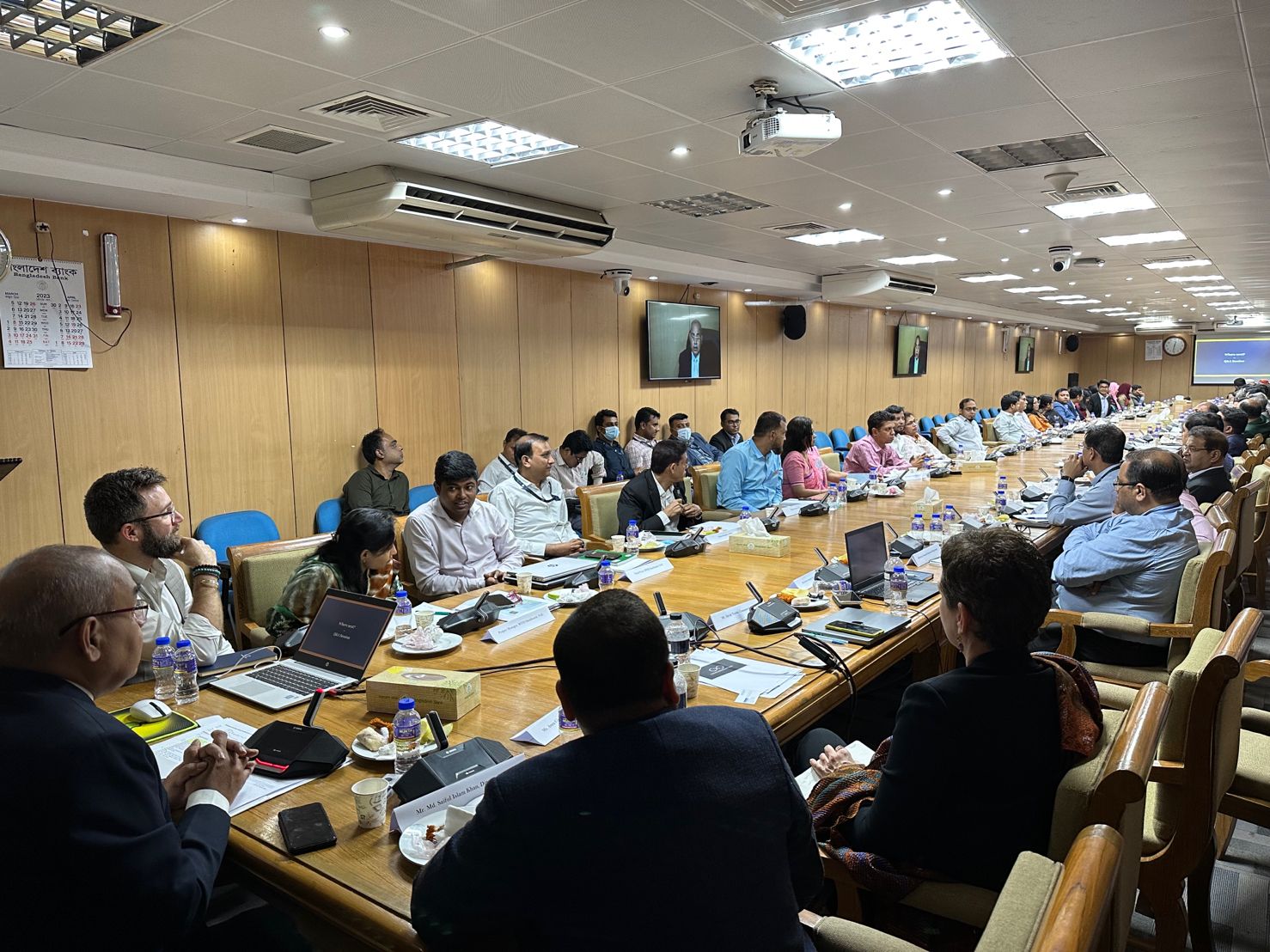
ConsumerCentriX Completes a 3-Day In-Person Consultation Event in Dhaka, Bangladesh, March 19-21, 2023
ConsumerCentriX Completes a 3-Day In-Person Consultation Event in Dhaka, Bangladesh, March 19-21, 2023
Dhaka, Bangladesh – March 25th, 2023 • CCX was represented in Dhaka, Bangladesh, by partner Anna Gincherman and project manager István Szepesy for a three-day in-person consultation event with the Bangladesh Bank (Central Bank of Bangladesh).
The event began with a meeting with the Deputy Governor of Bangladesh Bank, who offered guidance to the CCX team on the importance of leveraging gender data for greater women’s financial inclusion.

During the second day of the in-person consultation event, Bangladesh Bank (BB) conducted a stakeholder consultation with over 100 representatives from financial sector regulatory agencies, banks, MFS providers, micro edit institutions, insurance companies, and cooperatives.

In this consultation meeting, CCX partner Anna Gincherman shared key takeaways from the gender data ecosystem assessment in Bangladesh. Other stakeholders, including Quazi Mortuza Ali, presented Bank Asia Limited’s experience using gender data to drive its women’s market proposition, and CCX’s consultant David Taylor introduced the WFI Dashboard, a tool developed by CCX which brings together and visualizes financial-inclusion related data collected by Bangaldesh Bank from BB-regulated institutions on a regular basis.

Stakeholders were excited about the tool that would enable more data-driven policymaking and investment in the women’s market.
The 3-day in-person consultation event in Dhaka was concluded with a capacity-building discussion with Ashish Kumar Roy’s team from the Statistics Department, as well as the project team and representatives from the ICT Infrastructure Maintenance and Management Department, Information Systems Development and Support Department, and the Cyber Security Unit.

The project is implemented in collaboration with the Financial Alliance for Women and with the support of Bill & Melinda Gates Foundation.


ConsumerCentriX Contributes to Unlocking the Power and Potential of Women’s Financial Inclusion Data
ConsumerCentriX Contributes to Unlocking the Power and Potential of Women's Financial Inclusion Data
The female economy is the largest, fast-growing market representing a multi-trillion-dollar opportunity. However, despite significant progress made in expanding access to financial services, women remain unserved by the financial sector. Lack of quality sex-disaggregated data is a major barrier to women’s financial inclusion. Financial service providers (FSPs) and financial regulators are data-driven organizations but not always when it comes to collecting and using gender data.
ConsumerCentriX (CCX) conducted country-level sex-disaggregated supply-side data collection that contributed to the development of the “Gender Data for Financial Inclusion,” a report commission by the Women’s Financial Inclusion Data (WFID) Partnership that assessed the state of gender data and women’s financial inclusion in Bangladesh, Honduras, Kenya, Nigeria, Pakistan, and Turkey. The WFID Partnership is a coalition to improve the availability, production, and use of sex-disaggregated data to promote women’s financial inclusion.
CCX assessed data from their vast network of regulators, FSPS, and other key stakeholders in order to design, prioritize and manage interventions that address gaps in women’s financial inclusion. Mapping the ecosystem of financial services, identifying opportunities and building coalitions of national stakeholders is essential when driving action for women’s financial inclusion. The country research in the report provides a detailed mapping of the supply-side ecosystem helping to pinpoint the key stakeholders that are well-positioned to advance inclusive financial services for women using gender-disaggregated data.
Sex-disaggregated data is essential for driving solutions and policies that promote women’s financial inclusion.
– Anna Gincherman, Partner at ConsumerCentriX
The research calculated the women’s market opportunity in each country in order to build the business case for the financial sector. The annual revenue opportunity for reaching unbanked or underserved women in the six countries is staggering and ranges from an estimated $352M USD in Kenya to $1,159M USD in Turkey. Even given the limitations in incomplete gender data sources, CCX calculations suggest that there is a strong potential for market revenue gains if FSPs were to maximize their women’s market opportunities ranging from 2 percent in Turkey to 25 percent in Honduras. And by increasing the availability of supply-side data, business case metrics could be further leveraged.
Sharing Our Learnings: You Can Only Monitor What You Measure
Findings from the research were shared at a webinar on June 14th hosted by WFID in partnership with The Alliance for Financial Inclusion (AFI), Data2X, the European Bank for Reconstruction and Development (EBRD), the Financial Alliance for Women, the International Finance Corporation (IFC), the Women’s Entrepreneurs Finance Initiative (We-Fi), and the UN Capital Development Fund (UNCDF). The event celebrated the progress made in advancing women’s financial inclusion data in these six countries.
Speakers from the event included Antoinette Sayeh (Deputy Managing Director of the International Monetary Fund), Rebecca Ruf (EVP of Programs at Financial Alliance for Women), Elsie Addo Awadzi (Deputy Governor of Bank of Ghana), Tukiya Kankasa-Mabula (Former Deputy Governor of Bank of Zambia), Greta Bull (Director of Women’s Economic Empowerment at the Bill & Melinda Gates Foundation), and Inez Murray (CEO of the Financial Alliance for Women). The event was moderated by Mayra Buvinic (Senior Fellow of the United Nations Foundation with Data2X).
The panel discussions focused on country regulators and financial inclusion experts who have been taking bold steps forward when it comes to use of gender data. They have been working with FSPs to better understand the women’s market, drive revenue for businesses, and build more inclusive growth for society.
From a policy maker perspective, we have to understand who is being excluded and what services work differently for whom. We need sex-disaggregated data to answer these questions. There is no alternative.
– Mr. Md. Abul Bashar, Bangladesh Bank

Panel I included speakers from CCX collaborators: Sophia Abu (Central Bank of Nigeria), Md. Abul Bashar (Bangladesh Bank), Alba Luz Valladares O’Connor (Comisión Nacional de Bancos y Seguros Honduras) moderated by Wendy Teleki (Head of We-Fi Secretariat at the World Bank).
The first panel highlighted the importance of collecting standardized data in order to build convincing evidence on the women’s market opportunity and design effective policies and products. Without regulated mechanics for data collection, standardization is very difficult. A productive first step towards collecting better metrics is updating the regulatory institution’s dashboards and templates in order to capture higher quality data to advance specific products that meet women’s needs. All three speakers highlighted the importance of the WFID partnership in supporting them to build the mechanisms to collect quality gender-disaggregated data.
There’s a lot of data that’s already being collected and submitted by the financial services providers – we’re working with them to develop a women’s financial inclusion dashboard alongside the WFID partnership to show the business case to serve the women’s segment—once they see its good business, there will be more products and services tailored for the women’s segment.
– Sophia Abu, Central Bank of Nigeria
Speakers from Panel II included Melsa Ararat (Corporate Governance Forum of Turkey), Tamara Cook (CEO of FSD Kenya) moderated by Rosita Najmi (Head of Global Social Innovation at Paypal).

Women are often perceived as not being profitable enough, which makes it difficult for FSPs to justify investments in women-centered products in specific markets. The second panel discussed how improving women’s financial inclusion will require engagement from not only the FSPs, but also across the private and public sectors, along with international organizations, donors, associations, and civil society. Going forward, we should focus on strengthening all stakeholders’ ability to collect, report, and use gender data to increase women’s access to and usage of financial services, while encouraging collaborative thinking and action on the intersecting issues.
Women’s financial inclusion should not just be focused on justifying the business profitability but should also be based on the notion that financial inclusion of women is a public good.
– Melsa Ararat, Corporate Governance Forum of Turkey
Building out quality supply-side and provider-level data on women is vital in order to advance women’s financial inclusion, as highlighted by Greta Bull in her closing remarks. Clarity around what is best to measure, helpful reporting mechanisms and essential changes to FSPs systems are all key in progressing access and usage of formal financial services for women. Ultimately, there is a strong business case for society to serve the women’s market and a need for more coordination and collaboration among all stakeholders in order to develop data driven women’s financial inclusion solutions.
Gender data is primordial to women’s financial inclusion; it shines a light, measures where we are, prompts us to do better, shows us how, builds accountability and potentially shames us into action.
– Inez Murray, CEO of Financial Alliance for Women
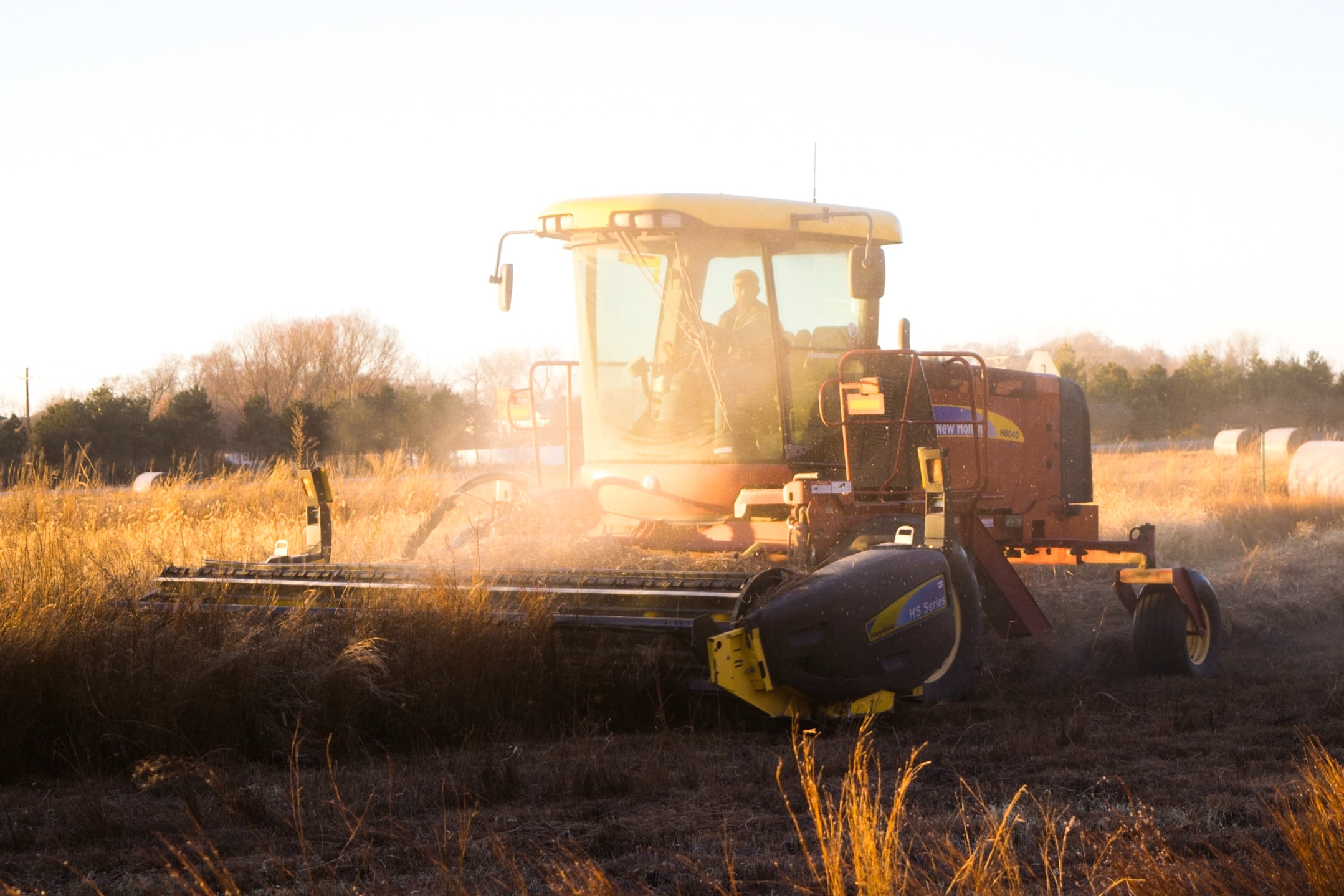
Stanbic Bank Uganda is helping to reduce the financing gap in the agribusiness sector.
ConsumerCentriX works closely with Stanbic Bank Uganda on both the COVID-19 Business Info Hub and the Stanbic Business Incubator. This article originally appeared on the COVID-19 Business Info Hub.
Melisa Nyakwera, Head Agribusiness at Stanbic Bank Uganda, spoke with the COVID-19 Business Info Hub on the banks’ initiatives to reduce the financing gaps for smallholder farmers and agribusinesses.
Stanbic Bank Uganda’s initiatives to reduce the financing gap in the agribusiness sector
Stanbic Bank Uganda has the following initiatives to facilitate access to finance for the sector:
- The bank uses the One Farm platform to profile farmers and agribusinesses. We understand their needs and provide solutions such as input financing, agronomy training, insurance, and information on markets.
- Stanbic Bank Uganda is increasing access to affordable finance to the farmers through their SACCOs and farmer groups by lending to the SACCOs and farmer groups at a subsidized interest rate.
- The bank provides several financial products to the sector, including short-term and long-term loans, invoice discounting, stock financing, and asset financing.
- Using the Flexi pay wallet, clients receive and pay for services or commodities from one wallet to another at no charge.
Keep in mind that agribusinesses need to have in place good business records, plans and a clear strategy to access financing during these challenging times.
For more information call: 0800250250 or WhatsApp: 0770588623
What is the role of Stanbic Bank Uganda in the agribusiness sector?
Stanbic Bank Uganda’s agribusiness segment works with all customers within the agriculture space. We look at the value chain from input suppliers, smallholder farmers, aggregators, and processors. We also engage with non-government organizations (NGOs), development institutions and ministry agencies working together to make a difference. Our role is running through that whole value chain to understand the needs of different actors and develop solutions to meet the requirements. We ensure that the solutions help them achieve their needs, and in case they require long term support, we work and walk with them along that journey.
How is the bank facilitating access to finance for the agribusiness sector?
The bank has several initiatives in place to facilitate access to finance for the agribusiness sector.
First, we’ve got a new initiative called the One Farm platform. Here, we partner with Agri-techs, who collect data from farmers and agribusinesses, analyze it to understand their requirements and provide solutions through the platform. Some of the services offered include input financing, agronomy training, insurance and information on markets. This initiative has helped to improve financial inclusion for several actors in the agribusiness value chain.
The bank has come together with several funding partners to provide affordable loans to Savings Credit and Cooperative Societies (SACCOs) and farmer groups. SACCOs receiving these funds can offer affordable loans to their members as well. We are also helping the SACCOs and farmer groups digitize records for a faster lending process. Funding partners include Agricultural Business Initiative (aBi), International Fund for Agricultural Development (IFAD) and United Nations Conference on Trade and Development (UNCTAD).
The third initiative is through the bank’s conventional offerings, which cut across the different value chain players from actual farmers, input providers to processors. Essentially, we have short-term and long-term loans, invoice discounting, stock financing, and versatile asset financing. We also have the Flexi pay wallet that enables users to receive and pay for services and commodities from one electronic wallet to another at no charge.
What can SMEs do to overcome disruptions resulting from the pandemic effects?
We all understand the impact of the pandemic, and we need to protect ourselves and keep safe. It means we have to go into the digital marketplace. Embracing digital tools will keep you safe and enable you to reach more customers than opting for face to face interactions.
Suppose businesses want to last and withstand the pandemic effects. In this case, they need good business plans, financial records and a strategy to follow through during this period. It will ease access to financing that they can use for operations to adapt to the current and future changes.
Financial institutions also need to play more in this space by supporting SMEs prepare the necessary records and plans to access the financing required.
For more information and access to Stanbic Bank’s Agri-banking Team;
Call: 0800250250
WhatsApp: 0770588623
Website: www.stanbic.co.ug
Visit any of our over 60 branches countrywide!