

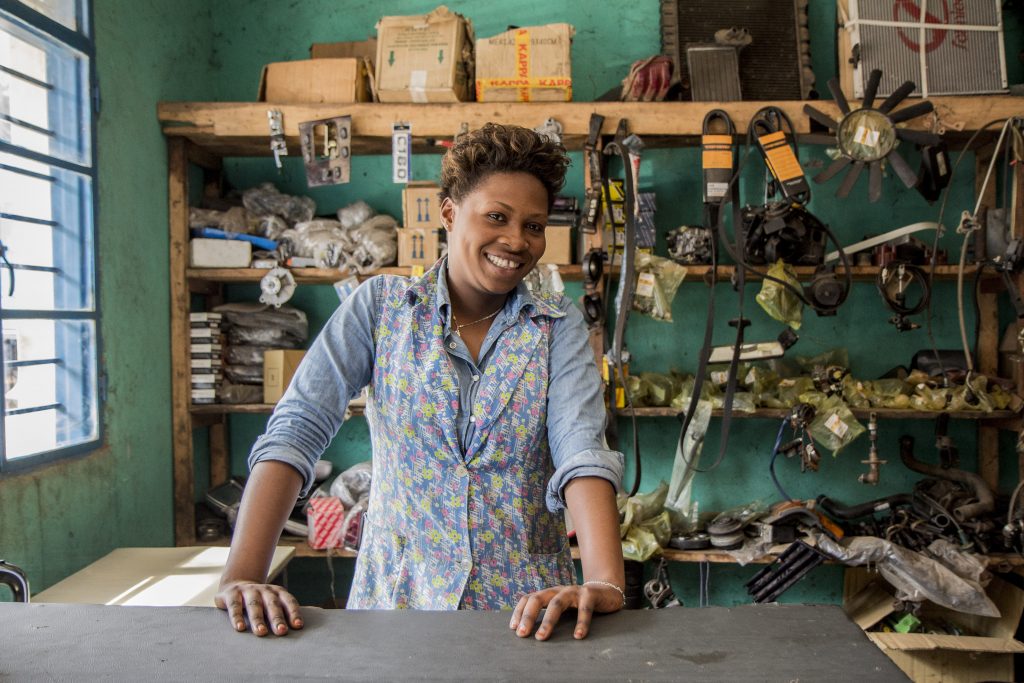
VIDEO | Introducing the SME Response Clinic
Introducing the SME Response Clinic
To support entrepreneurs in Rwanda struggling to adjust to the economic realities of Covid-19, the Rwanda Private Sector Federation has partnered with Access to Finance Rwanda (AFR) and ConsumerCentriX on the SME Response Clinic.


Key Takeaways from the SME Response Clinic
By Anna Gincherman, Partner at ConsumerCentrix, and Jean Bosco Iyacu, Director of Programs at Access to Finance Rwanda (AFR)
With 148,092 registered Micro, Small, and Medium Enterprises (MSMEs) in Rwanda representing 99.7 percent of the businesses according to the Integrated Business Enterprise Survey (2017) by the National Institute of Statistics of Rwanda (NISR), this sector plays a pivotal role in the country’s socio-economic development. However, as a result of the Covid-19 pandemic and lockdown, this key driver of growth for Rwanda became imperiled as MSMEs across the country faced disruptions in the supply chain, demand and economic uncertainty.
To support entrepreneurs in Rwanda struggling in their time of need, Access to Finance Rwanda (AFR) partnered with ConsumerCentriX and Rwanda Private Sector Federation on the SME Response Clinic. The platform was launched on May 3rd, a little over a month after Rwanda entered lockdown.
The goal of the digital platform is to address information asymmetry through the establishment of a centralized location for MSMEs to learn about the new policies, regulations, support structures and product innovations developing in response to the crisis and essential financial advice and business training. For all articles, simple language and a straightforward tone is used, and content is made available in both English and Kinyarwanda (the only local language that is used by all Rwandans).
However, as we all know, a website alone is not enough to drive traffic. To increase outreach, a Facebook page and Twitter account and campaign were launched the same week as the website. An Instagram profile was created a few weeks later. Since the launch of these channels, content promoting the website has been viewed on Social Media 4,032,652 times.
Beginning with no followers and an ambitious goal of becoming the go-to site for entrepreneurs in Rwanda during Covid-19 meant investing in advertisements. The promotional strategy differed by channel. For Twitter, the SME Response Clinic originally partnered with influencers on a campaign before switching to a strictly organic promotional strategy. For Facebook, there is a heavy focus on article promotions by directly targeting small and medium business owners. In addition to driving traffic to web articles, the content and advertisement strategy evolved as results proved Facebook to be a popular channel for amassing video and live event views.
As the platform grew so did the list of partners. The SME Response Clinic joined forces with the Association of Microfinance Institutions in Rwanda, New Faces New Voices Rwanda, African Management Institute, Argidius Foundation, Rwanda Bankers’ Association, and Tustawi. These partnerships ensure that the content on the website reflects diverse perspectives. Partners also play a critical role in promoting web content to their external audiences.
Through these partnerships, three Facebook live webinars were organized focusing on the banking and microfinance sectors response to the Covid-19 pandemic and on how the Economic Recovery Fund and other relief measures put in place by the Government of Rwanda would benefit women entrepreneurs during and post Covid-19 pandemic.
Key Takeaways
The last ten weeks have been a period of intense testing and optimizing. Here are the key takeaways:
- Content in Kinyarwanda is critical to reach the target audience. It performs better than content in English for most topics, particularly for articles on government measures and articles on the banking and microfinance sectors’ responses to the Covid-19 pandemic.
- Women need to be explicitly targeted in order to ensure gender parity. At present, 48 percent of visitors are women despite an initial gender gap that heavily skewed toward men visitors. Achieving gender parity with traffic views meant actively creating pieces of content for women entrepreneurs and targeting them specifically on Facebook. Given the additional challenges many women entrepreneurs face in general and how they have been disproportionately affected as a result of Covid-19, this demonstrates the platform’s value by offering much-needed support for women entrepreneurs.
- Social media channels are effective ways to market the SME Response Clinic, with Facebook yielding the best results by far accounting for 64 percent of all referral traffic and reaches over 170,000 users per month. The SME Response Clinic is active on Facebook, Twitter, and Instagram and uses both organic and paid advertising to promote content. While the Twitter campaign yielded higher levels of impressions, Facebook proved to be significantly more cost-effective when it came to engagements and website clicks.
- Video is essential for keeping users engaged with the content. Data from Facebook suggests that people are more likely to watch an entire video then click on an article and a recent survey on the SME Clinic conducted also revealed that users are twice as likely to prefer content in a video or animation format than in a written article format.
- Web traffic and social media performance is very closely correlated to the publication of new content and event promotion. Weekly reviews of visitors and views indicate that it is critical to post new content and promote events as often as possible to drive visits to the portal.
- Strong partnerships are key to the platform’s success in that they bring perspectives of their members and constituents to inform content development. Also, they are vital in supporting outreach by sending targeted information via SMS and WhatsApp to their networks.
While the lockdown has slowly been lifted, the economic consequences of the pandemic can still be felt by micro, small, and medium enterprises across Rwanda. These key takeaways will continue to inform the content and promotional strategy for SME Response Clinic as the platform continues to provide information and resources for entrepreneurs in Rwanda coming to terms with the new normal.

COVID-19: Challenges, coping mechanisms, and urgent needs of SMEs in Uganda
ConsumerCentriX recently interviewed entrepreneurs in Kampala, to learn about their current challenges, coping mechanisms, and urgent needs in the midst of the COVID-19 pandemic. Below are some highlights from those conversations.
Local measures impacted most entrepreneurs
- Lockdown, shutdown, and social distancing are top of mind measures for all entrepreneurs. The direct consequences of these measures include a drastic decline in daily sales, an increase in the price of goods, and a reduction in the supply of those goods, which has resulted in loss of revenue for most.
- The reduction in revenue has additional consequences, including difficulties to pay business rent, bank loans, suppliers, employee salaries, and family expenses.
- COVID-19 has affected the entire value chain, from suppliers being unable to deliver on existing orders or contracts due to logistical challenges to wholesalers and retailers that stocked up when the pandemic was first announced, and now many are suffering for not generating enough income to pay back to suppliers.
SMEs’s coping strategies
- SMEs in Uganda are using a variety of different strategies to avoid permanent closure, including keeping in close contact with suppliers, placing and accepting orders via phone, delivering products by motorcycle, and even using their personal Facebook accounts to market their products or services.
- Other SME owners have downsized, temporarily closed, reduced the number of employees or laid off employees. They stopped stocking up general goods, and have instead focused on stocking fast-moving goods. A number of them based in Kampala have also decided to send their families to their home villages to work in agriculture as a way of diversifying income and reducing family expenses.
- Some are also suspending payments on bank loans or withdrawing funds from their savings accounts (in many cases, these funds were meant to pay for school fees) to save their businesses from being evicted.
What SMEs urgently need
- To survive this crisis, SMEs need urgent flexible and affordable financing and non-financial support to help them to become more resilient and adapt to the new market conditions.
- While optimistic by nature, entrepreneurs would benefit from building their skills in things like how to keep in touch and negotiate with their suppliers; how to communicate with and deliver to their customers; how to digitalize their businesses; and how to manage their operational expenses such as employee salaries. An equally important topic would center around how to keep mental well-being in these times of crisis.
Meet the Business Info Hub
In this context, ConsumerCentriX in partnership with Stanbic Bank recently launched the COVID 19 Business Info Hub, a platform designed to help entrepreneurs navigate the changing environment.
The Business Info Hub provides entrepreneurs with insights and tools to better manage their businesses. In partnership with the African Management Institute (AMI), entrepreneurs can also access a suite of programs through their COVID-19 Business Survival Bootcamp, ranging from cash-flow forecasting to adjusting products or services for new customer segments, and from repurposing existing assets to meditation sessions that help promote mental well-being.
We invite you to explore the https://covid19businessinfohub.com/ to find the tools most appropriate for your own situation. And if you don’t find what you need, just let us know so we can try to find the best way to help you!

Re-opening in a Post COVID-19 Environment: Practical Solutions for SMEs
Please note that the webinar will not be accessible until 4:00pm on Tuesday, June 16th
Re-opening in a Post COVID-19 Environment:
Practical Solutions for SMEs
A version of this article was originally posted on the COVID-19 Business Info Hub.
The COVID-19 Business Info Hub is launching a webinar series to provide practical advice and solutions for small and medium enterprises (SMEs) through engaging discussions with expert panelists. The first session, Re-opening in a Post COVID-19 Environment: Practical Solutions for SMEs will be held on Tuesday, June 16th at 4.00 pm. The webinar will provide SMEs and industry stakeholders an opportunity to discuss the ”new normal” and share practical solutions that can help the sector in this time of crisis.
Panelists include Gideon Badagawa, Executive Director of the Private Sector Foundation Uganda (PSFU), Daniel Birungi, Executive Director of Uganda Manufacturers Association (UMA), and Hope Sharon Kwiyocwiny, Sales and Marketing Manager of HMH Rainbow Limited, YO KUKU. The session will be facilitated by Tony Otoa, Executive Director of Stanbic Bank Business Incubator, and hosted on Stanbic Bank Uganda’s Facebook Live page. The session is open to ALL, irrespective of the financial institution you bank with!
The webinar comes at a critical time. Uganda has been on lockdown following the COVID-19 pandemic for close to three months, resulting in a myriad of challenges for SMEs, including disruptions in the supply chain, income loss, and changing work environments. A socio-economic impact assessment of COVID-19 on the formal sector and SMEs by the United Nations Capital Development Fund (UNCDF) conducted in April 2020 reveals that 85 percent of all businesses anticipated financial distress after three months of lockdown. The expectation of loss is at least 90 percent across companies of all sizes.
The plight of SMEs during COVID-19 poses significant challenges to the Ugandan economy. As the engine of growth for economic development, innovation, and wealth creation, SMEs employ over 2.5 million people in Uganda and account for approximately 90 percent of the entire private sector, generating over 80 percent of the manufacturing output that contributes 20 percent of the gross domestic product (GDP).
With this in mind, Stanbic Bank Uganda has deliberately prioritized efforts to support the SME sector in their time of need. In partnership with ConsumerCentrix, Stanbic Bank Uganda has launched the COVID-19 Business Info Hub – a website dedicated to providing useful, practical information on key interventions including business training, useful government directives, and industry interviews to enable SMEs to stay afloat during COVID-19.
We look forward to engaging with you on this relevant discussion towards practical solutions for SMEs.
Sign up for our Newsletter and Event Reminders
Supporting Your Business Series: Advice from the Banking Sector in Rwanda
Supporting Your Business Series:
Advice from the Banking Sector in Rwanda
A version of this article was originally posted on the SME Response Clinic
Improve your business management skills with AMI’s free Bootcamp and Trainings:
Bootcamp: Thursday, June 5th, 2020 – https://www.africanmanagers.org/rwandacovidwebinars/
Open Webinars: https://www.africanmanagers.org/covidwebinars/
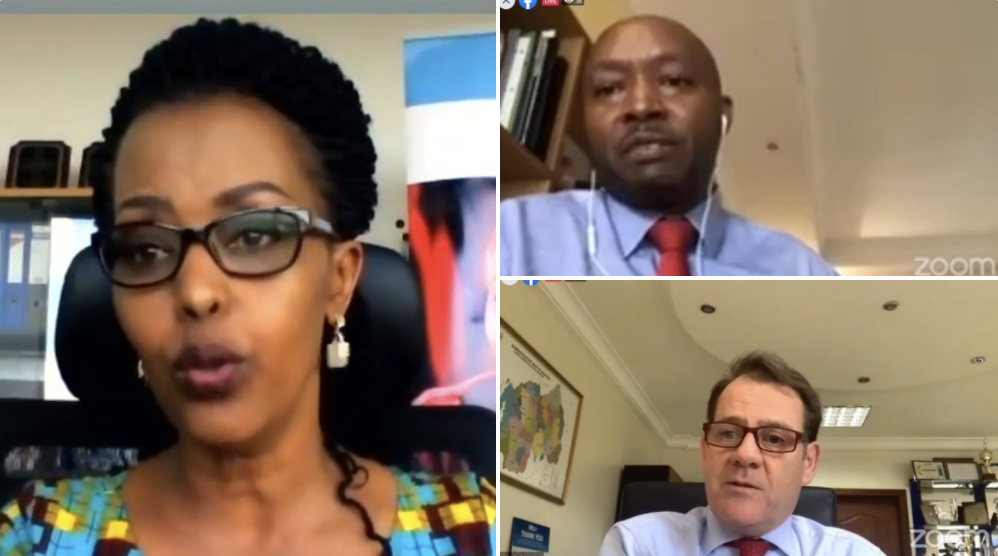
Many SMEs have questions about banking services right now, given that businesses have faced low cashflow, difficulty in repaying loans, and uncertainty. In response, the SME Response Clinic brought together a panel of bankers for a Facebook Live Event.
On May 28, this live webinar entitled “A Discussion with the Banking Sector” kicked off the Supporting Your Business Series. The interactive session engaged banking experts Maurice K. Toroitich, Managing Director of BPR Atlas Mara, Robin C. Bairstow, CEO of I&M Bank and Chairman of Rwanda Bankers Association, and Christine Baingana, CEO of Urwego Bank. It was moderated by Tony Francis Ntore, Executive Secretary of the Rwanda Bankers Association, and Jean Bosco Iyacu, Director of Programs at Access to Finance Rwanda.
Bankers offered advice to SMEs on managing businesses and relationships with their financial institutions. Here are the top recommendations to help your business survive the pandemic:
One of the main mistakes banks see small businesses make is using one account for both business and personal funds. When you start a business, it is important to open a separate business account so that you can track your earnings and expenses in an organized way. A good rule is to pay yourself a salary, but to pay it from your business account into your personal account so that you have a clear idea of your cashflow.
Keeping separate accounts will help you to better understand your own business’s profitability and will help if you decide at some point to access credit from a formal institution.
The COVID-19 pandemic has brought many changes to the business climate in Rwanda. Those businesses that learn to be flexible, to assess the effect that the crisis has had on their businesses, and who learn to plan three to six months in the future will be best placed to survive.
One important piece of advice from bankers is for businesses to plan for a much different market than they experienced in the past. For example, if a business made a certain revenue pre-COVID, they should not assume that this will go back to normal after the crisis has passed. Planning for a different customer base, and for reaching new customers will be key. Some businesses may move online, or adapt a model with more delivery services, for example.
Another thing to keep in mind is that now is not the time to venture into a completely new business line. Trying to start a new business in a new market is one of the riskiest propositions during a difficult time. While there will be changes and modifications in existing businesses, trying to take on a new venture without the knowledge of the business, good or service, and without the capacity to run that new venture, may lead to failure. It is important to first ensure that you have the knowledge and capacity for a new venture before seeking capital from a bank. If you cannot demonstrate this, you are likely to be disqualified.
Learn more about keeping accurate records with AMI’s free Bootcamp and Trainings:
Bootcamp: Thursday, June 5th, 2020 – https://www.africanmanagers.org/rwandacovidwebinars/
Open Webinars: https://www.africanmanagers.org/covidwebinars/
To keep you, your staff, and your clients safe, new digital solutions can be used in place of cash. Currently, there are zero fees when you transfer from a mobile wallet to a bank account, transfer between mobile wallets (person to person transfers), pay a merchant with mobile money, or pay your bills with mobile money. There are also no fees when you make a payment at a merchant with a card via a point-of-sale (POS) device.
These digital solutions help not only in avoiding touching cash, but they also help to keep solid records of your business cashflow. It is important to keep separate wallets or digital accounts for personal and business transactions so that if you need to access a loan or other solution from a bank, you can clearly show these records as proof of your creditworthiness.
For current clients, banks have developed a number of services to help repay loans. These include grace periods on interest and principle, other deferments, and waiver of late penalties and fees. Banks understand that many SME businesses are experiencing a decline during the lockdown.
Talking to your bank – to your relationship officer or loan officer – is key. If you are having trouble do not wait, do so right away. The bank will work with you to decide the time period needed for grace periods or deferments, often depending on the sector you are in and how hard it has been hit.
On June 4, 2020, the National Bank (BNR) has launched the Economic Recovery Fund, a fund which will allow banks to offer discounted loans and other services to businesses struggling due to the crisis. However, it is important as a business to plan carefully about your capacity to borrow and to earn enough to repay your loan. Even though loans will be available at lower interest rates for qualifying borrowers, they are not a grant. These loans will come with the same terms and conditions as a normal loan – to repay in full, on time and with all applicable fees and charges.
If you do qualify, and have a clear plan for how you will use and repay the funds, you may learn more by talking with your relationship officer or loan officer. They will help to make sure that you have all of the paperwork needed, that you have been a responsible client in the past, and that the loan will be a help rather than a burden for your business.
Learn more about assessing your capacity to borrow with AMI’s free Bootcamp and Trainings:
Bootcamp: Thursday, June 5th, 2020 – https://www.africanmanagers.org/rwandabusinessbootcam
Open Webinars: https://www.africanmanagers.org/covidwebinars/
Banks find that sometimes clients will use the loan funds that they have received for something other than their business, and when it comes time to repay, they no longer have the money. This is the number one reason that banks lose confidence in a customer. While it seems like a good idea in the short term, it will affect your ability to take out loans in the future, especially now that defaulting on a loan will affect your credit rating with the Credit Reference Bureau.
Rather than diverting funds – even if you have a crisis – as always, you should talk immediately with your relationship officer or loan officer. Your bank is not there to judge you but to help you. Without clear, truthful, and up-to-date information from you, they will not be able to discuss your problem and come up with a solution that will avoid you falling into default.
Many business people ask themselves: “Why should I get insurance and spend money that I will not see again if I do not experience a problem?” However, insurance is one of the most important products that a business can purchase to help manage risk. One rule the bankers offered is that if you cannot afford an insurance premium, then you cannot afford to not be insured.
In the case of an emergency – theft, a fire, an automobile accident – you need to protect the assets and infrastructure of your business. Insurance is available through financial institutions as well as through insurance companies to help you protect yourself against unforeseen events and avoid losing your livelihood.
The relationship between a business and its clients and customers cannot be ignored, even when the business climate is difficult. You have got to stay in contact with both customers and suppliers so that they know what you are doing to continue your relationship once business begins to pick up again.
For example, many small businesses struggle to pay rent or other suppliers because revenues were low or nonexistent during lockdown. While suppliers do not look forward to losing revenue, many are open to negotiation so that rather than losing ALL revenue, they still are able to make some earnings.
In terms of customers, you may not be able to supply goods and services in the same way that you could pre-COVID. You may need to negotiate with those who have paid in advance or reassure customers that you have a plan to reopen and will be working again as soon as possible. The key is to keep the lines of communication open so that your customers do not seek another business who is willing to speak with them and value their business.
Learn how to negotiate with suppliers with AMI’s free Bootcamp and Trainings:
Bootcamp: Thursday, June 5th, 2020 – https://www.africanmanagers.org/rwandacovidwebinars/
Open Webinars: https://www.africanmanagers.org/covidwebinars/
ConsumerCentriX is a Proud Co-Sponsor of this Event

Rwandan Online Business Bootcamp Launched
Rwandan Online Business Bootcamp Launched
By Alejandra Ríos and Jessica Massie
A version of this article was originally posted on the SME Response Clinic
To support entrepreneurs in these challenging and unprecedented times, Access to Finance Rwanda (AFR) has partnered with the Rwanda Private Sector Federation and ConsumerCentriX on the SME Response Clinic. This digital platform provides entrepreneurs in Rwanda with information on financial management and industry insights to improve their response to this crisis.
However, information alone is not enough. As a result of this conviction, the SME Response Clinic is promoting a series of webinars and virtual programs through a partnership with the African Management Institute (AMI), to help entrepreneurs to adjust to financial uncertainty by deepening their skills and business acumen.
On Tuesday, May 12th, small businesses in Rwanda across sectors and with different business sizes joined the first FREE “Business Survival Bootcamp” facilitated by the African Management Institute (AMI).
Jean Bosco Iyacu of Access to Finance Rwanda (AFR), opened the webinar with a message of solidarity for the SME Response Clinic and SMEs in Rwanda.
The webinar takes businesses through important tools for planning during the COVID-19 pandemic.
These include:
- Scenario planning for your business – how do you deal with issues regarding customers, suppliers, infrastructure, staff and cash flow? How will these be affected if I close or have slow business for two weeks? What if it is two months?
- Organizational risk assessments – looking at the different dimensions of business, the risks they face, and how to mitigate them. What do you do if you can’t get the goods you need for your store, or supply your customers?
- Impact on cash flow – what to do if and when your cash flow is affected by an unexpected closure or low period.
All participants are given access to tools, such as cash flow planning spreadsheets, from AMI to use to help in their own businesses. These resources are free and designed specifically to navigate the issues in the COVID-19 pandemic, and include additional courses.

These tools and conversations are important given that the pandemic is likely to continue to affect SMEs in Rwanda – and around the world – for an unknown period of time. According to Diederik Wokke of AMI, many small businesses originally thought they would be affected for just the first two weeks of the lockdown. Now that the situation is stabilizing but slowly, businesses still need to build these skills and plan for a more uncertain future.
Conversation during the training highlighted some of the questions that SMEs have right now. For example, supplier negotiation is becoming more difficult now that businesses are able to open little by little. A shop renting a space may have had more flexibility in terms of payment during the lockdown, but this is changing as the country opens.
Finally, there are still many questions around payments and transferring to contactless mechanisms as much as possible. Many businesses are switching to digital payments and are still in the learning phase.
But with planning, management, and resources like those available from the SME Response Clinic, small businesses will be more likely to survive this pandemic.
Find out more about the upcoming sessions at “Expanding My Skills” on the SME Response Clinic website and on Facebook.
About the Authors
Alejandra Rios is an expert in inclusive finance with a focus on small-and-medium (SME) enterprises, advising leading commercial banks and microfinance institutions in emerging markets for the past twenty years. Her portfolio in MSME finance consultancy covers change management, housing finance, rural finance, institution-building, strategic planning, and credit management. She is a Partner at ConsumerCentriX.
Jessica Massie is a consultant in financial capability and microfinance based in Kigali, Rwanda. She has lived and worked in a variety of African countries for almost 20 years, and specializes in curriculum development, training, research and writing, with a focus on skill-building and behavior change. She is working with the ConsumerCentriX team on the SME Response Clinic in Rwanda.
RELEVANT NEWS & INSIGHTS




Stanbic Uganda in partnership with ConsumerCentriX launch the COVID-19 Business Information Hub
“ConsumerCentriX is honored to continue working with Stanbic Bank on further strengthening its small and medium enterprise proposition to address these challenging times. Being relevant, providing support promptly can make the difference for enterprises today,”
-ANNA GINCHERMAN,PARTNER AT CONSUMERCENTRIX.
To provide the much-needed information and solutions for Ugandan entrepreneurs struggling with the financial consequences of the pandemic, Stanbic Bank has partnered with ConsumerCentriX on the Covid-19 Business Info Hub.
This website will provide entrepreneurs advice on financial management to overcome economic slowdown and insights into new developments across industries. Through a partnership with the African Management Institute (AMI), the Covid-19 Business Info Hub will promote informative virtual training sessions and webinars to help entrepreneurs navigate these challenging new circumstances.
Employing over 2.5 million people, small and medium enterprises (SMEs) are the key driver of growth for Uganda’s economy. However, as the COVID 19 pandemic unfolds, the SME sector faces reduced business activity and financial security as a result of disruptions to the supply chain, travel restrictions, and changing work environments.
Over the last few months, Stanbic Bank has already introduced a range of innovative products and services to support entrepreneurs with overcoming these challenges. For example, to address reduced revenues and cash flow, clients can now access an unsecured overdraft facility within 24 hours based on the performance of their banking history. To reduce disruptions in the supply chain, the bank has partnered with Zhejiang International Trading Supply Chain Co Ltd to support enterprise clients importing from China.
The Covid-19 Business Info Hub will become a centralized platform for Stanbic to communicate these responsive efforts with enterprise clients in Uganda. However, the vision of the site is to become a trusted resource for all entrepreneurs in Uganda, looking for industry insights and relevant virtual training sessions.
“We are aware of various the challenges businesses are facing especially during this time, and we are committed to unlocking new solutions to enable business continuity. Among the key initiatives, Stanbic has put in place to support businesses is the loan repayment holidays, as a measure to protect clients from adverse economic effects of the COVID-19 pandemic. We will also continue to be at the forefront of delivering wholesome solutions to entrepreneurs directly through strategic alliances and partnerships to keep them thriving during and post the pandemic,” said Grace Muliisa, Stanbic Uganda’s Head of Personal and Business Banking
As the implementing partner, ConsumerCentriX is well-positioned to support Stanbic Bank’s on this critical endeavor. ConsumerCentriX is an international strategy consulting firm that works with financial service providers and policymakers on translating consumer insights into market strategies and policies to reach the un/undeserved. The firm has extensive experience supporting SME development in East Africa through financial and non-financial services.
“ConsumerCentriX is honored to continue working with Stanbic Bank on further strengthening its small and medium enterprise proposition to address these challenging times. Being relevant, providing support promptly can make the difference for enterprises today,” said Anna Gincherman, Partner at ConsumerCentriX.
Visit the Covid-19 Business Info Hub