


ConsumerCentriX Participates in Sensitization Workshop for WE Finance Code In Uganda
Ugandan stakeholders have taken a bold step in their journey to become a signatory of the Women Entrepreneurs Finance Code (WE Finance Code), by convening a sensitization workshop that brought together 26 Commercial Banks, 35 Micro Finance Institutions (MFIs), representatives from the Central Bank – Bank of Uganda (BOU), representatives from the country’s Parliament, the FinTech Association and representatives from development partner institutions, to understand what the Code is, and the nature of commitment required for national champions and coalition partners to pledge to increasing access to capital for Women Small and Medium Enterprises (WSMEs).
The meeting was convened by the World Bank Funded GROW Project, alongside the Ministry of Gender, Labor and Social Development (MOGLSD), Private Sector Foundation Uganda (PSFU), Bank of Uganda (BOU), Uganda Bankers Association (UBA) and Association of Microfinance Institutions in Uganda (AMFIU).
ConsumerCentriX facilitated the technical discussions that are central to the code, including The Strategic and Business Case for Serving WMSMES, Benefits of implementing the WE Finance Code Initiative In Uganda, and the Critical importance of sex-disaggregated SME data – a central element of the code and its implementation.
Stakeholders made a commitment toward actions that will enable Uganda join over 31 countries around the world that have already signed the code, including Rwanda, Tanzania, and Kenya, within the East African region. Stakeholders recognized the vital role WSMEs play in driving business growth, job creation, and economic development, and the challenge around insufficient collection, quality, and use of sex disaggregated data that plays a major role in sustaining the gender gap in financial services and access to capital for WSMEs.
“The first barrier [to access to capital] for women is poverty…” Minister of Gender, Labor and Social Development, Hon. Amongi Betty Ongom remarked and committed that her Ministry will support the We-Fi Code initiative as this will cause a shift in financial policies that increase access to capital for women. The Uganda Bankers’ Association (UBA) committed to championing the Women Entrepreneurs Finance Code (WE-Fi Code) in Uganda, as it is aligned with their Women Economic Empowerment Initiative (WEEI), that aims to position its member institutions as leaders in supporting women entrepreneurs and to drive data-driven decisions that improve financial services for WMSMEs.
The Association of Micro Finance Institutions in Uganda (AMFIU) also committed to championing the Code by ensuring it is fully integrated within SACCOs, MFIs, and other financial institutions across Uganda through leveraging their national network to turn the Code into a living instrument that unlocks finance, growth, and dignity for millions of women entrepreneurs who are the backbone of Uganda’s economy. The Bank of Uganda (BOU) highlighted their current investment in big data initiatives that directly align with the Code’s emphasis on data – not only to support evidence-based policymaking and regulatory oversight but also enable financial institutions to design products that better meet the needs of women entrepreneurs. The Bank of Uganda committed to working with all partners to translate the WE-Fi Code into measurable action, unlocking finance, driving innovation, and accelerating inclusive growth. The meeting gained consensus on what it will take for Uganda to launch the code, with commitments from key coalition and partner institutions emphasizing the collaborative efforts required through public and private partnerships. ConsumerCentriX is supporting Uganda’s implementation of the code.


ConsumerCentriX attends Nigeria's 2024 International Financial Inclusion Conference.
ConsumerCentriX participated in Nigeria’s 2024 International Financial Inclusion Conference (#IFIC2024), organized by the Central Bank of Nigeria, which took place on November 12-13 at the Landmark Event Centre in Lagos. This year’s conference theme, “Inclusive Growth: Harnessing Financial Inclusion for Economic Development,” brought together over 2,000 participants from 78 countries, including global thought leaders, industry practitioners, and influential stakeholders
The conference agenda featured dynamic plenaries, roundtables, and exhibitions showcasing innovations that advance financial access and address critical topics such as gender-inclusive finance, MSME financing, and digital financial solutions.
As a key contributor to the event, Anna Gincherman, Partner at ConsumerCentriX, spoke in the session “Powering Nigeria’s Inclusive Growth through MSMEs.” Drawing on ConsumerCentriX’s global expertise, Anna highlighted the importance of leveraging data to build effective financial solutions for micro, small, and medium-sized enterprises (MSMEs), focusing on women-led businesses.
Beyond Anna’s session, ConsumerCentriX celebrated significant milestones during the week:
- Launching the Women’s Financial Inclusion Dashboard: Together with the Central Bank of Nigeria and the Nigeria Inter-Bank Settlement System PLC (NIBSS), ConsumerCentriX unveiled the Women’s Financial Inclusion Dashboard. This innovative data portal offers granular, up-to-date information on access and usage of financial services in Nigeria. Work is now underway to expand the portal with sex-disaggregated SME data, expected by the end of November. Visit the dashboard at www.wfid.ng.
- Onboarding Signatories to the WE Finance Code: Following the launch of the Women Entrepreneurs Finance Code (WE Finance Code), ConsumerCentriX, in collaboration with the Central Bank of Nigeria and the World Bank, co-led a workshop to onboard more than 30 signatories of the WE Finance Code, including 12 leading banks. This initiative emphasized the responsibilities and benefits of joining the Code, including capacity-building opportunities and peer learning programs presented by the Financial Alliance for Women.
- Collaborative Dialogues: ConsumerCentriX contributed to rich discussions during #IFIC2024, sharing insights on leveraging data to create impactful SME solutions. The event provided an opportunity to reconnect with colleagues and industry pioneers who continue to drive digital financial inclusion and innovation in Nigeria.
ConsumerCentriX is committed to fostering inclusive growth and supporting initiatives empowering MSMEs and underserved segments including, WMSMEs globally.


ConsumerCentriX Participates in and Co-organizes Two-Day Workshop on WE Finance Code in Georgia
ConsumerCentriX (CCX) had the privilege of co-organizing a two-day workshop in partnership with the European Bank for Reconstruction and Development (EBRD) and the National Bank of Georgia (NBG). The workshop focused on advancing financial inclusion for women-led enterprises in Georgia, an important step towards improving access to finance for Women-Owned Small and Medium Enterprises (WSMEs).
Day 1: Leveraging Data for Advancing Finance to Women Entrepreneurs
The first day began with a comprehensive analysis of Georgia’s WSME Finance Landscape. High-level representatives from the private sector and key ecosystem stakeholders attended the session, which opened with welcoming remarks by Ms. Natia Turnava, Acting Governor of NBG, and Mr. Alkis Vryenios Drakinos, Regional Head of Caucasus at EBRD.
Anna Gincherman from CCX set the stage by providing an insightful overview of international developments in gender-disaggregated data. She highlighted the business case for collecting and analyzing this data, revealing that while women-owned enterprises constitute around 32% of all SMEs in Georgia, they account for only 7.5% of formal credit access. This gap underscores the importance of developing targeted financial solutions for women entrepreneurs.
David Taylor of CCX followed by introducing the WSME Dashboard (https://www.wefinancegeorgia.ge/), an analytical and data visualization tool designed to provide insights into the financial landscape for WSMEs. The Dashboard sparked lively discussions among participants, who explored its potential applications for their own institutions.
Later in the day, Ms. Aurica Balmus, Principal of Gender and Economic Inclusion at EBRD, gave an in-depth presentation on the WE Finance Code and its potential impact on Georgia’s financial sector, particularly in improving access to finance for women-led businesses.
The session concluded with a presentation by Mr. David Utiashvili, Head of the Financial Stability Department at NBG. Mr. Utiashvili shared the regulator’s vision for the future of the WSME Dashboard, calling for collaboration between financial service providers (FSPs) and other stakeholders to enhance its capabilities. His remarks emphasized the need for collective efforts to ensure that the Dashboard becomes a valuable tool for increasing financial inclusion for WSMEs in Georgia.
Day 2: WE Finance Code – Data-Driven Strategies for Financing Women-Led Enterprises
The second day took a more interactive approach, with participants from financial institutions, including data, product, and ESG managers, as well as representatives from the Georgian Bankers Association. The discussion centered on their experiences working with the WSME segment and sex-disaggregated data.
Istvan Szepesy and Anna Gincherman from CCX led the morning session, focusing on strategies for capturing and managing gender data. They encouraged participants to critically assess their current data collection and analysis methods and offered practical recommendations for improvement.
David Taylor returned to share emerging insights from the WSME Dashboard, illustrating how the tool can inform data-driven decisions for financial service providers. Participants actively engaged in discussions on how the Dashboard can be further integrated into their day-to-day operations.
The workshop concluded with a presentation by Ms. Dana Kupova, Head of Inclusive Finance at EBRD, who outlined how EBRD could support banks in Georgia as they work to better serve women-led enterprises. Her remarks highlighted the growing opportunities for financial institutions to create tailored products and services that address the unique needs of WSMEs.
Looking Ahead
The two-day workshop demonstrated the power of collaboration between public and private sector stakeholders in advancing financial inclusion for women-led businesses. It also underscored the importance of data-driven strategies in fostering sustainable growth and access to finance for WSMEs.
We extend our heartfelt thanks to all participants for their active involvement and to the National Bank of Georgia, especially Salome Tvalodze and David Utiashvili, for their ongoing support and collaboration in developing the WSME Dashboard and organizing this impactful event.
As part of the ongoing implementation of the WE Finance Code in Georgia, CCX, EBRD, and NBG remain committed to working together to enhance financial access for women-led MSMEs and support their continued growth and success.
Press Release: Workshop on WE Finance Code


ConsumerCentriX attends the 2024 Financial Alliance for Women Annual Summit
ConsumerCentriX attends the 2024 Financial Alliance for Women Annual Summit.
The ConsumerCentriX (CCX) team had an exciting two days at the 2024 Financial Alliance for Women Annual Summit, participating in sessions and engaging in conversations with a diverse group of industry leaders. The Summit focused on advancing women through the entrepreneurial funnel, a critical issue in today’s economic landscape.
One of the key themes of the Summit was the vital role of sex-disaggregated data in driving actionable insights. Our senior advisor, David Taylor, had the opportunity to present our work on the Women’s Financial Inclusion Dashboards in Bangladesh and Nigeria. During the National Gender Data Dashboards panel, David highlighted the significance of data for regulators, stating, “Regulators need to recognise the power that data can present. The insights you present back to the market can be as powerful as the policies you set.”
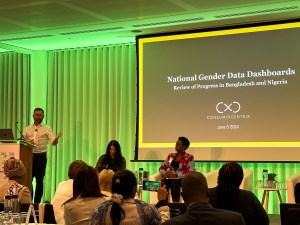
Following the Summit, the WFID Partnership Community of Champions held its third in-person convening. The WFID Partnership Community of Champions, a collaborative initiative facilitated by the Financial Alliance for Women (FAW) and ConsumerCentriX, brings together financial policy stakeholders from around the world. For the past three years, this community has been instrumental in sharing experiences and best practices aimed at increasing the collection and use of supply-side data to promote women’s financial inclusion (WFI). The recent convening showcased the latest innovations in applying gender data to inform policy-making and drive actions towards closing the financial inclusion gender gap.


David Taylor facilitated a session on National Gender Data Dashboards featuring distinguished speakers such as Sophia Abu from the Central Bank of Nigeria, Shahana Ferdousi from Bangladesh Bank, and Paula Ximena Franco from Superintendencia Financiera de Colombia. They discussed key learnings from our work on developing Women’s Financial Inclusion Data Dashboards in Bangladesh and Nigeria. Anna Gincherman, a partner at CCX, moderated a dynamic discussion among policymakers from Colombia, Peru, Honduras, Chile, Nigeria, Pakistan, and Bangladesh. The conversation focused on how to best apply supply-side data to shape women’s financial inclusion priorities, highlighting the collaborative efforts needed to drive meaningful change.
About the Summit
The Financial Alliance for Women’s Annual Summit is the premier event focused on the power of the female economy. Each year, the Alliance convenes financial, technology and real sector players to share business solutions for women’s financial empowerment.
ConsumerCentriX and Bangladesh Bank Launch the Women's Financial Inclusion Data Dashboard
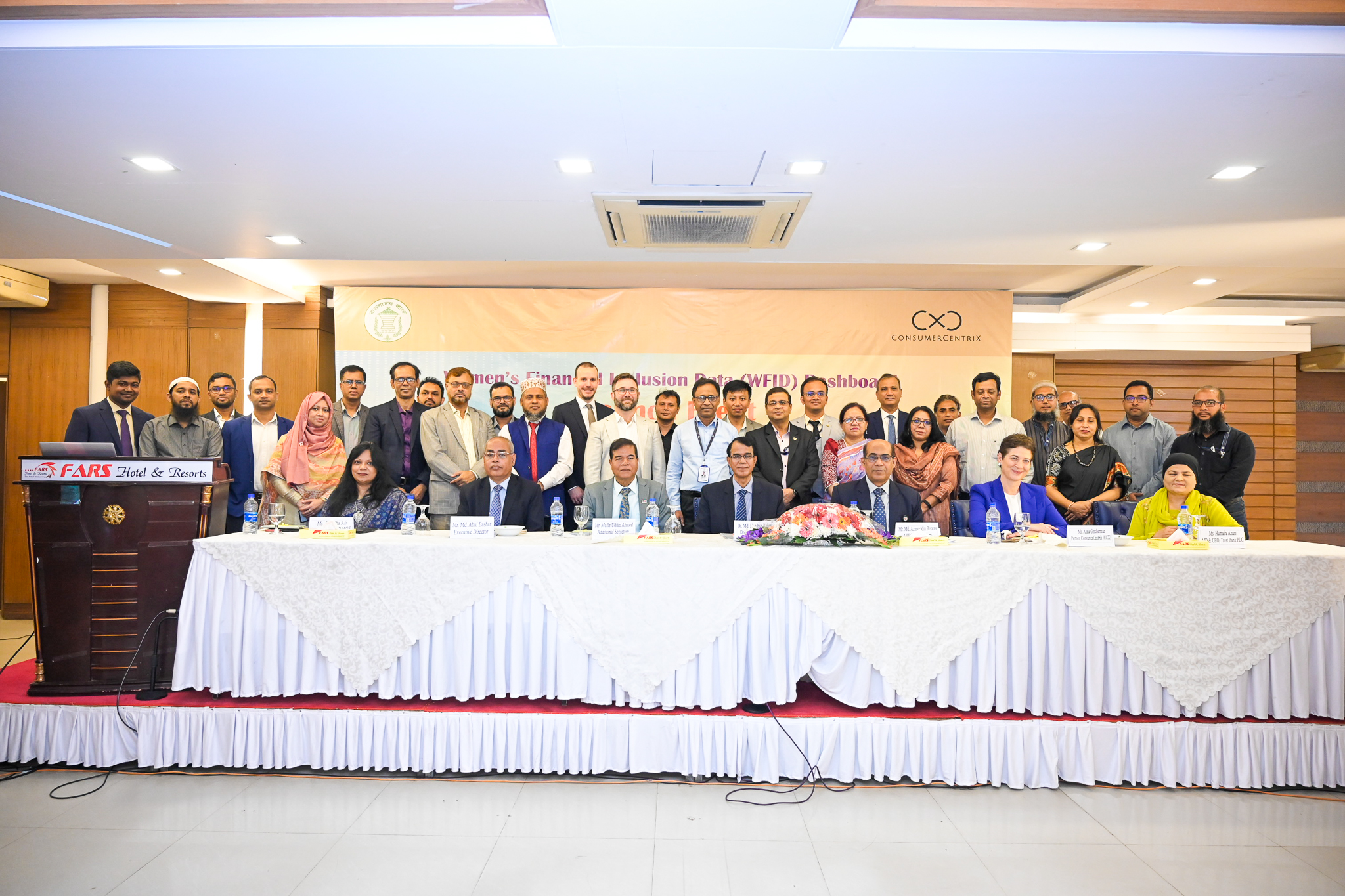
ConsumerCentriX and Bangladesh Bank co-hosted the launch event of the Women’s Financial Inclusion Data Dashboard, which had been developed in collaboration with the Financial Alliance for Women.
The event was inaugurated by Mr. Md. Abul Bashar, Executive Director of Bangladesh Bank, and saw the participation of over 100 stakeholders from Bangladesh’s financial services sector, including financial service providers, regulators, and development finance institutions.
In a keynote address, the Deputy Governor of Bangladesh Bank, Md. Habibur Rahman, PhD highlighted the importance of the the WFID dashboard’s vital role in facilitating informed policy-making and driving large-scale, impactful financial industry initiatives to enhance women’s financial inclusion in Bangladesh. Following the keynote, Mr Mofiz Uddin Ahmed, Additional Secretary from the Finance Division, Ministry of Finance, stressed the critical contribution of the microfinance sector to reaching women, especially in rural areas.
Shahana Ferdousi of the National Financial Inclusion Strategy Administrative Unit at Bangladesh Bank, István Szepesy, and David Taylor of ConsumerCentriX presented the content and key features of the dashboard.
The WFI Data Dashboard is designed to represent the landscape of women’s financial inclusion in Bangladesh utilizing data collected by BangladeshBank, which has been publicly available but fragmented in multiple independent data sources and files. The dashboard now collects and combines all relevant information in one place with easy-to-navigate functionality.
The formal launch was followed by a panel discussion titled “Sex-disaggregated Data to Promote Women’s Financial Inclusion in Bangladesh,” moderated by Anna Gincherman, partner at CCX. Snigdha Ali from the Bill & Melinda Gates Foundation, Azimuddin Biswas, Additional Secretary from the Finance Division, Ministry of Finance, Government of Bangladesh, and Humaira Azam, CEO of Trust Bank Limited, discussed how financial service providers and policymakers are using data to drive women’s financial inclusion efforts in Bangladesh.
We extend our deepest gratitude to Bangladesh Bank, our co-host, and all the participants who contributed to making the event a resounding success.

SME Response Clinic hosts webinar on Practical Solutions for Improving the Wellbeing of Women Entrepreneurs
A version of this article was originally posted on the SME Response Clinic
The SME Response Clinic held a webinar on practical solutions for improving the wellbeing of women entrepreneurs at Kigali Public Library on the 8th of December 2021. The webinar was part of the Building Back Healthier Series that was launched with a talk show on KT Radio on the 18thof October 2021 and followed another webcast on practical strategies to deal with stress held in November. The series is organized in partnership with the Geruka Healing Centre.
The objective of the webinar was to inform, inspire, and share knowledge and skills that businesswomen can use to better their wellbeing when dealing with day-to-day stresses of running a business while managing other responsibilities. In addition, the webinar dove into practical techniques for increasing psychological safety and productivity and how to optimize the workplace especially for women entrepreneurs.
The webinar featured a mental health expert, Adelite Mukamana, M.Sc., with two active businesswomen, Scovia Umutoni and Amina Umhoza. Mme. Mukamana started the session with a fantastic example to help the audience have an in-depth appreciation of mental health and wellbeing:
 Our mind is like an engine of any car. No matter how good-looking the car might seem on the outside, without the engine, it wouldn’t start. The car can only move when the engine is working in full force. Think about your mental health and wellbeing like that. When something is wrong with your car engine, you look for a mechanic. The moment you feel that your mental health or wellbeing is struggling, look for professional help.”
 Scovia’s Experience:
Scovia Umutoni is Founder of KGL Flour Limited, an agribusiness factory that produces maize flour – locally known as Kawunga – and animal feed. Before the pandemic, she was employed elsewhere, but she lost her job like many others when the pandemic hit. Undeterred, she decided to invest her savings to create her own business.
While exciting, it proved to be a very challenging time because once she started her business operations, Rwanda went into lockdown, putting everything on hold.
By the time lockdown was over, while many businesses were back up and running, Scovia’s target market including schools and hotels were still not operational. She started to feel frustrated and uncertain about the future. Scovia thought quickly and decided to change her approach, targeting the Democratic Republic of Congo (DRC). She has been serving customers in DRC since then, and as Rwanda has begun to recover, she has started to deliver her products locally.
Scovia believes that women entrepreneurs often face specific challenges based on the fact they are women. When she ordered a corn flour machine to start her business from a local businessman, Scovia struggled to get the machine in the agreed-upon two week period. It took engaging male friends to visit the provider with her for Scovia to get the machine two weeks later than promised. Scovia is certain that had she been a male entrepreneur, she would not have had to resort to engaging friends to help her. This is just one example of common obstacles faced by women entrepreneurs, many of whom were also disproportionately affected by COVID-19.
During the pandemic, Scovia took a step back to reflect on her businesses and to think of new strategies to improve operations. Recognizing the importance of her own wellbeing, she took a number of actions to improve her mental health, including listening to music. Her business life is not without challenges – she still faces challenges like being a woman in a male-dominated industry and travel restrictions due to the ongoing pandemic – but she doesn’t intend to stop. Scovia has learned that challenges will always exist, and what is important is to look for solutions to deal with them.
 Amina’s Experience:
Amina Umuhoza is Founder and CEO of SAYE – DUKATAZE LTD, which aims to fight unintended pregnancies in young Rwandan women due to menstruation stigma. Her company provides young women with reproductive health information, menstrual hygiene management, and economic empowerment by selling products produced by young women through technology and community engagement.
The COVID-19 pandemic dramatically changed SAYE’s operations, and like many other businesses, the company took its business online during lockdowns. This major shift in operations led Amina and her colleagues to question whether they would attain their goals, and Amina had to work hard to balance competing priorities. For instance, the company had to use profits planned for investment to instead pay employee salaries to ensure proper staffing and employee satisfaction. Choices like these have allowed Amina to ensure SAYE continues delivering on its business and social objectives throughout the challenges of the pandemic.
Like Scovia, Amina also faces challenges unique to being a woman entrepreneur. A key example is negative comments from others, including social media bullying. It is not uncommon for Amina to receive questions about plans to marry when she posts about new products or partnerships. She believes that these comments come from cultural beliefs about the role of women, but things have started to change as the government has been educating Rwandans on the role of a woman in societal, family, and personal development.
The hardest part of responding to the COVID-19 pandemic for Amina was to ensure she was strong and resilient for herself as well as for her co-workers and employees. Amina used the lockdown as productively as possible to ensure a positive mindset, reflecting on herself and catching up on important paperwork. This cheered her up, and that feeling encouraged her to reach out to co-workers through virtual platforms. Amina also managed to take care of action items she had postponed or put off pre-pandemic, which provided SAYE with new opportunities after lockdown.
Building Back Healthier:
Scovia and Amina seek to thrive as businesswomen, but this is not always easy. Both receive negative comments based on stereotypes nearly every day; for example, the idea that as women entrepreneurs they can only be successful if they are married. Adelite Mukamana disagrees with this stereotype. “We often hear that the development of women depends on a man. Scovia and Amina are true examples that a businesswoman can run her business smoothly and shine through all circumstances, and we hope they are good examples to our fellow women in the Rwandan society,” she says.
Both entrepreneurs agreed on one fact – one chooses her or his own mentality, and a positive sense of wellbeing is key to carrying on in the face of adversity. Adelite Mukamana agrees. “We act how we think, and we decide how to think,” she says.
Women entrepreneurs are typically challenged by balancing work and home life. Amina believes that marrying to a partner who supports you and who understands your vision is a crucial element for a success as a businesswoman. Mme Adelite Mukamana, both an expert in her field and a mother, advised businesswomen to not be afraid of having families since a woman is a human being that is capable of carrying out multiple tasks. She advised women to launch businesses regardless of their family lives if they’re confident they can do it. She also pointed out that men shouldn’t be threatened by women’s economic empowerment and their partners’ success but instead focus on growing together.
Visit the SME Response Clinic for tips for entrepreneurs to support their mental health and wellbeing. We also invite you to keep an eye on our social media platforms for entrepreneurs’ stories on how their businesses are prioritizing mental health and wellbeing, as part of responding to the COVID-19 pandemic challenges. You can find us on YouTube,Facebook, Twitter, and LinkedIn. Submission

ConsumerCentriX launches Compassionate Leadership for Entrepreneurs to support wellbeing of small business owners
ConsumerCentriX is launching Compassionate Leadership for Entrepreneurs to support small business owners as they navigate uncertain times. The COVID-19 pandemic has had a disorienting effect on global health, economic activity, and our daily lives both professionally and personally. Business owners and entrepreneurs have been among those most affected by COVID-19 as lockdowns and border closures made it nearly impossible for them to continue their day-to-day operations. As small business owners work to recover from the effects of the pandemic, personal wellbeing should be a priority, as it affects decision-making, employee management, and ultimately a business’ bottom line.
Compassionate Leadership for Entrepreneurs will feature a series of informative blogs, webinars, and a local radio show that explore tools and tips for business owners to positively impact their wellbeing. The initiative draws on the concept of compassionate leadership, which is defined as interacting as a leader in ways that exhibit compassion for oneself and in relationship to others as well as acting intentionally to create positive impact in the world as a whole.[1] The first of three webinars in the Compassionate Leadership Public Engagement Series launches on November 4th, 2021 in partnership with Stanbic Bank Uganda Limited. In Rwanda, the Building Back Healthier Series launched with a local radio show held October 25. Two additional webinars are scheduled to take place this fall, the next in mid-November.
In tough business environments, leading with compassion takes courage and is rewarded with resilience. Compassionate Leadership for Entrepreneurs will take a deep dive into the positive impact of compassionate leadership and the importance of focusing on personal wellbeing. Stay tuned as we share strategies and tools to help entrepreneurs foster better work environments, build better business outcomes, and lead with compassion.
[1] Center for Compassionate Leadership. July 9, 2019. “What is Compassionate Leadership?”

Anna Gincherman to Speak at 2021 Financial Alliance for Women Annual Summit
Anna Gincherman to Speak at 2021 Financial Alliance for Women Annual Summit
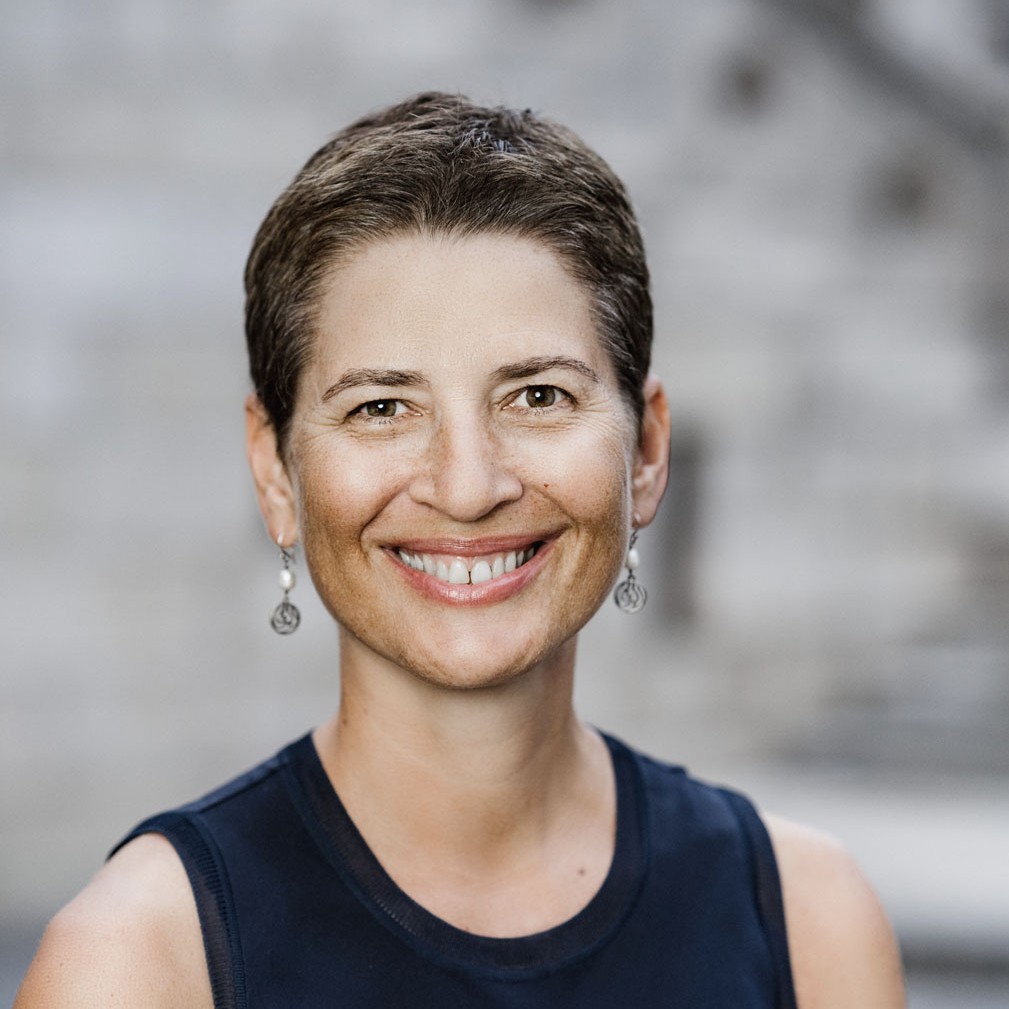
Anna Gincherman, a Partner at ConsumerCentriX, will speak at the Financial Alliance for Women’s Annual Summit for the third consecutive year. The Summit is known as the world’s most seminal and comprehensive event for women’s financial inclusion, with participation from bankers, policymakers, multilateral and bilateral officials, academics, and other stakeholders.
The 2021 Summit, titled “Investing in Women, Transforming Our World,” will address a wide range of topics, including introducing national measures to promote female-friendly entrepreneurial ecosystems, designing gender-aware fintechs, and developing tomorrow’s JEDI (justice, equality, diversity, and inclusion) workforce.
This year the event will take place virtually between October 5 and 7.
More information about the event can be found here.


MFW4A webinar: Gender finance as an opportunity during crisis times

MFW4A webinar: Gender finance as an opportunity during crisis times
Alejandra Rios, Partner at ConsumerCentrix, recently participated in a webinar hosted by Making Finance Work for Africa Partnership (MFW4A).This article originally appeared on Platform Africa’s website.
By Erica Yanice B.Essono Nze-Bekale, Darylle Tangara & Karungi Kajura
Women entrepreneurs represent a real opportunity for financial institutions provided they develop products and services as well as a suitable environment to meet their specific needs
Statistics have shown that female entrepreneurship in Africa is the highest in the world at 24 percent compared to 11 percent South East Asia Pacific and 9 percent Europe. It was also noticed that as borrowers, women entrepreneurs repay better than men. However, they face multiple constraints specific to them (household management, interruption of working life due to maternity and illnesses of their children). In addition, they are more vulnerable in times of crisis, but are better able to proactively seek solutions with Financial Institutions in times of crisis.
Addressing this issue, on 4 March 2021, the Making finance Work for Africa Partnership (MFW4A) in collaboration with the IPC, Horus and IECD Consortium hosted a webinar entitled “Gender finance as an opportunity during crisis times”. This session was the last of a series of four (4) webinars dedicated to banks and microfinance institutions in West and Central Africa within the context of the European Investment Bank (EIB) TA Financial sector programme for these regions.
Platform Africa covered the fourth session, and it dealt with topics relating to the financing of entrepreneurship and finance for women as an opportunity in such a crisis. The goal was to help realise the full potential of the African financial sector and stimulate economic development and reduce poverty.
The session was moderated by Edwige Takassi, from IPC GmBH and member of the Women in Africa Network and the three panellists sharing their insights on this topic were: Kady Traoré, Managing Director of Fin’elle of Group Cofina; Alejandra Rios, Partner at ConsumerCentrix and Head of the African Women Rising Initiative (AWRI) funded by the EIB, and Tania Colantone, Social Development Specialist at EIB.


Enhancing your Business Management Skills as Rwanda Reopens for Business
Enhancing your Business Management Skills as Rwanda Reopens for Business
February 18th, 2021, at 3 pm CAT
Join the SME Response Clinic for a live discussion featuring business development services providers in Rwanda. Learn about opportunities to enhance your management skills as Rwanda reopens for business. The discussion will be hosted on the SME Response Clinic’s Facebook page on February 18th at 3 pm CAT and held primarily in Kinyarwanda.
Moderator: Eric Musizana, Agriculture & Rural Finance Project Officer, Access to Finance Rwanda
Panelists:
- Dr. Mukulira Olivier, Managing Director at the Rwanda Institute of Cooperatives, Entrepreneurship, and Microfinance
- Sarah Mukunde, Senior Manager, Westerwelle Startup Haus Kigali
- Malik Shaffy Lizinde, Country Manager, African Management Institute
Please note that the Livestream will not be available until 3 pm CAT on February 18th, 2021