


ConsumerCentriX launches Compassionate Leadership for Entrepreneurs to support wellbeing of small business owners
ConsumerCentriX is launching Compassionate Leadership for Entrepreneurs to support small business owners as they navigate uncertain times. The COVID-19 pandemic has had a disorienting effect on global health, economic activity, and our daily lives both professionally and personally. Business owners and entrepreneurs have been among those most affected by COVID-19 as lockdowns and border closures made it nearly impossible for them to continue their day-to-day operations. As small business owners work to recover from the effects of the pandemic, personal wellbeing should be a priority, as it affects decision-making, employee management, and ultimately a business’ bottom line.
Compassionate Leadership for Entrepreneurs will feature a series of informative blogs, webinars, and a local radio show that explore tools and tips for business owners to positively impact their wellbeing. The initiative draws on the concept of compassionate leadership, which is defined as interacting as a leader in ways that exhibit compassion for oneself and in relationship to others as well as acting intentionally to create positive impact in the world as a whole.[1] The first of three webinars in the Compassionate Leadership Public Engagement Series launches on November 4th, 2021 in partnership with Stanbic Bank Uganda Limited. In Rwanda, the Building Back Healthier Series launched with a local radio show held October 25. Two additional webinars are scheduled to take place this fall, the next in mid-November.
In tough business environments, leading with compassion takes courage and is rewarded with resilience. Compassionate Leadership for Entrepreneurs will take a deep dive into the positive impact of compassionate leadership and the importance of focusing on personal wellbeing. Stay tuned as we share strategies and tools to help entrepreneurs foster better work environments, build better business outcomes, and lead with compassion.
[1] Center for Compassionate Leadership. July 9, 2019. “What is Compassionate Leadership?”


Strategies that can help save your business and plan for the unexpected
A version of this article was originally posted on the Covid-19 Business Info Hub
Due to the pandemic, many businesses have experienced new and significant operational challenges such as inadequate cash flow, decreased demand, and supply chain disruptions resulting from lockdown restrictions. According to the Economic Policy Research Center (EPRC), 50% of businesses in Uganda had to close operations at least temporarily for an average of over three months. These challenges were unprecedented and have made it clear how disruptive a crisis can be. Most companies were unprepared and as a result, some have closed operations permanently. Others have struggled to get back on their feet.
Here is where a business continuity plan can be a critical tool enabling businesses not only to survive but potentially to thrive even during a crisis. A business continuity plan is a document that outlines how a business will continue operating during an unplanned disruption. It guides businesses on how to reassign resources and communicate effectively internally and externally, all key components to maintain operations even during challenging times.
Because developing a business continuity plan may be a new concept for small business owners, in September, the COVID-19 Business Information Hub focused on guiding entrepreneurs in their development. We had insightful discussions with stakeholders and businesses who implemented a variety of business continuity strategies during the pandemic, and here is what we learnt:
Conducting a risk assessment: The first thing that every business owner should do is assess the risk and vulnerability of their business. This can be easily done using a tool that the International Labor Organization (ILO) provides free of charge. The ILO also outlines a six-step process to develop the business continuity plan with a key focus on four main elements (People, Process, Profits, and Partnerships). We spoke with John Kakungulu Walugembe of Federation of Small and Medium-Sized Enterprises-Uganda (FSME), who explained in detail what the 4Ps stand for and how businesses can use the six-step plan to their advantage. (click here to access the special interview with John Walugumbe).
Determining critical activities: Business owners need to define critical activities needed to continue to operate during a crisis. Businesses should immediately identify actions to take based on the risk exposure. Lilian Katiso of Mau and More, a company that sells potted plants, recognized that watering plants was critical to mitigate the risk of losing her inventory due to withering. The business decided to purchase a motorcycle to facilitate one staff to do the watering during the lockdown.
Establishing an internal communication plan: A communication plan outlines how teams and employees may best communicate with each other to support the company’s objectives. It helps increase communication frequency and promotes the dissemination of information about what is happening within the company and the employees. Toddler’s Gold implemented a communications plan including regular meetings to discuss business targets and understand staff welfare. As a result, their sales grew during the lockdown.
Embracing technology and digital platforms: Technology helps to support business operations during challenging times. When regular work arrangements were disrupted, and we saw a shift to remote work, Rajab Mukasa, Director at Pique Nique Ltd, adopted mobile money and the use of agents to complete his banking activities. It allowed the company to order by phone and pay suppliers remotely instead of using cash.
The disruptions caused by COVID-19 have set a new preparedness benchmark and demonstrated that small businesses need to continuously adapt and evolve their strategies to better prepare for future risks. Joseph Walusimbi a national coach and trainer with the International Trade Center (ITC), an agency of the United Nations, encourages entrepreneurs to embrace business continuity plans to prepare for uncertainty. He also highlighted the potential need for external financing to implement specific activities. Businesses should seek financing options focusing on recovery, innovation, adaptation and sustainability, such as the Economic Enterprise Restart Fund available at Stanbic Bank Uganda or credit guarantee schemes that shift risk from the private to the public sector.

ConsumerCentriX best-in-class training to support financial institutions serving the SME segment goes virtual
ConsumerCentriX best-in-class training to support financial institutions serving the SME segment goes virtual
ConsumerCentriX has a long history of working to support financial institutions serving small- and medium-enterprises (SMEs).
SMEs face a tremendous financing gap, and many do not have access to the kinds of business development services that make them stronger potential borrowers with the skills to grow their businesses as usual or to manage disruptions like COVID-19. SMEs face unique challenges and have specific needs.
On the other hand, financial institutions have a hard time grappling with understanding the full financial picture of many businesses in this segment, and as a result, find it challenging to lend to SME entrepreneurs, whose recordkeeping varies and who may bank with multiple banks (or none at all).
The financial institutions that serve SMEs – both those who want to serve them for the first time and those who want to serve them better – need to consider implementing an approach that enables them to better understand their SME customers: a relationship management approach. This approach entails establishing and maintaining long-term relationship with customers centered around providing solutions that meet customer needs rather than just promoting one product or service. In turn, this ensures a greater share of wallet for the bank.
Effective relationship management in SME banking requires strong Relationship Managers with skills in connecting with customers and understanding how to analyze businesses in this unique segment as well as in monitoring post-disbursement to address potential issues before they arise or to identify additional needs customers may have. Earlier this year, ConsumerCentriX developed and launched a four-part virtual training program to support Relationship Managers in honing their skills to better serve the SME segment. The best-in-class curriculum centers around four key areas essential to serving SMEs:

Relationship Management
Provides trainees with foundational skills needed to build a relationship with customers and real-life examples to complement learnings

Gender Awareness
Identifies and addresses potential biases trainees may have in approaching or assessing women entrepreneurs

Business and Credit Analysis
Focuses on techniques to collect, cross-check, and analyze business information to conduct an efficient credit analysis using quantitative and qualitative information

Decision Formalization and Portfolio Management
Hones trainees’ technical skills in preparing credit proposals, including identifying potential risks and mitigation strategies that are monitored from loan origination throughout the repayment period.
ConsumerCentriX transformed these topics, normally covered in 8 days of in-person classroom training, into 4 online modules with 26 mini-sessions of between 20 and 45 minutes. The mini-sessions include animations, exercises, and videos that aim to bring life to self-paced virtual learning.
We recently piloted the training with Stanbic Bank Uganda Limited (SBU), one of the largest commercial banks in Uganda with a strong footprint among SMEs that aims to expand its reach and deepen its engagement in the sector.
What have we learned?
While the pilot is still underway, ConsumerCentriX is already seeing results and has been able to leverage preliminary learnings to make small tweaks to enhance the effectiveness of the virtual training.
Importantly, trainees are successfully learning the theoretical knowledge presented in the self-paced virtual sessions. While online learning has become frequent due to COVID-19, the sessions developed for this training are short and as interactive as possible to avoid some of the fatigue that has become common with participating in online events.
Pearl Akol, an Enterprise Direct Business Banker at SBU, shared that as a result of completing the relationship management component of the online training, she has “understood that you have to listen to the customer carefully and match a solution to the customer’s need” rather than to focus on selling a particular product. It transforms the way she approaches conversations with new and existing customers and is sure to have an impact on the bank’s bottom line. For Alex Insingoma, an Enterprise Direct Business Banker, the gender awareness module was eye-opening. “After going through this training, I was able to recognize the importance of women in business given their big numbers and their unique way of running businesses,” he said.
While theoretical knowledge can be effectively transmitted through self-paced virtual sessions, live online discussions and practice sessions best ensure information is internalized by trainees. Typically, ConsumerCentriX follows up our in-person SME training programs with hands-on coaching and mentoring done with trainees at their branches and in the field. This kind of approach can be difficult to replicate online, but other techniques can be used instead. We incorporated live virtual coaching sessions moderated by our expert SME team to smaller groups of 5-7 people for 1.5 hours at a time. They focus on addressing main challenges faced by participants on any of the content, provide a dedicated time for trainees to practice specific tools or skills acquired, and offer participants the opportunity to discuss real case studies from actual entrepreneurs.
Lastly, proper planning and oversight by the financial institution are critical to success. ConsumerCentriX usually conducts multiple planning meetings in advance of in-person training to outline the objectives, ensure staff availability, and to identify how outcomes will be tracked in close collaboration with the partner financial institution. These steps cannot be skipped for virtual learning.
- First, an institution needs to identify its goals – particularly the behavior changes and outcomes that it aims to see as a result of the training.
- Then, time needs to be set aside for staff to complete the training – this can be a number of hours per day or week within a certain period of time. This needs to be communicated to staff, and follow-ups should be conducted by managers to ensure staff are completing modules within designated deadlines.
- Finally, the institution needs to identify the key performance indicators it will track to understand outcomes – if a financial institution wants to see additional business generated as a result of the training, key performance indicators around new leads or a greater share of wallet should be clearly communicated at the start of training, monitored during training, and tracked over time once training is completed.
ConsumerCentriX looks forward to completing the pilot training with SBU over the next few months and partnering with other financial institutions across Sub-Saharan Africa and beyond to continue to serve SMEs despite challenging times. If you are interested in learning more or partnering with us, contact info@consumercentrix.ch.
.


Stanbic Business Incubator Chief Executive Gives an Overview of the Opportunities for SMEs in the Oil and Gas Value Chain in Uganda
Stanbic Business Incubator Chief Executive gives an overview of the opportunities for SMEs in the Oil and Gas Value Chain in Uganda
Ernest Wasake: Good morning, Comrade Tony Otoa; I hope this finds you well. How have you been holding up during this period of the pandemic?
Tony Otoa: Thank you very much for hosting me. I have been great.
I have had a great time of learning, growing and understanding how to do things differently—and now we are getting used to doing different things to make things happen.
Ernest Wasake: Could you give us an overview of the Oil and Gas Value Chain in Uganda?
Tony Otoa: The Oil and Gas Value Chain is a very vast and intense one. It is a great value chain with many opportunities, especially in the local context.
The chain has upstream, midstream and downstream project segments. The upstream project is about the drilling, construction and civil works. In the midstream project, you have the oil pipeline of 1400-kilometre from Hoima in Uganda to the Tanga Port in Tanzania. The downstream, which is already evident in the country, is available for many local entities to deliver the final oil products to the consumers. There is less local participation in the upstream and the midstream projects because they are technical and capital intensive.
The Oil and Gas Value Chain in Uganda is an exciting opportunity for many local people. Opportunities include a wide range of jobs created plus the provision of services and goods in the downstream operations. With close to 15,000 workers to be employed directly, there will be a big need for food, accommodation, and health services, among others. When we talk about food, agriculture becomes a critical focus area, presenting many opportunities to benefit from.
Ernest Wasake: Great, please tell us about the Stanbic Business Incubator Limited’s role in the Oil and Gas Value Chain?
Tony Otoa: The Incubator’s role is very interesting and has been evident for quite some time.
We do not see ourselves as a stand-alone financial entity but as an entity supporting Oil and Gas Value Chain players. The Stanbic Business Incubator has concentrated on training and making Ugandan businesses astute over the last three years. When I speak about astute, I mean ensuring the visibility of demand, letting them know what opportunities are coming their way, and training them to become efficient, sustainable, and thrive.
There is no doubt that Ugandan businesses will seize the Oil and Gas sector opportunities with the Incubator’s support. For example, some companies that have come out of the incubator program are now huge players in the Oil and Gas space. One of the companies is Inspecta Africa, a company providing services to the Chinese National Offshore Oil Company (CNOOC) and has gone on to forge international partnerships with businesses across the region.
We also want to create stories that speak to employability for young people and steer financial rotation in the sector. We hope that as we support local businesses to become better, we can see many companies improving and actively participating in the industry. In the early times, not many Ugandan companies actively participated during the exploration and the appraisal phase. Many of them were sub, sub, sub, subcontractors. We want our companies to be contractors or subcontractors who are making real revenue and not breadcrumbs.
Ernest Wasake: Thank you for the excellent overview. What opportunities exist for SMEs in the Value Chain?
Tony Otoa: Enormous opportunities exist for SMEs in the Value Chain.
As you all know, the Government of Uganda has been very deliberate in ring-fencing some areas for local businesses. So Ugandan SMEs have priority when it comes to these opportunities. Some of these include civil work construction, transport logistics, catering, hospitality, security, manpower, etc. SMEs simply need to understand and prepare to apply for the opportunities.
As a business, you might have been in operation for a long time, but for as long as you have not gone the extra mile to make yourself known and active in the Oil and Gas space, it will be hard to participate. First, the Oil and Gas sector is capital intensive. Businesses need time to develop and become attractive to financing. That financing is now readily available.
Second, seek to understand the sector more by engaging with the different sector actors. We now see a trend of the Oil and Gas sector now coming back into the arena. Businesses need to seek partners to make this a reality through joint venture partnerships with local and international companies. If SMEs can do that, then we are doing well as a country because the sector proves that growth is possible.
Ernest Wasake: What policies exist to encourage SME participation in the Value Chain?
Tony Otoa: Uganda has done well in terms of policy and regulations for the Oil and Gas sector.
When we compare with countries like Nigeria, which has been producing oil for over 60 years, their local content regulations and laws came into play around 2010/2011. For Uganda, even before the Oil and Gas activities were fully operational, we created those laws, regulations and policies, which is a good step. We have policies that support the participation of local businesses in the Oil and Gas space under the local content policy. Some sector activities are ring-fenced for Ugandan companies, which is a great starting point.
These laws and policies are great, but if we do not have Ugandan SMEs who can manage to participate in that space, the law also allows foreign entities to take over the space. So it is upon us to take advantage of the policies and maximize the available opportunities.
Ernest Wasake: What would it take to increase SMEs’ level of participation in the Oil and Gas Value Chain?
Tony Otoa: We can do a lot to increase SMEs’ participation in the Value Chain.
I will share a story to answer the question. In 2018, I knew a company while I was at Total E&P as National Content Manager. This company wanted to do what the big players like Schlumberger, Halliburton, and Baker Hughes were doing. The company kept on bidding for those opportunities, but unfortunately, they kept falling off the grid. Why? They did not have what it took to participate in the sector. They had no policies in place. When we brought them on board at the Incubator, we trained them on a three-month program and coached them for close to nine months. During the same time, we supported them to get ISO certification and other certifications. As I speak today, the same company supports CNOOC in various operations and project work for an international logistics company. That shows you that it is possible in a short period for a small company to become a great participant in the Oil and Gas Value Chain, employ many people and create value in the country. This story speaks to the many businesses that still have the dream and hope of participating in the Oil and Gas sector.
Lastly now that the Final Investment Decision (FID) is soon, it is a signal to an excellent start for Ugandans participating in the Oil and Gas sector. But like the gun at a race, if you are not ready when the sound goes off, you are not prepared, and whoever is prepared will take on this whole race. Therefor SMEs need preparation to benefit from this value chain. As the Stanbic Business Incubator together with our partners we support SME preparation through training, information sharing and creating visibility over demand. We are positive that with these interventions we shall have more SMEs participating in the Oil and Gas value chain.
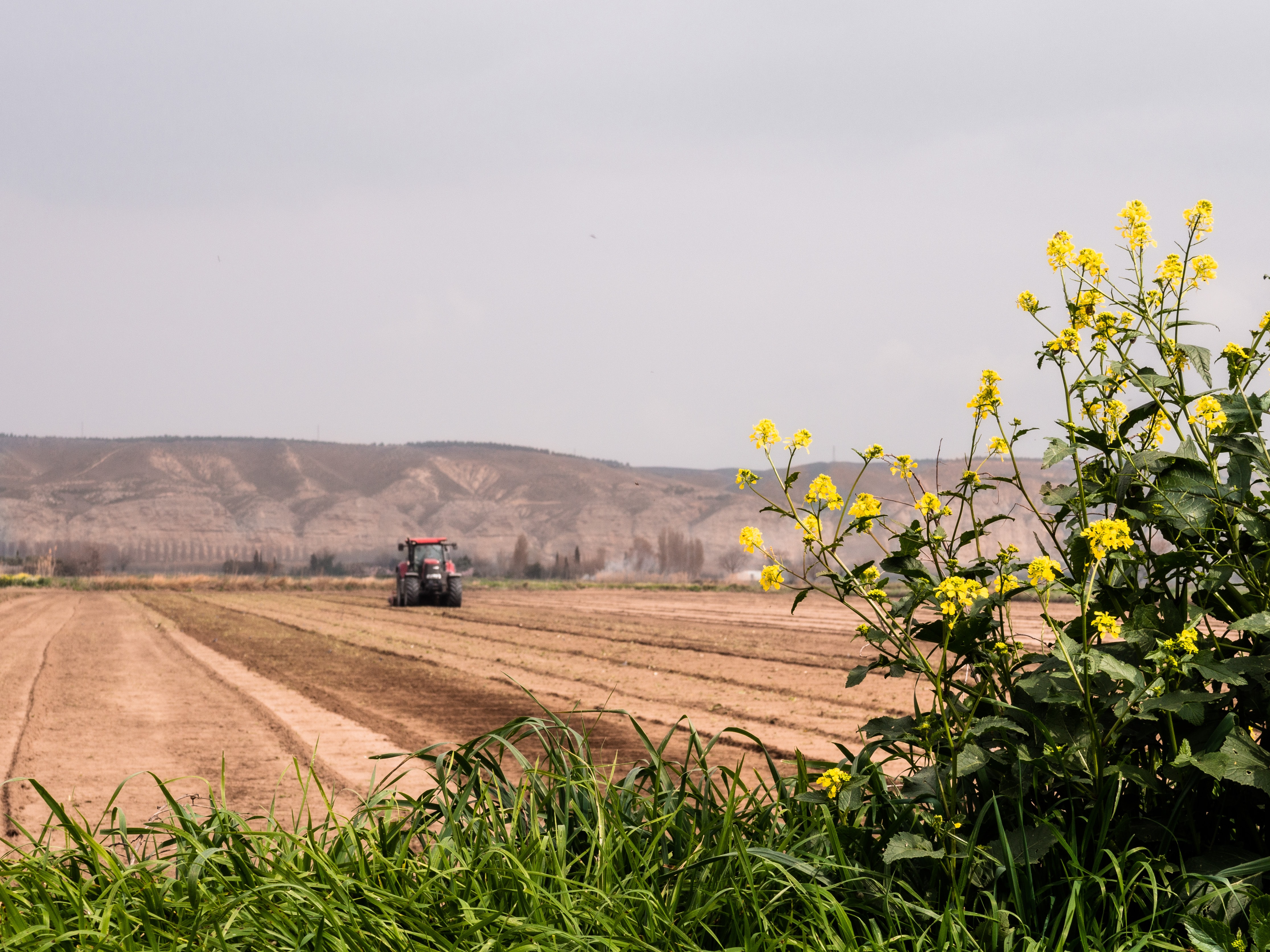
Learn How Stanbic Bank Uganda's One Farm Platform Promotes Business Linkages Within the Agribusiness Sector
A version of this article was originally posted on the Covid-19 Business Info Hub.
The COVID-19 Business Info Hub spoke to Christian Karamagi, Innovation Lead at Stanbic Bank Uganda Limited (SBUL), to understand how the One Farm Platform is creating business linkages within the agribusiness sector in Uganda. Read along to find out more.
What is the One Farm Platform?
The One Farm Platform, which is channel partner-led, is essentially a data-driven digital solution that creates business linkages within the agribusiness ecosystem, especially between smallholder and enterprise service providers like banks, insurance companies, exporters, and manufacturers. The platform has two main components. The first is supply certainty, the assurance that there is the right quality and quantity at the right time. The second is supply optimization, which is about empowering smallholders to produce at maximum capacity. The components are critical for SMEs to forecast the crop to buy from farmers, which helps builds trust between the farmers and SMEs.
Information is critical to creating meaningful linkages. The platform captures data on; location, acreage, and inputs to prepare data profiles of the farmers. This data is aggregated to estimate total production in each area and shared with off-takers or SMEs and other service providers. The profiling helps formalize the sector by providing farmers with a digital identity, giving them access to finance, insurance, agronomy and market linkage. It also helps the users grow their farming business, giving them credit and financial history, creating trust, increasing productivity, improving access to markets, and managing counterparty risk. SMEs use this information to make business decisions on where to source, when to supply the clients and the financing source. Other service providers, such as input suppliers, can project and plan for demand from the farmers.
The platform delivers its benefits to the users through the categories below:
- Lend: is credit, including farmer production loans and value chain financing.
- Protect: this is savings and insurance currently weather-based index.
- Trade: this is the linkage within the marketplace, allowing SMEs to tap into the out-grower database. It includes a digital marketplace.
- Grow: this focuses on offering agronomic services to farmers to enable them to grow their crops well.
- Share: this refers to reaching out to communities with available food to feed the hungry.
How does the bank facilitate the participation of different actors on the platform?
The platform is channel partner enabled. The bank has various approaches to engaging different actors on the platform, as elaborated below.
We are adopting multiple repayment options for the SMEs and farmers who have received lending using our hybrid models. It allows them to pay conveniently and access additional financing for their operations.
Delivery of timely financial services to suit the agricultural seasons when farmers need the finance through One Farm Lend. We know that farmers may miss out on the planting season in case of delays in the availability of financing to buy inputs. We manage the lending process to ensure that farmers apply for financing well in time to avoid any delays.
Establishing partnerships with NGOs/Donors, fintech & Agritechs, input suppliers, equipment leasing companies, and insurance providers has helped us increase the use of the platform. Working with the various partners brings onboard a broad range of services, experience and expertise that platform users can tap into.
We have embedded financial literacy and agricultural extension services for farmers and SMEs through One Farm Grow. These are influencing behavioural change, adopting new technologies, and best practices for sustainable solutions.
What is the future of the platform?
Our vision is to have the One Farm platform as the leading ecosystem driver in Uganda’s agriculture sector. Scaling up for the platform is also underway, which means capacity and capability initiatives. The first plan is to increase the number of data profiles to 20,000 profiles by June 2021. Second, we plan to incorporate more value chains from maize to coffee, beans, barley and oilseeds. We continue to engage different stakeholders and partners, especially SMEs, as buyers, SACCOs and fintech & Agri-techs, facilitating the development of value chains. Finally, we plan to empower young people to integrate such digital solutions into farm practices because we understand that the future of digitization in agriculture lies with the youth.
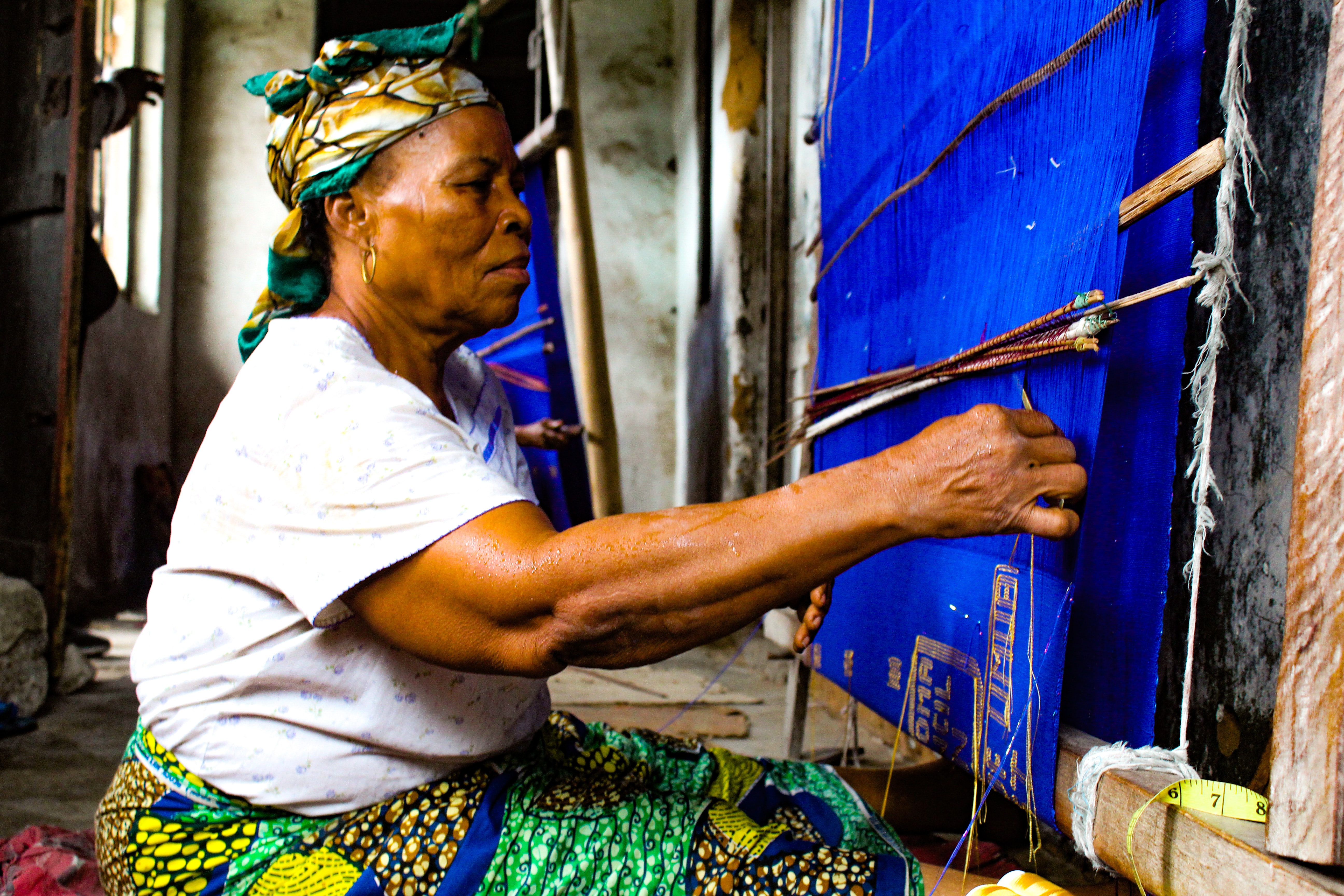
Building resilience for your small business through challenging times
A version of this article was originally posted on the SME Response Clinic
As Rwanda faces an uptick in COVID-19 infections and the government mandates new measures aimed at preventing a third wave, the SME Response Clinic wants to take a moment to recognize the challenges you face as a small business owner. Entrepreneurs like you have come so far in navigating the unchartered waters of a truly unprecedented health and economic crisis, but new developments indicate that there is further yet to go.
Micro-, small- and medium-enterprises (MSMEs) make up 97% of businesses in the country, contributing to 55% of total GDP and employing over 40% of Rwanda’s population (Microsave Report, 2017). The start and stop of operations for many if not most businesses over the past year and a half has had a tremendous impact on the economy but also importantly on the financial health of individual entrepreneurs like you and, importantly, your families. In addition to and often caused by the significant negative economic impact resulting from the pandemic, we are all struggling with challenges that affect our wellbeing. Increased levels of stress and anxiety make our day-to-day even tougher. Studies of entrepreneurs in Rwanda (as well as globally) undertaken in recent months indicate that business owners are facing high levels of anxiety caused by uncertainty about the future.
This uncertainty is not surprising as you work to navigate new and rapidly evolving regulations, make changes to your business operations to work to stay afloat, and manage relationships with your suppliers and customers remotely rather than face-to-face. You do all of this while working to ensure your families are healthy and safe.
Since our launch in May 2020, the SME Response Clinic has sought to provide you with updates and tips relevant to managing your business through the various challenges that have arisen and continue to arise as a result of the pandemic. Now, we want to offer you the opportunity to also focus on yourself so that you can in turn better manage your business, positively impacting your family, your employees, and your community at large.
Over the next few months, we will be providing simple tools to support you in building business resilience. These will include short videos, articles, and audio recordings that you can use to manage stress and maintain a positive outlook in the months ahead.
Stay in touch with us at smeresponseclinic@gmail.com and remember to stay safe!


Meet the Winners and Nominees of the SME Response Clinic Awards
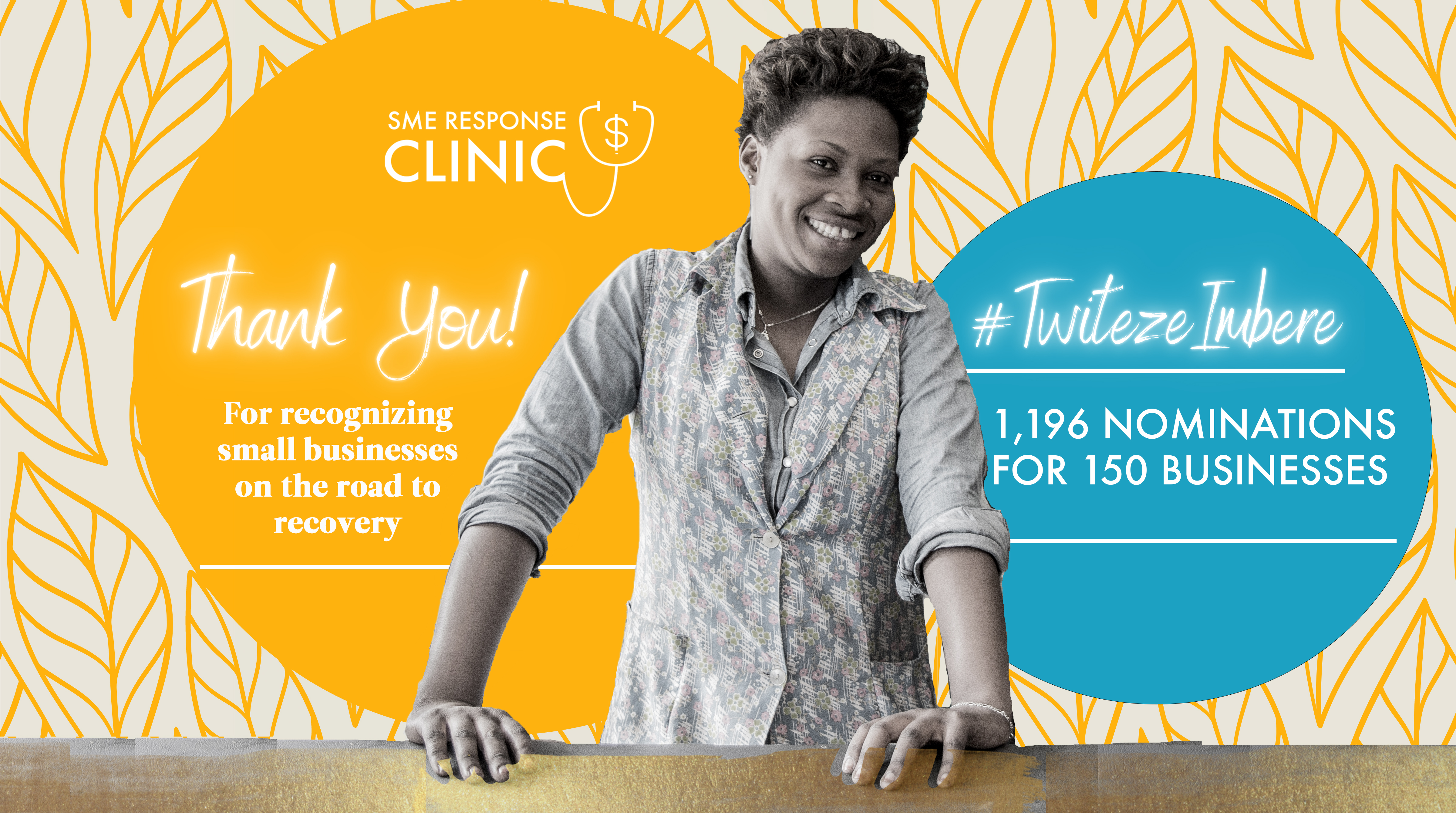
We are proud to feature the 30 businesses shortlisted for the SME Response Clinic Business Awards through the Twiteze Imbere campaign, which celebrated the role small businesses play in the country’s journey to recovery following COVID-19. We received around 1,200 nominations from across the country in three categories: established businesses, women-owned businesses, and startup/innovative businesses. Congratulations to the businesses that were shortlisted and we wish them the best in their growth!
CONGRATULATIONS TO THE WINNERS

Hadi Construction
A construction consulting firm based in Nyagatare District

Umucyo Company
A liquid soap manufacturer based in Kirehe District
Kurema Kureba Kwiga
A public-arts social enterprise located in Kigali
CONGRATULATIONS TO THE RUNNERS UP

Bhiku Bakery (Start-Up Business)

Johnson's Bakery (Start-up Business)

Blessed Garden (Established Business)

Kicirwanda (Women-Owned Business)

Crema (Established Business)


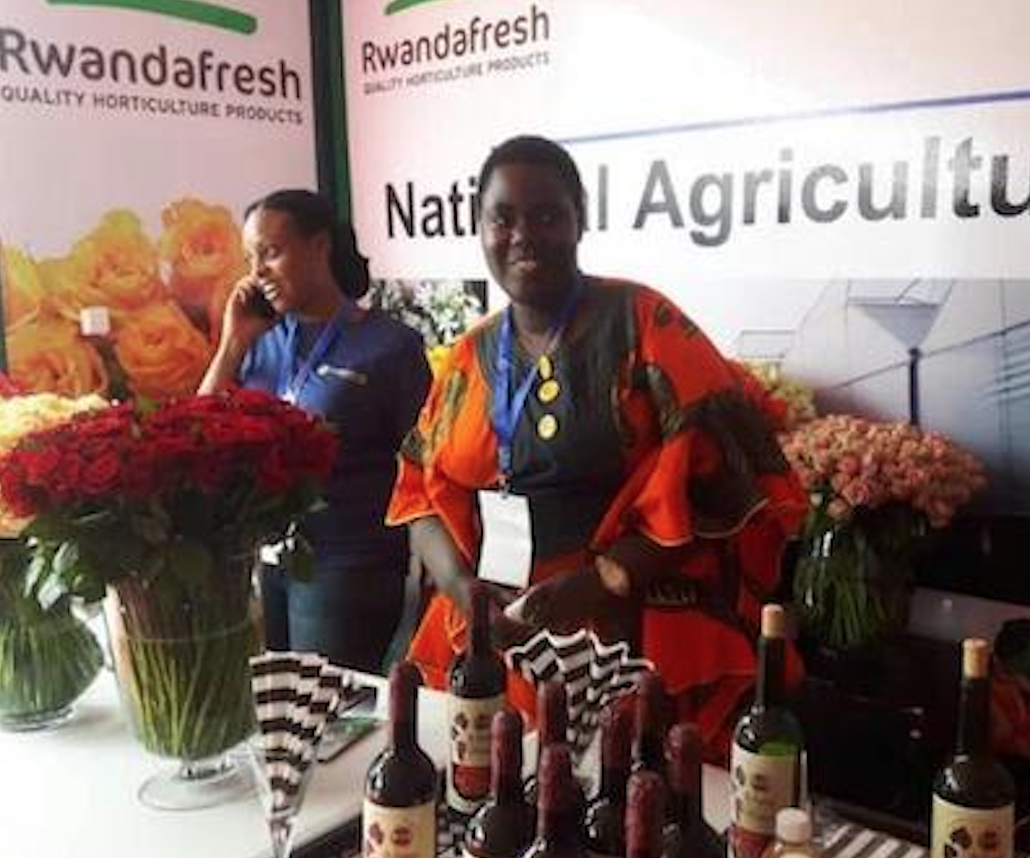


Announcing the Twiteze Imbere Campaign Award Celebration
Celebrating the Twiteze Imbere Campaign Award Winning Small Businesses
To recognise and celebrate the winners of the Twiteze Imbere campaign SME Response Clinic Business Awards, and reflect on the campaign, Access to Finance Rwanda (AFR) and ConsumerCentriX hosted a half-day celebration alongside key campaign partners on May 19th.
The Twiteze Imbere campaign was created to recognize the role small businesses are playing in Rwanda’s economic recovery from the COVID-19 pandemic. Through the campaign, the general public nominated their favorite small businesses, giving their nominees the chance to win an SME Response Clinic Business Award. The competition featured three categories: women-owned businesses, start-up or innovative businesses, and established businesses. Three winners and five runners-up stood out from almost 2,000 nominations.
During the celebration, Jean Bosco Iyacu, Country Director of AFR, congratulated the winners and thanked them for their role in Rwanda’s economic recovery. Mr. Iyacu also highlighted AFR’s ongoing efforts to support small businesses in Rwanda and appreciated the diversity within the businesses that were nominated.
Anna Gincherman, Managing Partner at ConsumerCentriX, encouraged the entrepreneurs to utilise the SME Response Clinic’s resources to grow their businesses.
“The SME Response Clinic will continue to support entrepreneurs by providing access to financial opportunities and information on business development services,” she said.
The three winners discussed how they plan to use the one million Rwandan francs prize to grow their businesses. They responded to some questions from partners and networked with business development experts including RICEM’s Dr. Olivier Mukulira and Malik Shaffy, Country Manager of the African Management Institute in Rwanda (AMI).
Jean Bosco Manirareba, winner in the established businesses category, said that the prize money will be invested to expand market reach beyond Kirehe District where Umucyo operates.
Hamdani Habumuremyi, winner of the start-up/innovative business category said: “The prize money will allow me to acquire new machinery and equipment to support my business activities.”
Judith Kaine, winner in the women-led businesses category said: “I plan to use the award to increase visibility and awareness of my business across Rwanda.”
In addition to the prize money, the three winners will each receive expert business advisory services provided by Rwanda Institute for Cooperatives, Entrepreneurship and Microfinance (RICEM), and AMI. These services will equip them with the skills and knowledge to further improve the success of their businesses.
Meet the winners here
Winners of SME Response Clinic Business Awards Announced

Press Release - For Immediate Release
Kigali, Rwanda - 30 April 2021
Access to Finance Rwanda, ConsumerCentriX, and Partners Announce Winners of SME Response Clinic Business Awards
- Three diverse Rwandan businesses win inaugural SME Response Clinic Business Awards with Rwf 1,000,000 prize
- Winners selected from 1,200 nominations across the country
- Five runners-up awarded 6-month business skills course
Access to Finance Rwanda and ConsumerCentriX today announced the winners of the inaugural SME Response Clinic Business Awards following the Twiteze Imbere campaign to recognise the role of small businesses in Rwanda’s road to recovery from the COVID-19 pandemic.
Through the campaign, the general public nominated their favourite small businesses, giving their nominees the chance to win an SME Response Clinic Business Award. The competition featured three categories: women-owned businesses, start-up or innovative businesses, and established businesses. Rwandans made online nominations via the SME Response Clinic website and over the phone.
The three winning small businesses and five runners-up were selected from among 30 shortlisted companies after careful and thorough deliberation. Access to Finance Rwanda and ConsumerCentriX are pleased to announce that the winners and runners-up are:
- Women-owned business category:
-
- Winner: Kurema Kureba Kwiga, a public-arts social enterprise located in Kigali
- Runner-up: Kicirwanda, an art and craft store based in Kigali
- Startup/Innovative business category:
-
- Winner: HADI Constructions, a construction consulting firm based in Nyagatare District
- Runners-up: Bhiku Bakery from Rwamagana District and Johnson’s Bakery from Kicukiro District
- Established business category:
-
- Winner: Umucyo Company, a liquid soap manufacturer based in Kirehe District
- Runners-up: Blessed Garden, a female-owned guest house based in Kayonza District, and Crema, a coffee shop located in Musanze District
The awards come as a result of the SME Response Clinic campaign ‘Twiteze Imbere’ (Let’s Move Forward Together), which celebrated the resilience of small businesses and recognised their contribution to Rwanda’s economic recovery. The SME Response Clinic is a platform developed by Access to Finance Rwanda and ConsumerCentriX in collaboration with the Private Sector Federation, the Association of Microfinance Institutions in Rwanda, African Management Institute, New Faces New Voices Rwanda, and Rwanda Bankers’ Association.
“Congratulations to the winners and runners-up of the SME Response Clinic Business Awards. In just a few weeks, we received 1,200 nominations from across the country. We were pleased to see great diversity among the nominated small businesses, enthusiasm from their customers, and the impact they are having in their communities on our journey of COVID-19 recovery,” said Jean Bosco Iyacu, Country Director, Access to Finance Rwanda.
“We are grateful to everyone who took part in the Twiteze Imbere campaign, partner institutions as well as media partners who helped us spread the word. It’s rewarding to see the SME Response Clinic reaching small businesses in every corner of this country and we will continue to support them in these difficult times and beyond,” he added.
“I am honoured and excited to be one of the winners of the SME Response Clinic Business Awards. This award recognises the important role of the creative industry in the economy and the prize money will support my business to grow. Thank you to the SME Response Clinic and its partners for organising this campaign and for looking out for small businesses,” said Judith Kaine, Director of Kurema Kureba Kwiga, one of the winning businesses.
The winner in each category receives a cash prize of Rwf 1,000,000 to invest in their business as well as expert advisory services. Runners-up will be sponsored to participate in the African Management Institute‘s Survive to Thrive programme where they will learn how to navigate business challenges and network with other entrepreneurs in Rwanda and across Africa.
About the SME Response Clinic
In May 2020, Access to Finance Rwanda (AFR) partnered with ConsumerCentriX to launch the SME Response Clinic – a platform that supports entrepreneurs in Rwanda struggling in the face of the COVID-19 pandemic. The SME Response Clinic provides access to training, industry insights, and financial management advice to entrepreneurs in Rwanda struggling to adjust to the economic realities of COVID-19. Access the platform at smeresponse.clinic
About Access to Finance Rwanda
AFR began its operations in 2010 with the core objective of stimulating the development of the financial sector in Rwanda. AFR’s intention is to remove the systemic barriers that hinder access to financial services by putting low-income people particularly the rural poor and women at the centre of its interventions. AFR supports the development and provision of financial services including savings, credit, insurance, payments, and remittances. Learn more at afr.rw.
About ConsumerCentriX
ConsumerCentriX is a strategy consulting firm that works with financial service providers and policymakers on translating consumer insights into market strategies and policies to reach the un/underserved. Our mission is to develop scalable solutions that are based on deep insights into the lives, needs, and constraints of un/underserved people in emerging markets to improve their livelihoods and create opportunities for economic growth.
Media Contact
For any enquiries, write to Nadege Nzeyimana, AFR Communications Consultant, at nadege@afr.rw.

RADIO SHOW | The role of SMEs in the road to recovery
The role of SMEs in the road to recovery
On 18th March 2021, the SME Response Clinic launched the Twiteze Imbere campaign to recognize and celebrate the role SMEs play in Rwanda’s road to recovery from the COVID-19 pandemic. The campaign was supported by the partners of the SME Response Clinic and business development service providers, including the Rwanda Institute of Cooperatives, Entrepreneurship, and Microfinance (RICEM).
During the campaign, a radio show was conducted featuring Esperance Niyitegeka, a lead trainer at RICEM and Angelique Uwimana, an entrepreneur involved in the tailoring business that had gone through RICEM’s training program. Esperance gave a detailed overview of the campaign and highlighted the role SMEs play in Rwanda‘s recovery from COVID-19, sighting their contribution to taxes. Angelique also encouraged women entrepreneurs to participate in the campaign to stand a chance to win and increase their capital, which would help them develop their businesses.