


Stanbic Business Incubator Chief Executive Gives an Overview of the Opportunities for SMEs in the Oil and Gas Value Chain in Uganda
Stanbic Business Incubator Chief Executive gives an overview of the opportunities for SMEs in the Oil and Gas Value Chain in Uganda
Ernest Wasake: Good morning, Comrade Tony Otoa; I hope this finds you well. How have you been holding up during this period of the pandemic?
Tony Otoa: Thank you very much for hosting me. I have been great.
I have had a great time of learning, growing and understanding how to do things differently—and now we are getting used to doing different things to make things happen.
Ernest Wasake: Could you give us an overview of the Oil and Gas Value Chain in Uganda?
Tony Otoa: The Oil and Gas Value Chain is a very vast and intense one. It is a great value chain with many opportunities, especially in the local context.
The chain has upstream, midstream and downstream project segments. The upstream project is about the drilling, construction and civil works. In the midstream project, you have the oil pipeline of 1400-kilometre from Hoima in Uganda to the Tanga Port in Tanzania. The downstream, which is already evident in the country, is available for many local entities to deliver the final oil products to the consumers. There is less local participation in the upstream and the midstream projects because they are technical and capital intensive.
The Oil and Gas Value Chain in Uganda is an exciting opportunity for many local people. Opportunities include a wide range of jobs created plus the provision of services and goods in the downstream operations. With close to 15,000 workers to be employed directly, there will be a big need for food, accommodation, and health services, among others. When we talk about food, agriculture becomes a critical focus area, presenting many opportunities to benefit from.
Ernest Wasake: Great, please tell us about the Stanbic Business Incubator Limited’s role in the Oil and Gas Value Chain?
Tony Otoa: The Incubator’s role is very interesting and has been evident for quite some time.
We do not see ourselves as a stand-alone financial entity but as an entity supporting Oil and Gas Value Chain players. The Stanbic Business Incubator has concentrated on training and making Ugandan businesses astute over the last three years. When I speak about astute, I mean ensuring the visibility of demand, letting them know what opportunities are coming their way, and training them to become efficient, sustainable, and thrive.
There is no doubt that Ugandan businesses will seize the Oil and Gas sector opportunities with the Incubator’s support. For example, some companies that have come out of the incubator program are now huge players in the Oil and Gas space. One of the companies is Inspecta Africa, a company providing services to the Chinese National Offshore Oil Company (CNOOC) and has gone on to forge international partnerships with businesses across the region.
We also want to create stories that speak to employability for young people and steer financial rotation in the sector. We hope that as we support local businesses to become better, we can see many companies improving and actively participating in the industry. In the early times, not many Ugandan companies actively participated during the exploration and the appraisal phase. Many of them were sub, sub, sub, subcontractors. We want our companies to be contractors or subcontractors who are making real revenue and not breadcrumbs.
Ernest Wasake: Thank you for the excellent overview. What opportunities exist for SMEs in the Value Chain?
Tony Otoa: Enormous opportunities exist for SMEs in the Value Chain.
As you all know, the Government of Uganda has been very deliberate in ring-fencing some areas for local businesses. So Ugandan SMEs have priority when it comes to these opportunities. Some of these include civil work construction, transport logistics, catering, hospitality, security, manpower, etc. SMEs simply need to understand and prepare to apply for the opportunities.
As a business, you might have been in operation for a long time, but for as long as you have not gone the extra mile to make yourself known and active in the Oil and Gas space, it will be hard to participate. First, the Oil and Gas sector is capital intensive. Businesses need time to develop and become attractive to financing. That financing is now readily available.
Second, seek to understand the sector more by engaging with the different sector actors. We now see a trend of the Oil and Gas sector now coming back into the arena. Businesses need to seek partners to make this a reality through joint venture partnerships with local and international companies. If SMEs can do that, then we are doing well as a country because the sector proves that growth is possible.
Ernest Wasake: What policies exist to encourage SME participation in the Value Chain?
Tony Otoa: Uganda has done well in terms of policy and regulations for the Oil and Gas sector.
When we compare with countries like Nigeria, which has been producing oil for over 60 years, their local content regulations and laws came into play around 2010/2011. For Uganda, even before the Oil and Gas activities were fully operational, we created those laws, regulations and policies, which is a good step. We have policies that support the participation of local businesses in the Oil and Gas space under the local content policy. Some sector activities are ring-fenced for Ugandan companies, which is a great starting point.
These laws and policies are great, but if we do not have Ugandan SMEs who can manage to participate in that space, the law also allows foreign entities to take over the space. So it is upon us to take advantage of the policies and maximize the available opportunities.
Ernest Wasake: What would it take to increase SMEs’ level of participation in the Oil and Gas Value Chain?
Tony Otoa: We can do a lot to increase SMEs’ participation in the Value Chain.
I will share a story to answer the question. In 2018, I knew a company while I was at Total E&P as National Content Manager. This company wanted to do what the big players like Schlumberger, Halliburton, and Baker Hughes were doing. The company kept on bidding for those opportunities, but unfortunately, they kept falling off the grid. Why? They did not have what it took to participate in the sector. They had no policies in place. When we brought them on board at the Incubator, we trained them on a three-month program and coached them for close to nine months. During the same time, we supported them to get ISO certification and other certifications. As I speak today, the same company supports CNOOC in various operations and project work for an international logistics company. That shows you that it is possible in a short period for a small company to become a great participant in the Oil and Gas Value Chain, employ many people and create value in the country. This story speaks to the many businesses that still have the dream and hope of participating in the Oil and Gas sector.
Lastly now that the Final Investment Decision (FID) is soon, it is a signal to an excellent start for Ugandans participating in the Oil and Gas sector. But like the gun at a race, if you are not ready when the sound goes off, you are not prepared, and whoever is prepared will take on this whole race. Therefor SMEs need preparation to benefit from this value chain. As the Stanbic Business Incubator together with our partners we support SME preparation through training, information sharing and creating visibility over demand. We are positive that with these interventions we shall have more SMEs participating in the Oil and Gas value chain.

Learn How Stanbic Bank Uganda's One Farm Platform Promotes Business Linkages Within the Agribusiness Sector
A version of this article was originally posted on the Covid-19 Business Info Hub.
The COVID-19 Business Info Hub spoke to Christian Karamagi, Innovation Lead at Stanbic Bank Uganda Limited (SBUL), to understand how the One Farm Platform is creating business linkages within the agribusiness sector in Uganda. Read along to find out more.
What is the One Farm Platform?
The One Farm Platform, which is channel partner-led, is essentially a data-driven digital solution that creates business linkages within the agribusiness ecosystem, especially between smallholder and enterprise service providers like banks, insurance companies, exporters, and manufacturers. The platform has two main components. The first is supply certainty, the assurance that there is the right quality and quantity at the right time. The second is supply optimization, which is about empowering smallholders to produce at maximum capacity. The components are critical for SMEs to forecast the crop to buy from farmers, which helps builds trust between the farmers and SMEs.
Information is critical to creating meaningful linkages. The platform captures data on; location, acreage, and inputs to prepare data profiles of the farmers. This data is aggregated to estimate total production in each area and shared with off-takers or SMEs and other service providers. The profiling helps formalize the sector by providing farmers with a digital identity, giving them access to finance, insurance, agronomy and market linkage. It also helps the users grow their farming business, giving them credit and financial history, creating trust, increasing productivity, improving access to markets, and managing counterparty risk. SMEs use this information to make business decisions on where to source, when to supply the clients and the financing source. Other service providers, such as input suppliers, can project and plan for demand from the farmers.
The platform delivers its benefits to the users through the categories below:
- Lend: is credit, including farmer production loans and value chain financing.
- Protect: this is savings and insurance currently weather-based index.
- Trade: this is the linkage within the marketplace, allowing SMEs to tap into the out-grower database. It includes a digital marketplace.
- Grow: this focuses on offering agronomic services to farmers to enable them to grow their crops well.
- Share: this refers to reaching out to communities with available food to feed the hungry.
How does the bank facilitate the participation of different actors on the platform?
The platform is channel partner enabled. The bank has various approaches to engaging different actors on the platform, as elaborated below.
We are adopting multiple repayment options for the SMEs and farmers who have received lending using our hybrid models. It allows them to pay conveniently and access additional financing for their operations.
Delivery of timely financial services to suit the agricultural seasons when farmers need the finance through One Farm Lend. We know that farmers may miss out on the planting season in case of delays in the availability of financing to buy inputs. We manage the lending process to ensure that farmers apply for financing well in time to avoid any delays.
Establishing partnerships with NGOs/Donors, fintech & Agritechs, input suppliers, equipment leasing companies, and insurance providers has helped us increase the use of the platform. Working with the various partners brings onboard a broad range of services, experience and expertise that platform users can tap into.
We have embedded financial literacy and agricultural extension services for farmers and SMEs through One Farm Grow. These are influencing behavioural change, adopting new technologies, and best practices for sustainable solutions.
What is the future of the platform?
Our vision is to have the One Farm platform as the leading ecosystem driver in Uganda’s agriculture sector. Scaling up for the platform is also underway, which means capacity and capability initiatives. The first plan is to increase the number of data profiles to 20,000 profiles by June 2021. Second, we plan to incorporate more value chains from maize to coffee, beans, barley and oilseeds. We continue to engage different stakeholders and partners, especially SMEs, as buyers, SACCOs and fintech & Agri-techs, facilitating the development of value chains. Finally, we plan to empower young people to integrate such digital solutions into farm practices because we understand that the future of digitization in agriculture lies with the youth.
What we learned this month about how to promote recovery in Uganda’s agribusiness sector
ConsumerCentriX works closely with Stanbic Bank Uganda on both the COVID-19 Business Info Hub and the Stanbic Business Incubator. This article originally appeared on the COVID-19 Business Info Hub.
In July, the COVID-19 Business Info Hub focused its efforts on understanding recovery mechanisms and opportunities for the agribusiness sector. We engaged with many stakeholders, including SMEs, financing institutions, and organizations offering support to the industry. Here is what we learnt!
The agribusiness sector has faced a number of challenges.
Just as SMEs were recovering from the first wave of the COVID-19 pandemic, the second wave hit the country in May 2021. This led to another lockdown during June and July, which has brought more difficulties for SMEs operating in this environment. Some of the challenges faced by the businesses include:
- Supply chain disruptions especially delayed transportation both by road and air cargo for agricultural inputs and products because of movement restrictions.
- Working capital constraints because of reduced sales and delayed payments, which affect operational efficiency.
- Reduced demand and price for agricultural products because buyers cannot easily access markets due to the lockdown.
- Increased cost in retaining essential human resources as businesses work to keep staff on the payroll despite reduced operations to avoid losing critical talent to competition.
As a result of these challenges, SMEs have used up their cash reserves and thus need financial and non-financial support to recover.
Several organizations are providing support to help agribusinesses recover.
Different sector players that we spoke to shared interventions they have in place to support businesses to stay afloat during the pandemic. Some are included here below:
aXiom Zorn creates digital profiles for farmers and agribusinesses to enable them to access financial services. The digital profiles capture data that builds a credit score for the farmer or the business. A credit score of 60% allows the farmer or agribusiness to access financing from a bank.
Stanbic Bank Uganda provides affordable loans to Savings Credit and Cooperative Societies (SACCOs) and farmer groups. SACCOs and farmer groups receiving these funds can then offer affordable loans to their members. Learn more about other interventions of the bank to reduce the financing gap in the financial sector.
Agricultural Business Initiative (aBi) promotes access to agricultural inputs by availing subsidized inputs to farmers to plant within the season. aBi Finance has also tweaked its credit guarantee product for partner financial institutions to help them to lend to customers with better terms.
Palladium is implementing a program to link farmers to service providers and markets via commercial agents. Through the model, over 80 businesses have benefitted to date with increased income.
Agribusinesses can implement a three-step plan to speed up the road to recovery.
SMEs need to seek information to understand the shifts in the consumption, production and trade within the sector to plan for recovery and build resilience. Here is a three-step recovery pathway that SMEs can adopt;
- Reflect: Pause and think about the impact COVID-19 has had on the business. Analyze what has worked during the period, lessons learnt and what needs to change. Then, adopt a holistic work approach to consolidate the best practices and manage change while maintaining a safe work environment.
- Restart: Identify steps required to “restart” – maybe a new business process, a new product, or service line to fit in the new normal. Mobilize the necessary resources and take action.
- Revitalize: Revisit the business environment to seize available opportunities along the value chain. SMEs need to optimize opportunities within the supply chain. They can improve volume flexibility, enhance delivery performance and identify areas where technology can help streamline processes to minimize costs.
For faster sector recovery, stakeholders also need to actively engage with the businesses to help them innovate and expand into new markets more than ever before.
SMEs can access information on:
Agribusiness financing from Stanbic Bank Uganda
Call: 0800250250
WhatsApp: 0770588623
Visit: www.stanbic.co.ug
Innovative digital solutions from aXiom Zorn
Tel: +256 200 951 713/+256 200 903 099
Email: info@axiomzorn.com
Visit: https://axiomzorn.com/
Commercial Agent Model from Palladium
Tel: +256 774 040751
Email: jackline.kitongo@thepalladiumgroup.com
Building resilience for your small business through challenging times
A version of this article was originally posted on the SME Response Clinic
As Rwanda faces an uptick in COVID-19 infections and the government mandates new measures aimed at preventing a third wave, the SME Response Clinic wants to take a moment to recognize the challenges you face as a small business owner. Entrepreneurs like you have come so far in navigating the unchartered waters of a truly unprecedented health and economic crisis, but new developments indicate that there is further yet to go.
Micro-, small- and medium-enterprises (MSMEs) make up 97% of businesses in the country, contributing to 55% of total GDP and employing over 40% of Rwanda’s population (Microsave Report, 2017). The start and stop of operations for many if not most businesses over the past year and a half has had a tremendous impact on the economy but also importantly on the financial health of individual entrepreneurs like you and, importantly, your families. In addition to and often caused by the significant negative economic impact resulting from the pandemic, we are all struggling with challenges that affect our wellbeing. Increased levels of stress and anxiety make our day-to-day even tougher. Studies of entrepreneurs in Rwanda (as well as globally) undertaken in recent months indicate that business owners are facing high levels of anxiety caused by uncertainty about the future.
This uncertainty is not surprising as you work to navigate new and rapidly evolving regulations, make changes to your business operations to work to stay afloat, and manage relationships with your suppliers and customers remotely rather than face-to-face. You do all of this while working to ensure your families are healthy and safe.
Since our launch in May 2020, the SME Response Clinic has sought to provide you with updates and tips relevant to managing your business through the various challenges that have arisen and continue to arise as a result of the pandemic. Now, we want to offer you the opportunity to also focus on yourself so that you can in turn better manage your business, positively impacting your family, your employees, and your community at large.
Over the next few months, we will be providing simple tools to support you in building business resilience. These will include short videos, articles, and audio recordings that you can use to manage stress and maintain a positive outlook in the months ahead.
Stay in touch with us at smeresponseclinic@gmail.com and remember to stay safe!
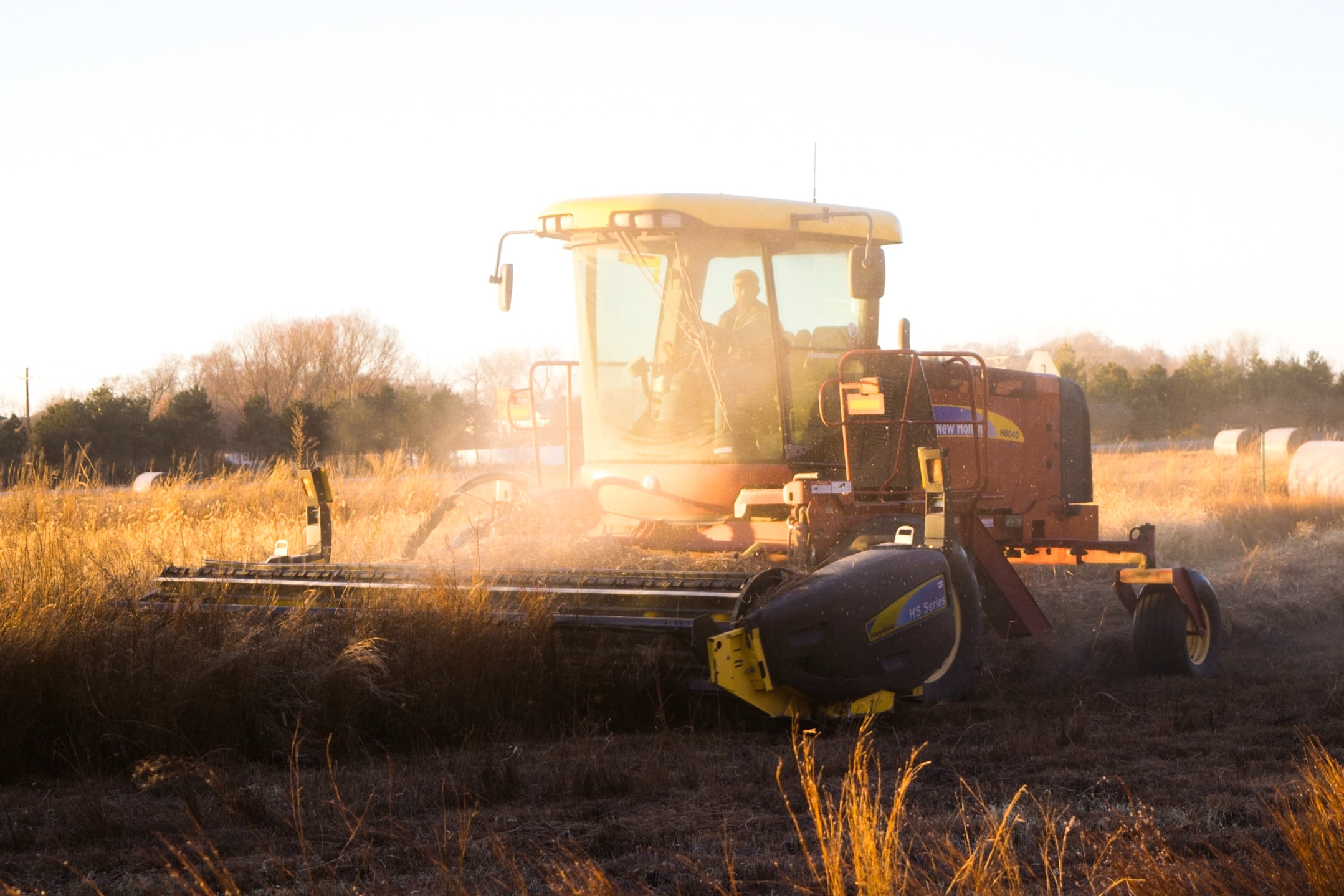
Stanbic Bank Uganda is helping to reduce the financing gap in the agribusiness sector.
ConsumerCentriX works closely with Stanbic Bank Uganda on both the COVID-19 Business Info Hub and the Stanbic Business Incubator. This article originally appeared on the COVID-19 Business Info Hub.
Melisa Nyakwera, Head Agribusiness at Stanbic Bank Uganda, spoke with the COVID-19 Business Info Hub on the banks’ initiatives to reduce the financing gaps for smallholder farmers and agribusinesses.
Stanbic Bank Uganda’s initiatives to reduce the financing gap in the agribusiness sector
Stanbic Bank Uganda has the following initiatives to facilitate access to finance for the sector:
- The bank uses the One Farm platform to profile farmers and agribusinesses. We understand their needs and provide solutions such as input financing, agronomy training, insurance, and information on markets.
- Stanbic Bank Uganda is increasing access to affordable finance to the farmers through their SACCOs and farmer groups by lending to the SACCOs and farmer groups at a subsidized interest rate.
- The bank provides several financial products to the sector, including short-term and long-term loans, invoice discounting, stock financing, and asset financing.
- Using the Flexi pay wallet, clients receive and pay for services or commodities from one wallet to another at no charge.
Keep in mind that agribusinesses need to have in place good business records, plans and a clear strategy to access financing during these challenging times.
For more information call: 0800250250 or WhatsApp: 0770588623
What is the role of Stanbic Bank Uganda in the agribusiness sector?
Stanbic Bank Uganda’s agribusiness segment works with all customers within the agriculture space. We look at the value chain from input suppliers, smallholder farmers, aggregators, and processors. We also engage with non-government organizations (NGOs), development institutions and ministry agencies working together to make a difference. Our role is running through that whole value chain to understand the needs of different actors and develop solutions to meet the requirements. We ensure that the solutions help them achieve their needs, and in case they require long term support, we work and walk with them along that journey.
How is the bank facilitating access to finance for the agribusiness sector?
The bank has several initiatives in place to facilitate access to finance for the agribusiness sector.
First, we’ve got a new initiative called the One Farm platform. Here, we partner with Agri-techs, who collect data from farmers and agribusinesses, analyze it to understand their requirements and provide solutions through the platform. Some of the services offered include input financing, agronomy training, insurance and information on markets. This initiative has helped to improve financial inclusion for several actors in the agribusiness value chain.
The bank has come together with several funding partners to provide affordable loans to Savings Credit and Cooperative Societies (SACCOs) and farmer groups. SACCOs receiving these funds can offer affordable loans to their members as well. We are also helping the SACCOs and farmer groups digitize records for a faster lending process. Funding partners include Agricultural Business Initiative (aBi), International Fund for Agricultural Development (IFAD) and United Nations Conference on Trade and Development (UNCTAD).
The third initiative is through the bank’s conventional offerings, which cut across the different value chain players from actual farmers, input providers to processors. Essentially, we have short-term and long-term loans, invoice discounting, stock financing, and versatile asset financing. We also have the Flexi pay wallet that enables users to receive and pay for services and commodities from one electronic wallet to another at no charge.
What can SMEs do to overcome disruptions resulting from the pandemic effects?
We all understand the impact of the pandemic, and we need to protect ourselves and keep safe. It means we have to go into the digital marketplace. Embracing digital tools will keep you safe and enable you to reach more customers than opting for face to face interactions.
Suppose businesses want to last and withstand the pandemic effects. In this case, they need good business plans, financial records and a strategy to follow through during this period. It will ease access to financing that they can use for operations to adapt to the current and future changes.
Financial institutions also need to play more in this space by supporting SMEs prepare the necessary records and plans to access the financing required.
For more information and access to Stanbic Bank’s Agri-banking Team;
Call: 0800250250
WhatsApp: 0770588623
Website: www.stanbic.co.ug
Visit any of our over 60 branches countrywide!

Building resilience for SMEs in the Agribusiness sector post COVID-19
ConsumerCentriX works closely with Stanbic Bank Uganda on both the COVID-19 Business Info Hub and the Stanbic Business Incubator. This article originally appeared on the COVID-19 Business Info Hub.
This month, the COVID-19 Business Info Hub seeks to understand how the Small and Medium Enterprises (SMEs) in the Agribusiness sector can remain resilient after the pandemic. We will feature insights from different players in the Agribusiness Ecosystem. We will explore the pandemic’s disruptions on the Agribusiness supply chain, learn about the sector’s challenges and opportunities, and provide insights on what to do to stay afloat. We will provide you and your business information on the available interventions and support that you can take advantage of to grow your business.
Before the pandemic, SMEs in the Agribusiness sector were vibrant and engaged in significant value addition with the food system. They created employment along the value chains in agricultural trade, farm services and inputs, agro-processing, urban retailing and food services. However, when the pandemic hit, the sector suffered adverse effects, especially disruption of the supply chain and reduction in market demand. Although SMEs tried to respond by adopting digital solutions to access information on production, training services, and access to finance and markets, business still remains low. Nevertheless, as the economy is slowly opening up after months of lockdown and restricted movement, SMEs are slowly seeking to build back businesses.
Stakeholders, therefore, need to design interventions that support SMEs to continue playing their critical role within the sector. Interventions should help SMEs cope with the economic and financial implications of the pandemic. For example, help them strengthen their digital capacity through training and provide them with relevant information for business continuity. Successful implementation of these interventions will enable SMEs to become innovative, build resilience, and manage the current pandemic effects. They will also withstand continued market uncertainty and position for more robust post-COVID trade.
Are you interested in learning how some of the Agribusinesses managed to survive the pandemic? Do you want to know more about the policies and initiatives to help you stay resilient and grow your business? Then, keep following The Covid-19 Business Information Hub this month for more insights and relevant resources in the Agribusiness sector!

Meet the Winners and Nominees of the SME Response Clinic Awards
We are proud to feature the 30 businesses shortlisted for the SME Response Clinic Business Awards through the Twiteze Imbere campaign, which celebrated the role small businesses play in the country’s journey to recovery following COVID-19. We received around 1,200 nominations from across the country in three categories: established businesses, women-owned businesses, and startup/innovative businesses. Congratulations to the businesses that were shortlisted and we wish them the best in their growth!
CONGRATULATIONS TO THE WINNERS

Hadi Construction
A construction consulting firm based in Nyagatare District

Umucyo Company
A liquid soap manufacturer based in Kirehe District
Kurema Kureba Kwiga
A public-arts social enterprise located in Kigali
CONGRATULATIONS TO THE RUNNERS UP

Bhiku Bakery (Start-Up Business)

Johnson's Bakery (Start-up Business)

Blessed Garden (Established Business)

Kicirwanda (Women-Owned Business)

Crema (Established Business)


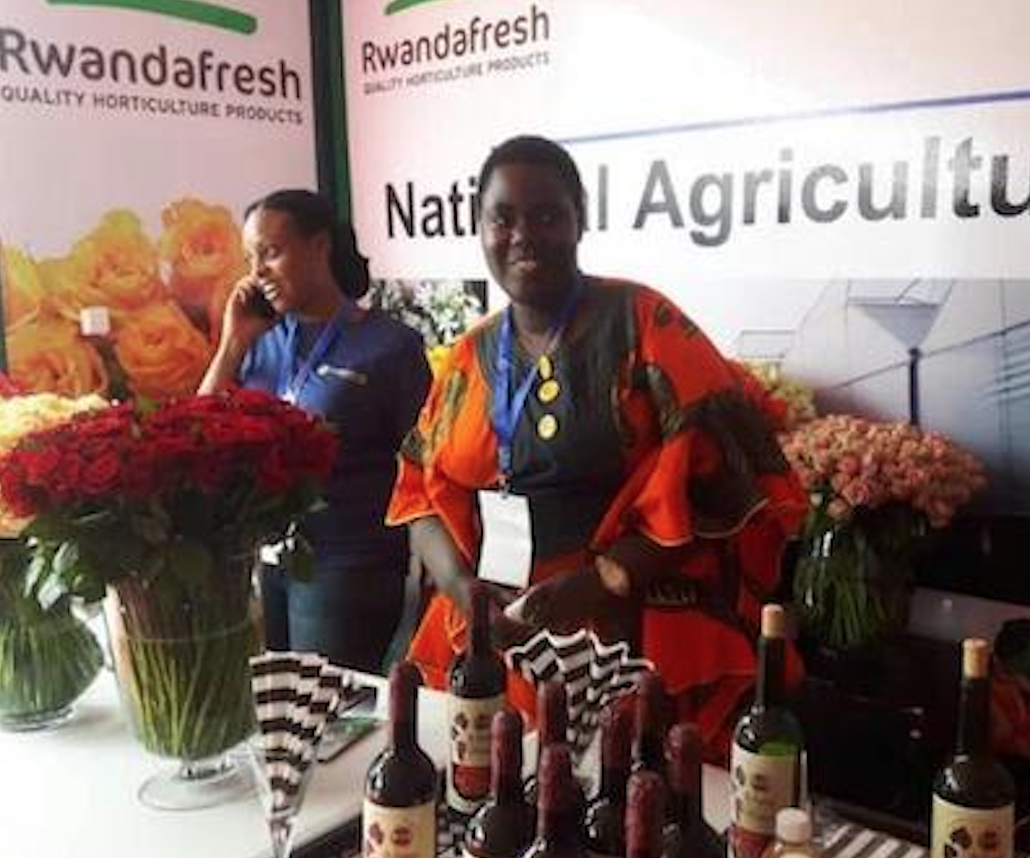


Announcing the Twiteze Imbere Campaign Award Celebration
Celebrating the Twiteze Imbere Campaign Award Winning Small Businesses
To recognise and celebrate the winners of the Twiteze Imbere campaign SME Response Clinic Business Awards, and reflect on the campaign, Access to Finance Rwanda (AFR) and ConsumerCentriX hosted a half-day celebration alongside key campaign partners on May 19th.
The Twiteze Imbere campaign was created to recognize the role small businesses are playing in Rwanda’s economic recovery from the COVID-19 pandemic. Through the campaign, the general public nominated their favorite small businesses, giving their nominees the chance to win an SME Response Clinic Business Award. The competition featured three categories: women-owned businesses, start-up or innovative businesses, and established businesses. Three winners and five runners-up stood out from almost 2,000 nominations.
During the celebration, Jean Bosco Iyacu, Country Director of AFR, congratulated the winners and thanked them for their role in Rwanda’s economic recovery. Mr. Iyacu also highlighted AFR’s ongoing efforts to support small businesses in Rwanda and appreciated the diversity within the businesses that were nominated.
Anna Gincherman, Managing Partner at ConsumerCentriX, encouraged the entrepreneurs to utilise the SME Response Clinic’s resources to grow their businesses.
“The SME Response Clinic will continue to support entrepreneurs by providing access to financial opportunities and information on business development services,” she said.
The three winners discussed how they plan to use the one million Rwandan francs prize to grow their businesses. They responded to some questions from partners and networked with business development experts including RICEM’s Dr. Olivier Mukulira and Malik Shaffy, Country Manager of the African Management Institute in Rwanda (AMI).
Jean Bosco Manirareba, winner in the established businesses category, said that the prize money will be invested to expand market reach beyond Kirehe District where Umucyo operates.
Hamdani Habumuremyi, winner of the start-up/innovative business category said: “The prize money will allow me to acquire new machinery and equipment to support my business activities.”
Judith Kaine, winner in the women-led businesses category said: “I plan to use the award to increase visibility and awareness of my business across Rwanda.”
In addition to the prize money, the three winners will each receive expert business advisory services provided by Rwanda Institute for Cooperatives, Entrepreneurship and Microfinance (RICEM), and AMI. These services will equip them with the skills and knowledge to further improve the success of their businesses.
Meet the winners here

RADIO SHOW | The role of SMEs in the road to recovery
The role of SMEs in the road to recovery
On 18th March 2021, the SME Response Clinic launched the Twiteze Imbere campaign to recognize and celebrate the role SMEs play in Rwanda’s road to recovery from the COVID-19 pandemic. The campaign was supported by the partners of the SME Response Clinic and business development service providers, including the Rwanda Institute of Cooperatives, Entrepreneurship, and Microfinance (RICEM).
During the campaign, a radio show was conducted featuring Esperance Niyitegeka, a lead trainer at RICEM and Angelique Uwimana, an entrepreneur involved in the tailoring business that had gone through RICEM’s training program. Esperance gave a detailed overview of the campaign and highlighted the role SMEs play in Rwanda‘s recovery from COVID-19, sighting their contribution to taxes. Angelique also encouraged women entrepreneurs to participate in the campaign to stand a chance to win and increase their capital, which would help them develop their businesses.

RADIO SHOW | Get to know the Twiteze Imbere Campaign and SME Response Clinic
Get to know the Twiteze Imbere Campaign and SME Response Clinic
On 26th March 2021, the SME Response Clinic launched the Twiteze Imbere campaign to recognize and celebrate the role SMEs play in Rwanda‘s road to recovery from the COVID-19 pandemic. The campaign was supported by the partners of the SME Response Clinic, including the African Management Institute (AMI), which will be providing sponsorship to select runners-up of the campaign’s Business Awards competition to participate in its Survive to Thrive programme. The programme equips business owners with the skills, tools, and strategies to navigate challenges and thrive in difficult times.
AMI’s country director, Malik Shaffy Lizinde, was featured on Radio Rwanda for a 30-minute discussion on the Amahumbezi program. Malik gave a detailed overview of the campaign and highlighted how SMEs could engage with the campaign to stand a chance to win 1 million Rwandan Francs and expert advisory services.