


AFI Special Report • Blog: In times of crisis, Financial Inclusion with a focus on Women is not a distraction but actually a force- multiplier
Author:
Benedikt Wahler, Partner
Date:
June 16th, 2023
Area Covered:
Global
Topics:
Financial Inclusion • Women’s Financial Inclusion • Micro, Small and Medium Enterprises (MSMEs) • Financial Regulation • Crisis Response • Resilience Building • Research
In times of crisis, Financial Inclusion with a focus on Women is not a distraction but actually a force- multiplier – as highlighted by a new Special Report of the Alliance for Financial Inclusion (AFI) prepared by CCX. The COVID-19 pandemic has not just been a call to action but also a hotbed of innovation, testing and learning.
A new Special Report published by AFI, analyses the global set of experiences of financial sector policymakers, regulators and financial institutions, and provides recommendations: financial inclusion policy, particularly with a focus on Gender Inclusive Finance (GIF) leads to more effective policy response when a crisis is on as well as faster recovery and better resilience to future crises. In other words: a focus on women is the way to Build Back Better in the financial sector.
Gaps between women and men in the access to and usage of formal financial services, such as bank accounts, credit facilities, and insurance remain large and in a few regions were even growing. Before the COVID-19 pandemic, Gender Inclusive Finance (GIF), therefore, was a policy priority in many emerging markets. Already in 2016, the members of the Alliance for Finance Inclusion – central banks and financial regulatory institutions from 76 developing countries – committed to halving these gender gaps in the Denarau Action Plan. But a fast-moving crisis that disrupted social and economic life might seem to suggest such priorities have to wait.
With deep-dive research, extensive stakeholder interviews, a survey of one-third of AFI members and the financial inclusion policy and solution design expertise of our team, ConsumerCentriX (CCX) supported AFI to explore the nexus of women’s financial inclusion and crisis response in the project “Closing the Financial Inclusion Gender Gap During the Crisis and Afterward”.
The evidence from pioneering AFI member experiences is clear and borne out in macroeconomic data and numbers of active users of financial services. Without a focus on women as the largest group of at-risk, under-served citizens, crises linger, recovery is slower and less stable, and countries can catch a case of “economic long-COVID”.
AFI members like Paraguay, Fiji, Egypt, Bangladesh, Zimbabwe, Togo, Ghana, and Rwanda show that even under the pressures of crisis, Gender Inclusive Finance should be in focus. It helps set the right priorities, mobilise the most impactful set of stakeholders, identify the key operational challenges, and target beneficiaries with a large multiplier effect. Enabled by the opportunities of digital finance that can be ramped up fast even for poor countries that had so far seen limited adoption, GIF gets crisis relief and stimulus to where it is needed most and makes sure economic life can continue.
Some of the key recommendations for policymakers and financial services providers include:
Policymakers (central banks, regulators, supervisors)
- Support the development and use of digital financial services as an enabler and crisis-proofing of financial sector operations. Benchmarked against women’s needs and constraints, it will deliver the widest adoption – especially in areas likely the hardest to reach in times of crisis. For example, one of Africa’s poorer and smaller economies, Togo was able to launch payments to informal workers – many of them women -within 14 days and ramp it up to 1 in 5 adults.
- Make sure that new users who signed up during the crisis remain active users of formal (digital) financial services – and don’t revert to cash or informal practices. Women as financial managers of the household are key. Incentives, financial literacy, and consumer protection can help entrench these new practices of using financial services. What counts most are reliable, lost-cost everyday use cases: sending money to family and friends, paying for groceries – enable such ecosystems so that money that arrives from government support remains cashless.
Financial services providers (banks, MFIs, Fintechs, insurance companies)
- Building cashflow-based and digitally-enabled lending solutions ahead of a crisis makes the short-term liquidity support easier to deploy when crises hit. Women, as consistently better re-payers even in times of a global pandemic, are loyal clients, and as the financial managers of their households, they should be at the center of efforts to create these lending solutions. Using human-centred design that focuses on their needs and constraints is the approach to get it right.
- Partner with other organizations to promote financial inclusion for women, such as NGOs, government agencies, or business development skills providers where possible to enhance your reach among women. This can be done through providing non-financial services, such as business development training tailored to the needs of women entrepreneurs.
- Actively engage regulators in financial inclusion working groups to help shape Gender Inclusive Finance and be able to draw on established lines of communication and collaboration when crisis hits. This will lead to pragmatic and impactful policies.
In addition to the 5 case studies that are already published, ConsumerCentriX and the Alliance for Financial Inclusion will soon also share a policy toolkit to operationalize the recommendations from the special report. Stay tuned for more updates.
To access the report, visit: “Closing the Financial Inclusion Gender Gap During the Crisis and Afterwards” project special report.

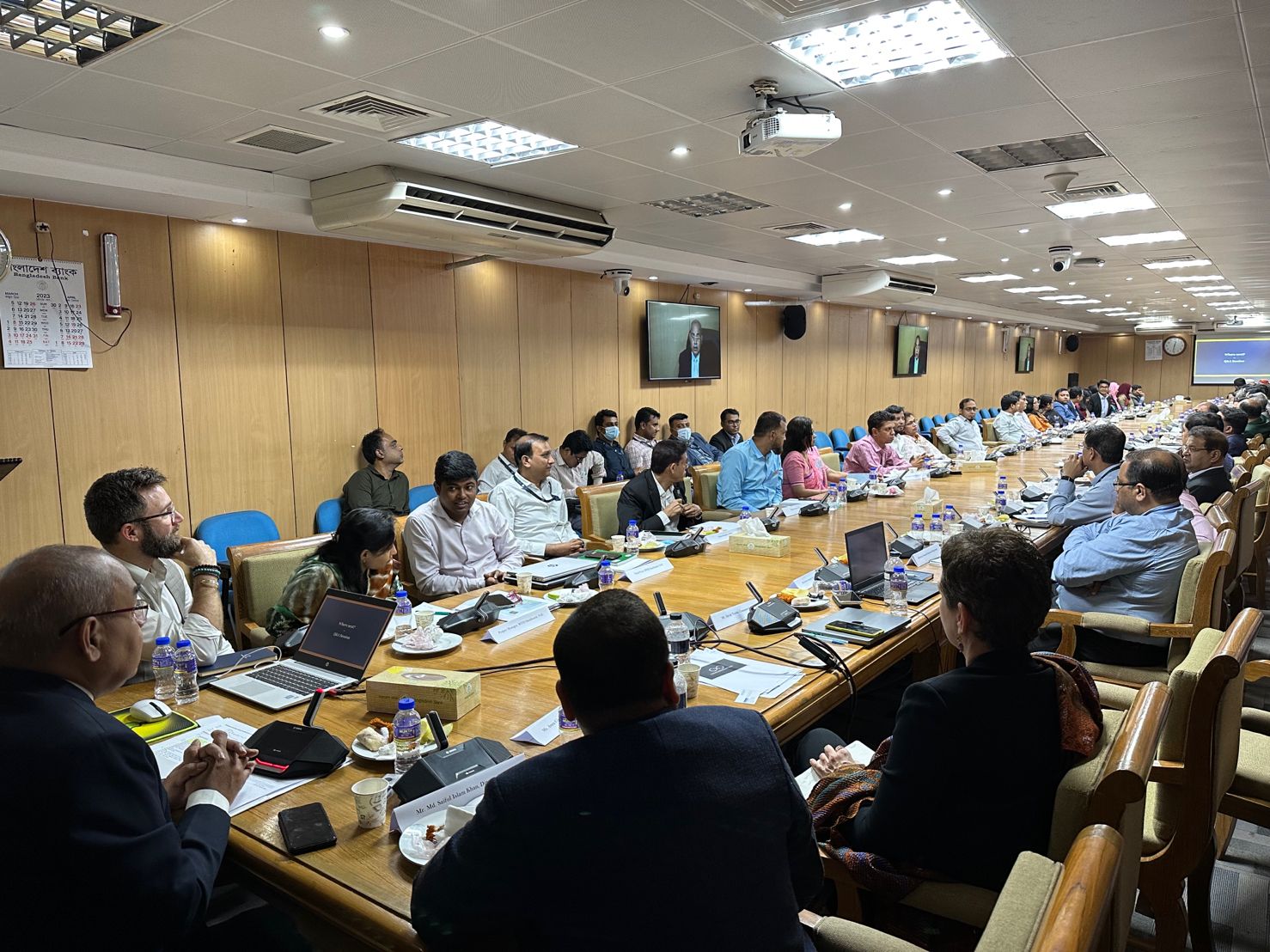
ConsumerCentriX Completes a 3-Day In-Person Consultation Event in Dhaka, Bangladesh, March 19-21, 2023
ConsumerCentriX Completes a 3-Day In-Person Consultation Event in Dhaka, Bangladesh, March 19-21, 2023
Dhaka, Bangladesh – March 25th, 2023 • CCX was represented in Dhaka, Bangladesh, by partner Anna Gincherman and project manager István Szepesy for a three-day in-person consultation event with the Bangladesh Bank (Central Bank of Bangladesh).
The event began with a meeting with the Deputy Governor of Bangladesh Bank, who offered guidance to the CCX team on the importance of leveraging gender data for greater women’s financial inclusion.

During the second day of the in-person consultation event, Bangladesh Bank (BB) conducted a stakeholder consultation with over 100 representatives from financial sector regulatory agencies, banks, MFS providers, micro edit institutions, insurance companies, and cooperatives.

In this consultation meeting, CCX partner Anna Gincherman shared key takeaways from the gender data ecosystem assessment in Bangladesh. Other stakeholders, including Quazi Mortuza Ali, presented Bank Asia Limited’s experience using gender data to drive its women’s market proposition, and CCX’s consultant David Taylor introduced the WFI Dashboard, a tool developed by CCX which brings together and visualizes financial-inclusion related data collected by Bangaldesh Bank from BB-regulated institutions on a regular basis.

Stakeholders were excited about the tool that would enable more data-driven policymaking and investment in the women’s market.
The 3-day in-person consultation event in Dhaka was concluded with a capacity-building discussion with Ashish Kumar Roy’s team from the Statistics Department, as well as the project team and representatives from the ICT Infrastructure Maintenance and Management Department, Information Systems Development and Support Department, and the Cyber Security Unit.

The project is implemented in collaboration with the Financial Alliance for Women and with the support of Bill & Melinda Gates Foundation.


Gender-Intelligent Fintech Design
Gender-Intelligent Fintech Design
In collaboration with the Financial Alliance for Women, ConsumerCentriX conducted a research study “How Fintechs Can Capture The Female Economy.” The research team interviewed 31 fintechs, 10 investors and 15 industry stakeholders across the world. The report quantifies the opportunity cost of not taking a gender-intelligent approach and shares solutions that fintechs can use to increase women’s conversion rates at each stage of the sales funnel.
Click here to access the full report: Fintech-Research-II

IN THE NEWS | Ibigo by’ubucuruzi buto birakangurirwa kwitabira ubukangurambaga bwa “Twiteze Imbere”
Ibigo by’ubucuruzi buto birakangurirwa kwitabira ubukangurambaga bwa “Twiteze Imbere”
Ubukangurambaga bwa “Twiteze Imbere” bwateguwe n’abafatanyabikorwa b’ihuriro rya ‘SME Response Clinic’ mu rwego rwo gushyigikira no kuzirikana uruhare rw’ibigo by’ubucuruzi buto mu kuzahura ubukungu bw’u Rwanda bwazahajwe n’icyorezo cya COVID-19.
Kimwe mu bikorwa bigize ubwo bukangurambaga ni irushanwa rishishikariza abantu gutanga amazina y’ibigo by’ubucuruzi bito babona bigira imikorere myiza. Ibigo by’ubucuruzi bizatsinda bikazahabwa igihembo cya miliyoni imwe y’Amafaranga y’u Rwanda (1.000.000Frw) hamwe na serivisi z’ubujyanama zitangwa n’impuguke mu bucuruzi.
Icyiciro cy’ubucuruzi buzatsinda ku mwanya wa kabiri kizahabwa inkunga yo gukurikirana amahugurwa atangwa n’Ikigo Nyafurika Kigamije Guteza Imbere Imiyoborere (AMI), yiswe “Komeza Utere Imbere – Survive to Thrive”. Binyuze kuri ayo mahugurwa, ba rwiyemezamirimo bazunguka ubuhanga, bahabwe ibikoresho byabugenewe, bige n’ingamba zabafasha guhangana n’ibibazo bagakomeza gutera imbere muri ibi bihe bikomeye byatewe n’icyorezo cya COVID-19. Nanone, bazahahurira n’abandi bacuruzi bo mu Rwanda no muri Afurika.
Umuyobozi wa Access to Finance Rwanda, Iyacu Jean Bosco, asobanura uko SME Response Clinic ifasha ibigo by’ubucuruzi, agira ati “Urubuga rwa SME Response Clinic rufasha ba rwiyemezamirimo kubona amahugurwa, amakuru n’inama ku buryo bwo gukora ubucuruzi neza mu bihe turimo, n’inama mu bijyanye n’imicungire y’imari mu rwego rwo guhangana n’ibibazo by’ubukungu byatejwe na Covid-19”.
Yongeraho ko SME Response Clinic ari umushinga uhuriweho n’abafatanyabikorwa aribo Access to Finance Rwanda, Consumer CentriX, Urugaga rw’Abikorera mu Rwanda (PSF), Ishyirahamwe ry’Ibigo by’Imari Iciriritse mu Rwanda (AMIR), Ikigo Nyafurika Kigamije Guteza Imbere Imiyoborere (AMI), New Faces New Voices Rwanda, n’Ishyirahamwe ry’Amabanki mu Rwanda (RBA).

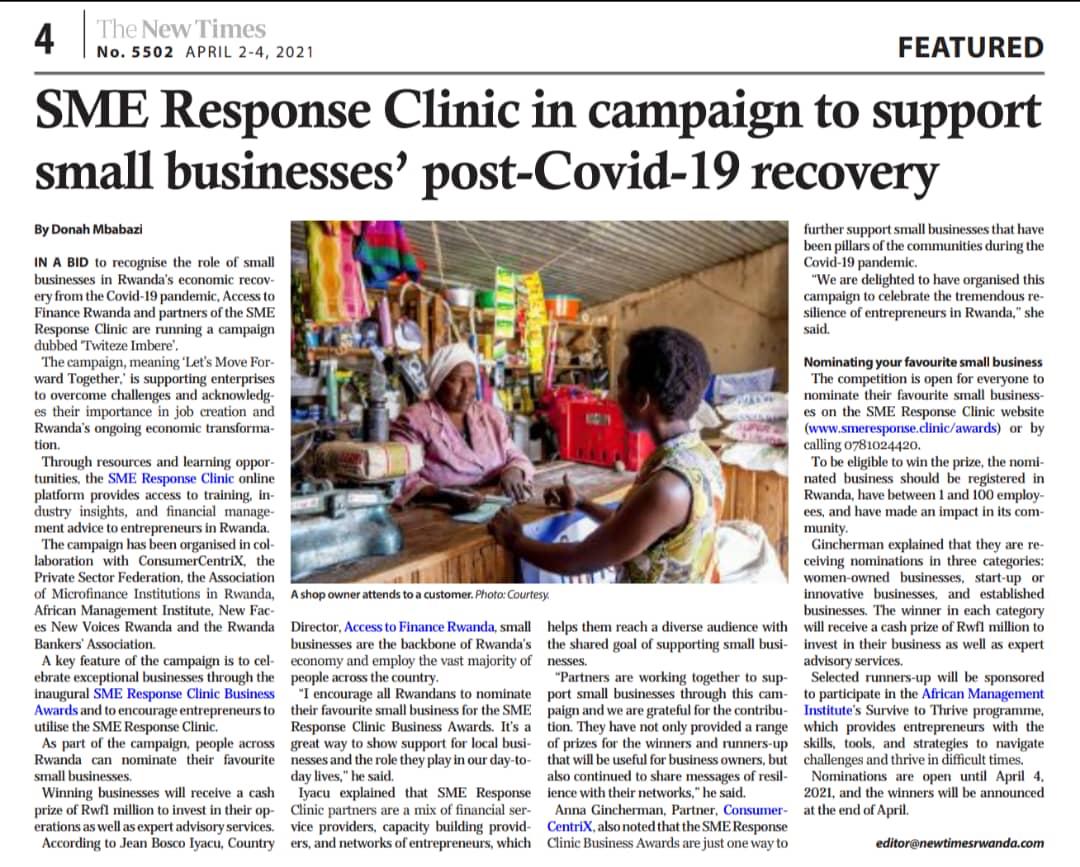
IN THE NEWS | FEATURED: SME Response Clinic in campaign to support small businesses’ post-Covid-19 recovery
FEATURED: SME Response Clinic in campaign to support small businesses’ post-Covid-19 recovery
In a bid to recognise the role of small businesses in Rwanda’s economic recovery from the Covid-19 pandemic, Access to Finance Rwanda and partners of the SME Response Clinic are running a campaign dubbed ‘Twiteze Imbere’.
The campaign, meaning ‘Let’s Move Forward Together,’ is supporting enterprises to overcome challenges and acknowledges their importance in job creation and Rwanda’s ongoing economic transformation.
Through resources and learning opportunities, the SME Response Clinic online platform provides access to training, industry insights, and financial management advice to entrepreneurs in Rwanda.
The campaign has been organised in collaboration with ConsumerCentriX, the Private Sector Federation, the Association of Microfinance Institutions in Rwanda, African Management Institute, New Faces New Voices Rwanda and the Rwanda Bankers’ Association.
A key feature of the campaign is to celebrate exceptional businesses through the inaugural SME Response Clinic Business Awards and to encourage entrepreneurs to utilise the SME Response Clinic.
As part of the campaign, people across Rwanda can nominate their favourite small businesses.
IN THE NEWS | Uruhare rwa SME Response Clinic mu kuzahura ubucuruzi bwazahajwe n’ingaruka za Covid-19
Uruhare rwa SME Response Clinic mu kuzahura ubucuruzi bwazahajwe n’ingaruka za Covid-19
Umuyobozi w’Ishyirahamwe ry’Ibigo by’Imari iciriritse Bikorera mu Rwanda (AMIR), Nkuranga Aimable, yavuze ko ihuriro SME Response Clinic riri kugira uruhare rukomeye mu kuzahura ubukungu bw’Igihugu. Ubu washyigikira ikigo cy’ubucuruzi buto ukagiha amahirwe yo kwegukana ibihembo byatanzwe n’iri huriro.
SME Response Clinic ni urubuga rwatangijwe hagamijwe kujya rukusanyirizwaho amakuru n’ubujyanama ku icungamari, imisoro, imikoranire na banki n’aho abucuruzi bakura ibishoro muri iki gihe cya Covid-19.
Rufasha abanyarwanda benshi bari mu bikorwa by’ubucuruzi kandi amakuru yose agatangwa mu Kinyarwanda n’Icyongereza.
Hashize umwaka ihuriro rya SME Response Clinic ritangiye mu Rwanda. Iri huriro ryavutse mu gihe Igihugu cyari gihanganye n’ingaruka z’icyorezo cya Covid-19, aho ibigo bito n’ibiciriritse byahuye n’ihungabana ry’ubukungu ritabyoroheye.
Umuyobozi w’Ishyirahamwe ry’Ibigo by’Imari Iciriritse bikorera mu Rwanda (AMIR) rikaba rinabarizwa muri iri huriro, Nkuranga Aimable, yavuze ko iri huriro rihugura ba rwiyemezamirimo b’ibigo bito ndetse n’ibiri kwiyubaka mu gucunga amafaranga akoreshwa mu bucuruzi.
ConsumerCentriX is a proud to partner of the SME Response Clinic with Access to Finance Rwanda and Rwanda Private Sector Federation

IN THE NEWS | Hatangijwe ubukangurambaga buzashimirwamo ibigo bito byagaragaje umuhate mu kwigobotora ingaruka za Covid-19
Hatangijwe ubukangurambaga buzashimirwamo ibigo bito byagaragaje umuhate mu kwigobotora ingaruka za Covid-19
Bizakorwa binyuze mu rubuga SME Response Clinic rwatangijwe n’urugaga rw’abikorera mu Rwanda (PSF) ku bufatanye n’Ikigo cy’igihugu giharanira ko serivisi z’imari zigera kuri bose, Access to Finance Rwanda (AFR), hagamijwe kugeza amakuru ya ngombwa ku bari mu bucuruzi mu guhangana n’ingaruka za Covid-19.
Urwo rubuga rukusanyirizwaho amakuru n’ubujyanama ku icungamari, imisoro, imikoranire na banki n’aho abari mu bucuruzi bakura ibishoro muri iki gihe cya Covid-19.
Ubukangurambaga bwa ‘Twiteze Imbere’ buzamara ibyumweru bitatu, bukubiyemo gusangira amakuru y’uburyo ibigo by’ubucuruzi bito n’ibiciriritse byabashije guhangana n’ibihe bikomeye by’icyorezo cyugarije Isi. Hazanashishikarizwa ba rwiyemezamirimo na ba nyir’ibigo by’ubucuruzi bitandukanye kwitabira gahunda za SME Response Clinic, ndetse ibizagaragaza ubudasa bihabwe ishimwe.
Icyo gikorwa kizaterwa inkunga na Access to Finance Rwanda, ConsumerCentriX, Urugaga rw’Abikorera mu Rwanda (PSF), Ishyirahamwe ry’Ibigo by’Imari Iciriritse Bikorera mu Rwanda (AMIR), Ikigo Nyafurika Kigamije Guteza Imbere Imiyoborere (AMI), New Faces New Voices Rwanda, n’Ishyirahamwe ry’Amabanki mu Rwanda.


Rwanda Broadcasting Agency | Businesswomen call for streamlined means of access to finance and investment opportunities
Rwanda Broadcasting Agency
Businesswomen call for streamlined means of access to finance and investment opportunities
By tailoring content and digital targeting, SME Response Clinic is actively equalizing the information asymmetry that prevents women entrepreneurs from safely accessing finance and training. ConsumerCentriX is proud to serve as the implementing partner in this critical initiative.
Nothing found.

The SME Response Clinic is featured by RwandaTV
The SME Response Clinic is featured by RwandaTV
ConsumerCentriX is proud to partner on the SME Response Clinic with Access to Finance Rwanda and Rwanda Private Sector Federation
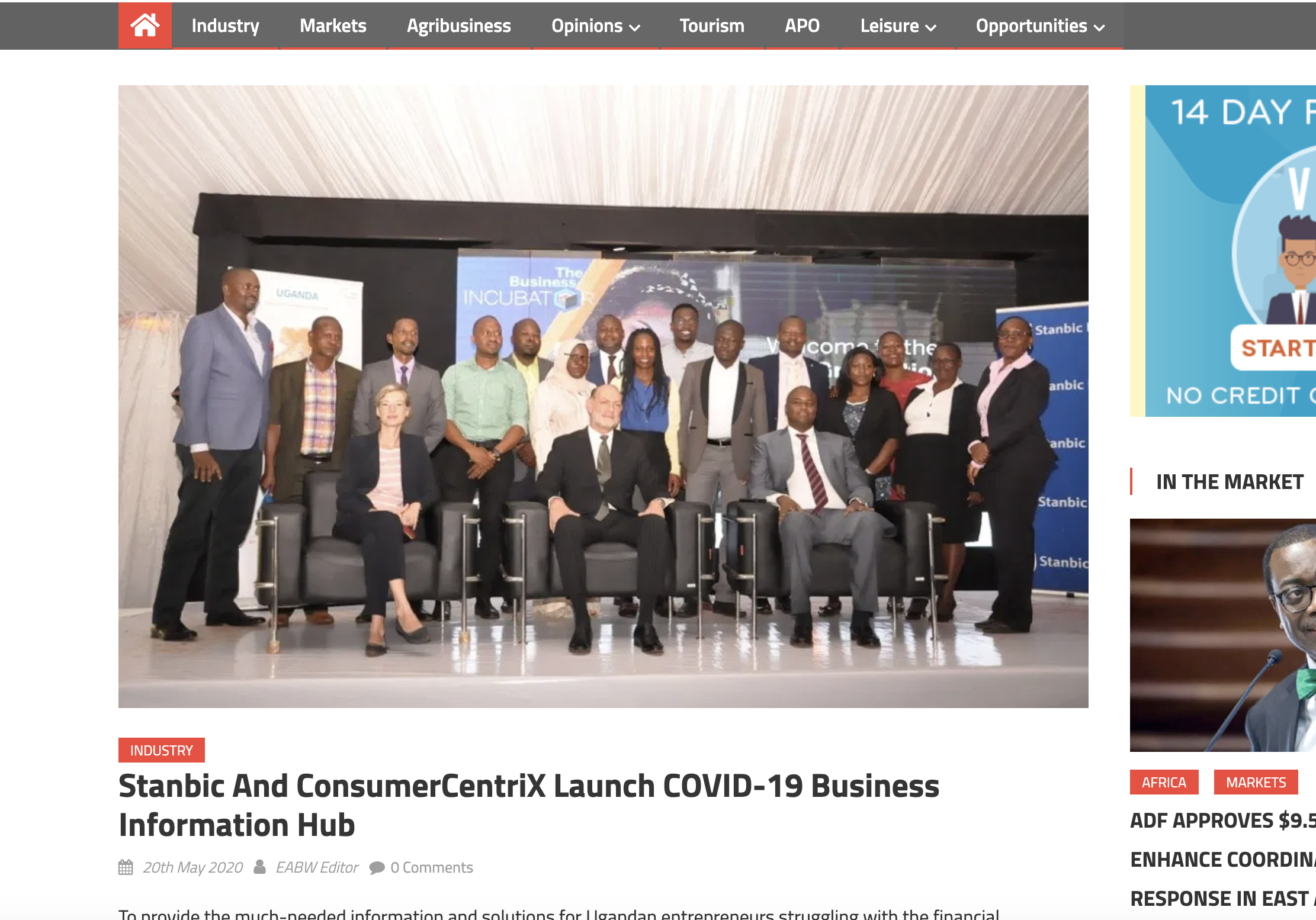
EABW NEWS | Stanbic And ConsumerCentriX Launch COVID-19 Business Information Hub
Stanbic And ConsumerCentriX Launch COVID-19 Business Information Hub
To provide the much-needed information and solutions for Ugandan entrepreneurs struggling with the financial consequences of the COVID -19 pandemic, Stanbic Bank has partnered with ConsumerCentriX on a Business Information Hub.
This website will provide entrepreneurs with advice on financial management to overcome economic slowdown and insights into new developments across industries.
Through a partnership with the African Management Institute (AMI), the Covid-19 Business Info Hub will promote informative virtual training sessions and webinars to help entrepreneurs navigate these challenging new circumstances.
Employing over 2.5 million people, small and medium enterprises (SMEs) are the key driver of growth for Uganda’s economy.