


Key Takeaways from the SME Response Clinic
By Anna Gincherman, Partner at ConsumerCentrix, and Jean Bosco Iyacu, Director of Programs at Access to Finance Rwanda (AFR)
With 148,092 registered Micro, Small, and Medium Enterprises (MSMEs) in Rwanda representing 99.7 percent of the businesses according to the Integrated Business Enterprise Survey (2017) by the National Institute of Statistics of Rwanda (NISR), this sector plays a pivotal role in the country’s socio-economic development. However, as a result of the Covid-19 pandemic and lockdown, this key driver of growth for Rwanda became imperiled as MSMEs across the country faced disruptions in the supply chain, demand and economic uncertainty.
To support entrepreneurs in Rwanda struggling in their time of need, Access to Finance Rwanda (AFR) partnered with ConsumerCentriX and Rwanda Private Sector Federation on the SME Response Clinic. The platform was launched on May 3rd, a little over a month after Rwanda entered lockdown.
The goal of the digital platform is to address information asymmetry through the establishment of a centralized location for MSMEs to learn about the new policies, regulations, support structures and product innovations developing in response to the crisis and essential financial advice and business training. For all articles, simple language and a straightforward tone is used, and content is made available in both English and Kinyarwanda (the only local language that is used by all Rwandans).
However, as we all know, a website alone is not enough to drive traffic. To increase outreach, a Facebook page and Twitter account and campaign were launched the same week as the website. An Instagram profile was created a few weeks later. Since the launch of these channels, content promoting the website has been viewed on Social Media 4,032,652 times.
Beginning with no followers and an ambitious goal of becoming the go-to site for entrepreneurs in Rwanda during Covid-19 meant investing in advertisements. The promotional strategy differed by channel. For Twitter, the SME Response Clinic originally partnered with influencers on a campaign before switching to a strictly organic promotional strategy. For Facebook, there is a heavy focus on article promotions by directly targeting small and medium business owners. In addition to driving traffic to web articles, the content and advertisement strategy evolved as results proved Facebook to be a popular channel for amassing video and live event views.
As the platform grew so did the list of partners. The SME Response Clinic joined forces with the Association of Microfinance Institutions in Rwanda, New Faces New Voices Rwanda, African Management Institute, Argidius Foundation, Rwanda Bankers’ Association, and Tustawi. These partnerships ensure that the content on the website reflects diverse perspectives. Partners also play a critical role in promoting web content to their external audiences.
Through these partnerships, three Facebook live webinars were organized focusing on the banking and microfinance sectors response to the Covid-19 pandemic and on how the Economic Recovery Fund and other relief measures put in place by the Government of Rwanda would benefit women entrepreneurs during and post Covid-19 pandemic.
Key Takeaways
The last ten weeks have been a period of intense testing and optimizing. Here are the key takeaways:
- Content in Kinyarwanda is critical to reach the target audience. It performs better than content in English for most topics, particularly for articles on government measures and articles on the banking and microfinance sectors’ responses to the Covid-19 pandemic.
- Women need to be explicitly targeted in order to ensure gender parity. At present, 48 percent of visitors are women despite an initial gender gap that heavily skewed toward men visitors. Achieving gender parity with traffic views meant actively creating pieces of content for women entrepreneurs and targeting them specifically on Facebook. Given the additional challenges many women entrepreneurs face in general and how they have been disproportionately affected as a result of Covid-19, this demonstrates the platform’s value by offering much-needed support for women entrepreneurs.
- Social media channels are effective ways to market the SME Response Clinic, with Facebook yielding the best results by far accounting for 64 percent of all referral traffic and reaches over 170,000 users per month. The SME Response Clinic is active on Facebook, Twitter, and Instagram and uses both organic and paid advertising to promote content. While the Twitter campaign yielded higher levels of impressions, Facebook proved to be significantly more cost-effective when it came to engagements and website clicks.
- Video is essential for keeping users engaged with the content. Data from Facebook suggests that people are more likely to watch an entire video then click on an article and a recent survey on the SME Clinic conducted also revealed that users are twice as likely to prefer content in a video or animation format than in a written article format.
- Web traffic and social media performance is very closely correlated to the publication of new content and event promotion. Weekly reviews of visitors and views indicate that it is critical to post new content and promote events as often as possible to drive visits to the portal.
- Strong partnerships are key to the platform’s success in that they bring perspectives of their members and constituents to inform content development. Also, they are vital in supporting outreach by sending targeted information via SMS and WhatsApp to their networks.
While the lockdown has slowly been lifted, the economic consequences of the pandemic can still be felt by micro, small, and medium enterprises across Rwanda. These key takeaways will continue to inform the content and promotional strategy for SME Response Clinic as the platform continues to provide information and resources for entrepreneurs in Rwanda coming to terms with the new normal.


What Post-COVID Survival Could look like for Ugandan Tourism Business
ConsumerCentriX is partnering with Stanbic Bank Uganda on the Covid-19 Business Info to provide to entrepreneurs across Uganda with reliable information to help them overcome the challenges of the pandemic. A version of this article was originally posted on the COVID-19 Business Info Hub.
The COVID-19 Business Info Hub spoke with David Gonahasa, an African tourism enthusiast and CEO of Tripxio, an SME that has built a unique solution to help tourism businesses survive through the serious effects of the COVID-19 pandemic. Here are some of the lessons SMEs in the sector can learn from to ensure their survival post-COVID.
What have the effects of COVID-19 been on the tourism sector?
From the onset, 2020 screamed opportunity for Uganda tourism. The year on year growth trend was expected to continue, and operators were looking to drive sales as high as possible in anticipation of a possible slowdown caused by 2021 being an election year.
Four months into the year, the entire tourism sector, which contributes 7.5% of GDP, shut down due to COVID-19. The largest hotel chains have laid off staff, some operators are completely bowing out, and according to Uganda Tourism Board, about 460,000 jobs are on the line. The lockdown will soon be over, and people will travel again; however, for some operators, the damage may be irreparable. It could be up to a year before international tourists, who have long been the core backbone of the sector revenue, start to flock Uganda again. Without these visitors, operators that start over will still be in the eye of the storm and will have to be at their most innovative to navigate this period.
What does survival look like?
Sector specialists expect that tourism will restart with domestic and regional market bookings and that eventually international tourists will return. This brings up questions around how to target the domestic market and whether the market is sufficiently large to keep the sector afloat. Targeting domestic and regional tourists may be a viable option for operators to not only create cash flows post-COVID but also start to rebuild destination confidence, particularly since most people (including international tourists) will travel to places where other people go.
Is the market sufficiently large? Yes. The African Development Bank reports Uganda’s middle class makes up 18% of the population, which is about 7.2 million people. The same report places the upper-middle-class number at about 1.5 million individuals. This would indicate that there are over 1 million Ugandans likely to be able to afford to pay for tourism or experience-related products, as well as groups like schools and churches.
What is important is changing the mindset around domestic or regional travel and finding new ways of communicating customer experience. Local tourism operators have long been reluctant to focus on the domestic market with the viewpoint that “Ugandans don’t travel.” This view is now gradually changing to “Ugandans prefer to travel to international destinations as opposed to local National Parks.” Data from Dubai Tourism and Commerce Marketing (DTCM) that indicates that 49,000 Ugandans traveled to the Emirate in 2018 may confirm this view when taking into account that this is larger than the number of East African Residents who traveled to most Ugandan National Parks in the same year. The value to the potential domestic or regional tourist traveling to a Ugandan National Park needs to be effectively communicated – and that means highlighting things like price, convenience, scenic beauty, and the customer experience that can be expected. Marketing should focus on being empathetic and relatable – it is not the time for “come to my destination” type marketing. The #TravelTomorrow campaign is one to ride on.
How can industry players practically re-invent themselves post-COVID?
In more developed markets, tourism is highly fragmented and specialized. Products are tailored to suit the target audience’s needs and desires. This innovation creates differentiation and relevance for operators. It drives consistent bookings. In Uganda, tourism is still characterized by product homogeneity, Operators sell the same National Park deals, for the same number of days, and in many cases, even for the same price. For competing operators, conversion comes down to how much an agent has to spend on marketing or how well networked they are.
A few recommendations to consider include:
Rethink and redevelop products.
Operators should:
- Identify their target customers. Who are operators selling to?
- Understand their motivations to purchase tourism or experience products. Are they looking to relax? To engage with culture and history?
- Build products around that, ensuring that what are you selling and why they should buy from you are clear.
Rethink distribution & digitalize business operations.
With an effective technology solution, an operator can start distributing packages and promotions for later dates, accept installments, and start to guarantee revenues. Business survival calls for improving efficiency across many areas, primarily product distribution, conversion, and maximizing customer spend. Digitalizing tourism sales and operations is one way to achieve this, enabling front end e-commerce and back end operations capabilities.
Digitalization has for long seemed very expensive and out of reach for many operators; however, there are a number of solutions today that will allow an operator to achieve this at a fraction of the cost. Tripxio (hello@tripxio.com) is one such solution that helps businesses develop, distribute, and sell tourism and experience products online. It allows businesses access to e-commerce websites, itinerary builders, digital marketing, and bookings and payments systems, and generally enables them to manage back-office operations and customer relationships all in one place. This solution is a software as a service model, which implies a limited cost of acquisition to the business with the benefits of running an in-house technology team.
Get creative about marketing and public relations.
Marketing and public relations activities should not stop for agents, even if travel is limited. It is pertinent to remain visible and use this time to build customer expectations. Marketing should focus on being empathetic and relatable – it is not the time for “come to my destination” type marketing. The #TravelTomorrow campaign is one to ride on. Communicate what your business is doing to be better post-COVID and what inclusive tourism strategies are being implemented to ensure sustainability not only for the business but also for nearby communities. Answer questions like “What is the business story? Why does it matter?” As the lockdown is loosened and people start to travel, show that people are coming to your destinations. This will drive confidence, and more visitors will come. If you are unsure of how to craft this kind of messaging yourself, there are numerous communications professionals out there that can support this process.

Rwanda Broadcasting Agency | Businesswomen call for streamlined means of access to finance and investment opportunities
Rwanda Broadcasting Agency
Businesswomen call for streamlined means of access to finance and investment opportunities
By tailoring content and digital targeting, SME Response Clinic is actively equalizing the information asymmetry that prevents women entrepreneurs from safely accessing finance and training. ConsumerCentriX is proud to serve as the implementing partner in this critical initiative.
Nothing found.


Relief Measures Available for Women Entrepreneurs During and Post Covid-19
Relief Measures Available for Women Entrepreneurs During and Post Covid-19
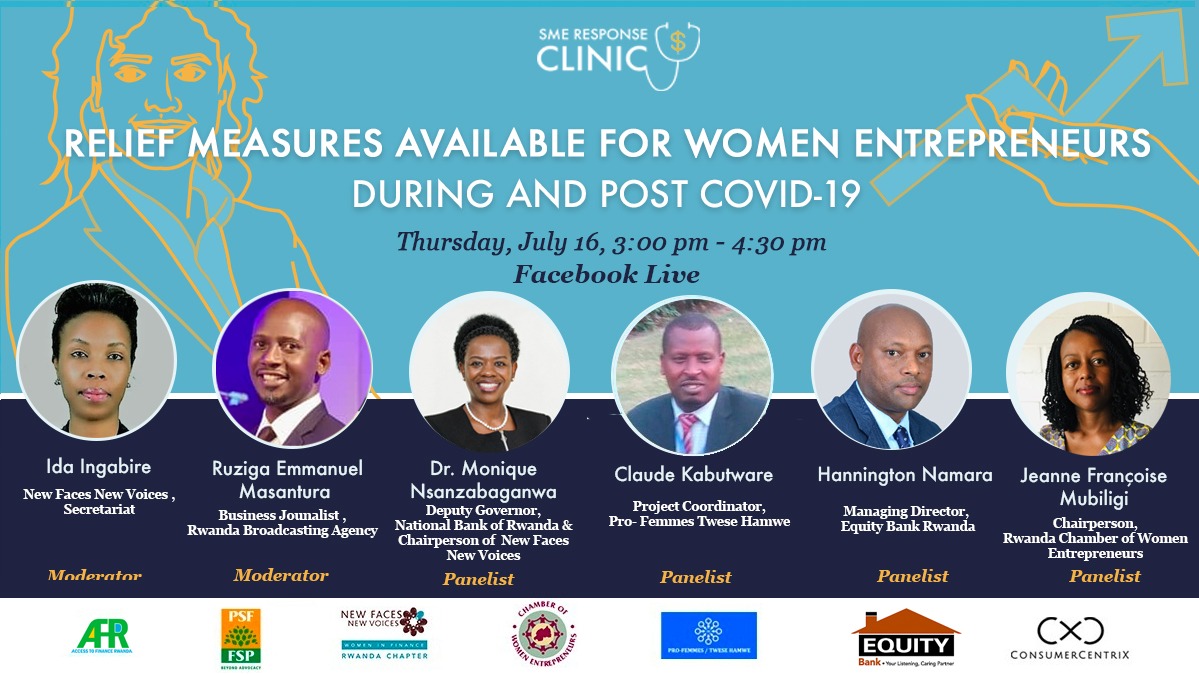
New Faces New Voices Rwanda in collaboration with the SME Response Clinic will be hosting a live discussion focused on how public and private sector measures to address the economic effects of COVID-19 can support women entrepreneurs. The discussion will be hosted on the SME Response Clinic’s Facebook page at 3:00 pm on July 16 and will be held in English and Kinyarwanda.
Micro, small, and medium enterprises (MSMEs) play a significant role in the Rwandan economy and contribute to sustain livelihoods for many. According to the National Institute of Statistics of Rwanda’s Establishment Census 2017, the sector, including private sector and cooperatives, represents 99% of businesses and over 70% of in-establishment employment. Women entrepreneurs are a vital force in Rwanda’s economy. Statistics from the National Gender Policy in Rwanda indicate that women head 42 percent of enterprises and comprise 58 percent of enterprises in the informal sector, which accounts for 30 percent of GDP. National surveys indicate that women entrepreneurs also have a tremendous impact on job creation in Rwanda, with many hiring between 3 and 5 employees to work in their businesses.
In addition to contributing to the development of their local communities through offering employment opportunities, women entrepreneurs contribute substantially to the development of their families through health and nutrition, ensuring funds are available for school fees and higher education for their children, and making improvements to their homes with profits from their businesses. Their contributions, however, are not without challenges. Women entrepreneurs in Rwanda face difficulties in access to three important factors: information, business skills training and development, and finance. They grapple with issues such as high taxes and transportation costs as well as discrimination in property ownership.
As in many markets across the globe, women entrepreneurs in Rwanda have been adversely affected by the COVID-19 pandemic, and measures to contain the spread of the virus have deepened some of the existing challenges they face. In the face of drops in demand or disruptions in the supply chains, a number of jobs have been lost or are at the brink while loans, taxes and rent are going unpaid. To respond to the challenge, the Government of Rwanda introduced the Economic Recovery Fund (ERF) as a mechanism to mitigate the threats that the pandemic is putting on the sector. Due to known barriers women in business face, there is a legitimate concern that without a deliberate effort women-owned/led MSMEs are likely to remain ill-informed and their uptake of ERF less than optimal.
To provide information about ERF and other private and public sector measures available to support women entrepreneurs in these uncertain times, New Faces New Voices Rwanda in collaboration with the SME Response Clinic will be hosting a live discussion focused on how government measures to address the economic effects of COVID-19 can support women entrepreneurs. The discussion will be hosted on the SME Response Clinic’s Facebook page at 3:00 pm on July 16. To increase accessibility for women entrepreneurs, the event will be held mostly in Kinyarwanda.
Panelists include:
Dr. Monique Nsanzabaganwa, Deputy Governor, National Bank of Rwanda
Jeanne Françoise Mubiligi, Chairperson, Rwanda Chamber of Women Entrepreneurs
Claude Kabutware, Project Coordinator, Pro- Femmes Twese Hamwe
Hannington Namara, Managing Director, Equity Bank Rwanda
The panel will be moderated by Ida Ingabire, Secretariat at New Faces, New Voices Rwanda and Ruziga Emmanuel Masantura, Business Journalist, Rwanda Broadcasting Agency.
This discussion will be the first of a two-part conversation with key stakeholders in the Rwandan economy. The second webinar, scheduled for July 30, will focus on how financial services providers are addressing the specific needs of women entrepreneurs in the face of COVID-19.
ConsumerCentriX is a Proud Co-Sponsor of this Event

Supporting Your Business Series: A Discussion with the Microfinance Sector
Supporting Your Business Series
A Discussion with the Microfinance Sector
Join us on Facebook on June 18th for a live discussion with key stakeholders from the microfinance sector!
From 3:00 pm -4:15 pm on Thursday, June 18th, join the SME Response Clinic on Facebook for a live webinar with key stakeholders from the Rwandan microfinance sector hosted by Access to Finance Rwanda and the Association of Microfinance Institutions in Rwanda (AMIR).
You can join simply by opening up the SME Response Clinic page on Facebook at 3pm on June 18th. It will be your chance to learn more about the microfinance sector’s response to support SMEs during the COVID-19 pandemic.
The SME Response Clinic’s goal is to provide more information to SMEs in Rwanda during the pandemic. The Clinic’s partners know that many small businesses are struggling with lack of cash flow, repayment of loans, and an uncertain future right now.
An important part of the response is already coming from the microfinance sector and other institutions. There are products and services in place that are meant to aid with issues of working capital, reduced revenue and liquidity. The key to managing a business and surviving the pandemic will be to stay informed, stay safe, and know what is available to you as a business person – especially if you operate in a hard-hit industry like tourism, hospitality or transport.
During the webinar, you will learn about products and services available from the microfinance sector. You will have the opportunity to ask questions and interact with:
- Jules Théoneste Ndahayo, Chief Executive Officer, UFC PLC and Chairman of the AMIR Board of Directors
- Laurence Uwambaje, Director General, UMWALIMU SACCO
- Grace Dushimimana, Chief Executive Officer, VisionFund Rwanda
- Aimable Nkuranga, Executive Director, Association of Microfinance Institutions in Rwanda
This webinar will be held primarily in English and will be moderated by Frank Baguma, Programs Officer, MFIs & SACCOs Development at Access to Finance Rwanda.
Please join us for this important event!
ConsumerCentriX is a Proud Co-Sponsor of this Event

COVID-19: Challenges, coping mechanisms, and urgent needs of SMEs in Uganda
ConsumerCentriX recently interviewed entrepreneurs in Kampala, to learn about their current challenges, coping mechanisms, and urgent needs in the midst of the COVID-19 pandemic. Below are some highlights from those conversations.
Local measures impacted most entrepreneurs
- Lockdown, shutdown, and social distancing are top of mind measures for all entrepreneurs. The direct consequences of these measures include a drastic decline in daily sales, an increase in the price of goods, and a reduction in the supply of those goods, which has resulted in loss of revenue for most.
- The reduction in revenue has additional consequences, including difficulties to pay business rent, bank loans, suppliers, employee salaries, and family expenses.
- COVID-19 has affected the entire value chain, from suppliers being unable to deliver on existing orders or contracts due to logistical challenges to wholesalers and retailers that stocked up when the pandemic was first announced, and now many are suffering for not generating enough income to pay back to suppliers.
SMEs’s coping strategies
- SMEs in Uganda are using a variety of different strategies to avoid permanent closure, including keeping in close contact with suppliers, placing and accepting orders via phone, delivering products by motorcycle, and even using their personal Facebook accounts to market their products or services.
- Other SME owners have downsized, temporarily closed, reduced the number of employees or laid off employees. They stopped stocking up general goods, and have instead focused on stocking fast-moving goods. A number of them based in Kampala have also decided to send their families to their home villages to work in agriculture as a way of diversifying income and reducing family expenses.
- Some are also suspending payments on bank loans or withdrawing funds from their savings accounts (in many cases, these funds were meant to pay for school fees) to save their businesses from being evicted.
What SMEs urgently need
- To survive this crisis, SMEs need urgent flexible and affordable financing and non-financial support to help them to become more resilient and adapt to the new market conditions.
- While optimistic by nature, entrepreneurs would benefit from building their skills in things like how to keep in touch and negotiate with their suppliers; how to communicate with and deliver to their customers; how to digitalize their businesses; and how to manage their operational expenses such as employee salaries. An equally important topic would center around how to keep mental well-being in these times of crisis.
Meet the Business Info Hub
In this context, ConsumerCentriX in partnership with Stanbic Bank recently launched the COVID 19 Business Info Hub, a platform designed to help entrepreneurs navigate the changing environment.
The Business Info Hub provides entrepreneurs with insights and tools to better manage their businesses. In partnership with the African Management Institute (AMI), entrepreneurs can also access a suite of programs through their COVID-19 Business Survival Bootcamp, ranging from cash-flow forecasting to adjusting products or services for new customer segments, and from repurposing existing assets to meditation sessions that help promote mental well-being.
We invite you to explore the https://covid19businessinfohub.com/ to find the tools most appropriate for your own situation. And if you don’t find what you need, just let us know so we can try to find the best way to help you!
The SME Response Clinic is featured by RwandaTV
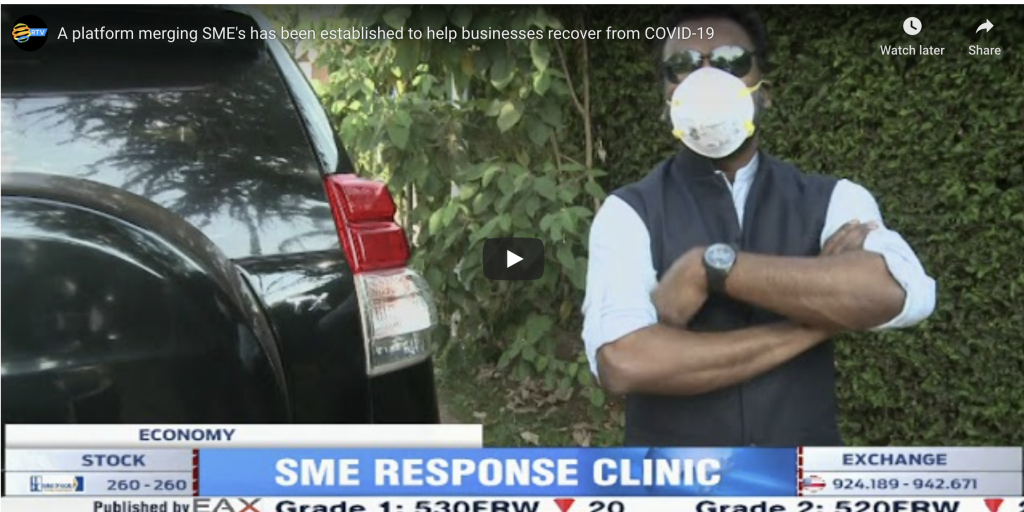
The SME Response Clinic is featured by RwandaTV
ConsumerCentriX is proud to partner on the SME Response Clinic with Access to Finance Rwanda and Rwanda Private Sector Federation

Content Consultant (Part-time) – Uganda
ConsumerCentriX is seeking an energetic Content Consultant to join the team for an…
0 Comments3 Minutes
Local Resident Advisor (Rwanda)
We are seeking a Financial and Administrative Officer to provide a variety of…
0 Comments3 Minutes
Financial Administrative Officer (FAO)
We are seeking a Financial and Administrative Officer to provide a variety of…
0 Comments6 Minutes

CNBC NEWS |Rwandan entrepreneurs treated to Covid-19 business survival boot camp
Rwandan entrepreneurs treated to Covid-19 business survival Bootcamp
Access to Finance Rwanda in partnership with the African Management institute, the Private Sector Federation and others, has launched a new webinar series dubbed, ‘The Business Survival Bootcamp’, through their website, SME Response Clinic. The program is designed to help entrepreneurs navigate the unique challenges that have presented themselves as a result of the Covid-19 pandemic and is slated to begin next week. Head of Programs at AFR, Jean Bosco Iyacu joins CNBC Africa for more.

Re-opening in a Post COVID-19 Environment: Practical Solutions for SMEs
Please note that the webinar will not be accessible until 4:00pm on Tuesday, June 16th
Re-opening in a Post COVID-19 Environment:
Practical Solutions for SMEs
A version of this article was originally posted on the COVID-19 Business Info Hub.
The COVID-19 Business Info Hub is launching a webinar series to provide practical advice and solutions for small and medium enterprises (SMEs) through engaging discussions with expert panelists. The first session, Re-opening in a Post COVID-19 Environment: Practical Solutions for SMEs will be held on Tuesday, June 16th at 4.00 pm. The webinar will provide SMEs and industry stakeholders an opportunity to discuss the ”new normal” and share practical solutions that can help the sector in this time of crisis.
Panelists include Gideon Badagawa, Executive Director of the Private Sector Foundation Uganda (PSFU), Daniel Birungi, Executive Director of Uganda Manufacturers Association (UMA), and Hope Sharon Kwiyocwiny, Sales and Marketing Manager of HMH Rainbow Limited, YO KUKU. The session will be facilitated by Tony Otoa, Executive Director of Stanbic Bank Business Incubator, and hosted on Stanbic Bank Uganda’s Facebook Live page. The session is open to ALL, irrespective of the financial institution you bank with!
The webinar comes at a critical time. Uganda has been on lockdown following the COVID-19 pandemic for close to three months, resulting in a myriad of challenges for SMEs, including disruptions in the supply chain, income loss, and changing work environments. A socio-economic impact assessment of COVID-19 on the formal sector and SMEs by the United Nations Capital Development Fund (UNCDF) conducted in April 2020 reveals that 85 percent of all businesses anticipated financial distress after three months of lockdown. The expectation of loss is at least 90 percent across companies of all sizes.
The plight of SMEs during COVID-19 poses significant challenges to the Ugandan economy. As the engine of growth for economic development, innovation, and wealth creation, SMEs employ over 2.5 million people in Uganda and account for approximately 90 percent of the entire private sector, generating over 80 percent of the manufacturing output that contributes 20 percent of the gross domestic product (GDP).
With this in mind, Stanbic Bank Uganda has deliberately prioritized efforts to support the SME sector in their time of need. In partnership with ConsumerCentrix, Stanbic Bank Uganda has launched the COVID-19 Business Info Hub – a website dedicated to providing useful, practical information on key interventions including business training, useful government directives, and industry interviews to enable SMEs to stay afloat during COVID-19.
We look forward to engaging with you on this relevant discussion towards practical solutions for SMEs.
Sign up for our Newsletter and Event Reminders

Supporting Your Business Series: A Discussion with the Banking Sector
Supporting Your Business Series: A Discussion with the Banking Sector
Join us on Facebook on May 28th for a live discussion with bankers!
From 3-4pm on Thursday, May 28th, join the SME Response Clinic on Facebook for a live webinar with Rwandan bankers hosted by Access to Finance Rwanda and the Rwanda Bankers Association.
You can join simply by opening up the SME Response Clinic page on Facebook at 3pm on May 28th. It will be your chance to learn more about what banks are doing to help SMEs during the COVID-19 pandemic.
The SME Response Clinic’s goal is to provide more information to SMEs in Rwanda during the pandemic. The Clinic’s partners know that many small businesses are struggling with lack of cash flow, repayment of loans, and an uncertain future right now.
An important part of the response is already coming from banks and other institutions. There are products and services in place that are meant to aid with issues of working capital, reduced revenue and liquidity. The key to managing a business and surviving the pandemic will be to stay informed, stay safe, and know what is available to you as a business person – especially if you operate in a hard-hit industry like tourism, hospitality or transport.
During the webinar, you will learn about products and services like loan repayment holidays, loan moratoriums, lines of credit and overdraft facilities directly from Rwandan bankers. You will have the opportunity to ask questions and interact with:
- Maurice K. Toroitich, Managing Director of BPR Atlas Mara
- Robin C. Bairstow, CEO of I&M Bank and Chairman of Rwanda Bankers Association
- Christine Baingana, CEO of Urwego Bank
This webinar will be held primarily in English and will be moderated by Tony Francis Ntore, Executive Secretary of the Rwanda Bankers Association, and Jean Bosco Iyacu, Director of Programs at Access to Finance Rwanda.
Please join us for this important event!
ConsumerCentriX is a Proud Co-Sponsor of this Event